Precipitation
Key Points
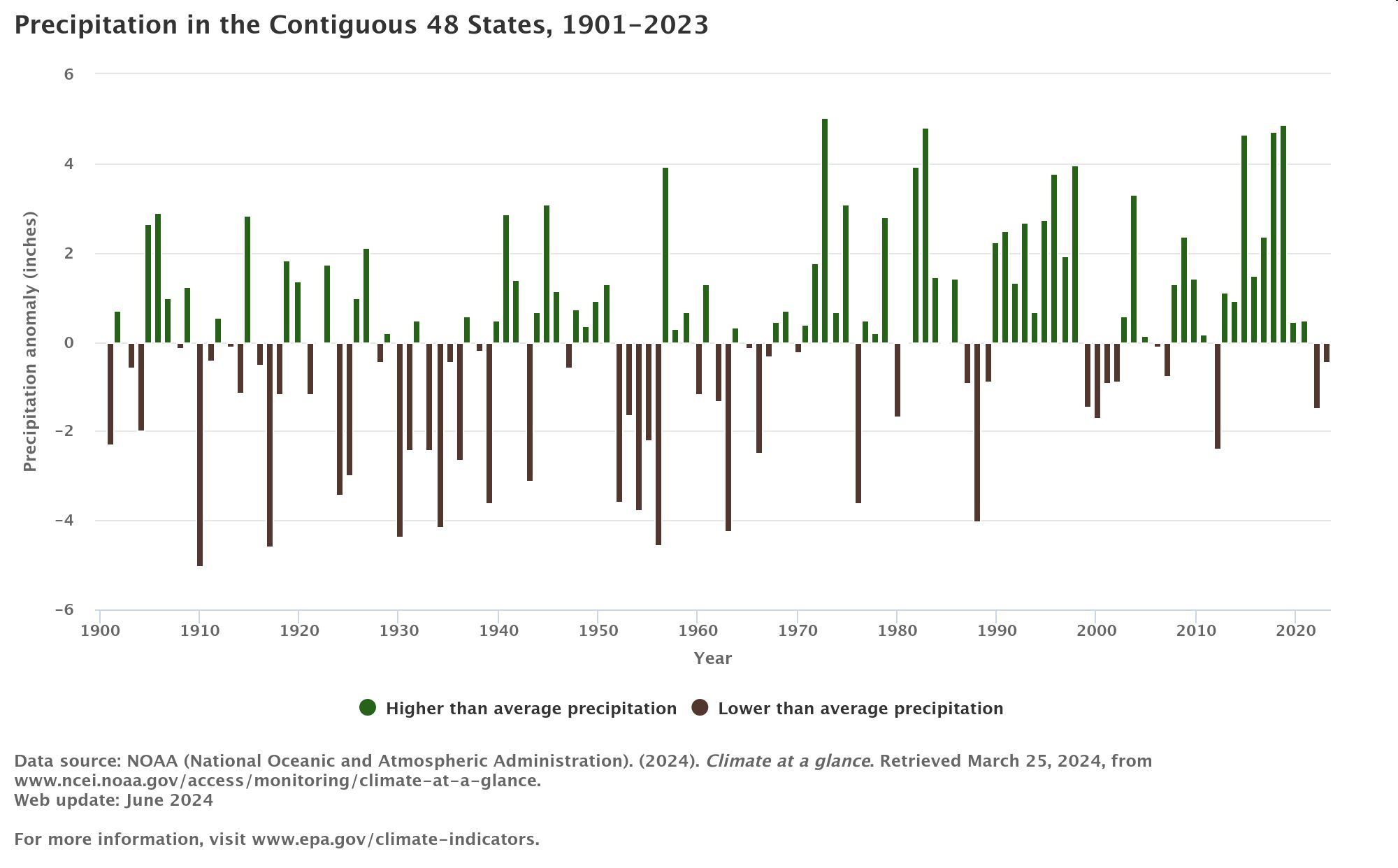
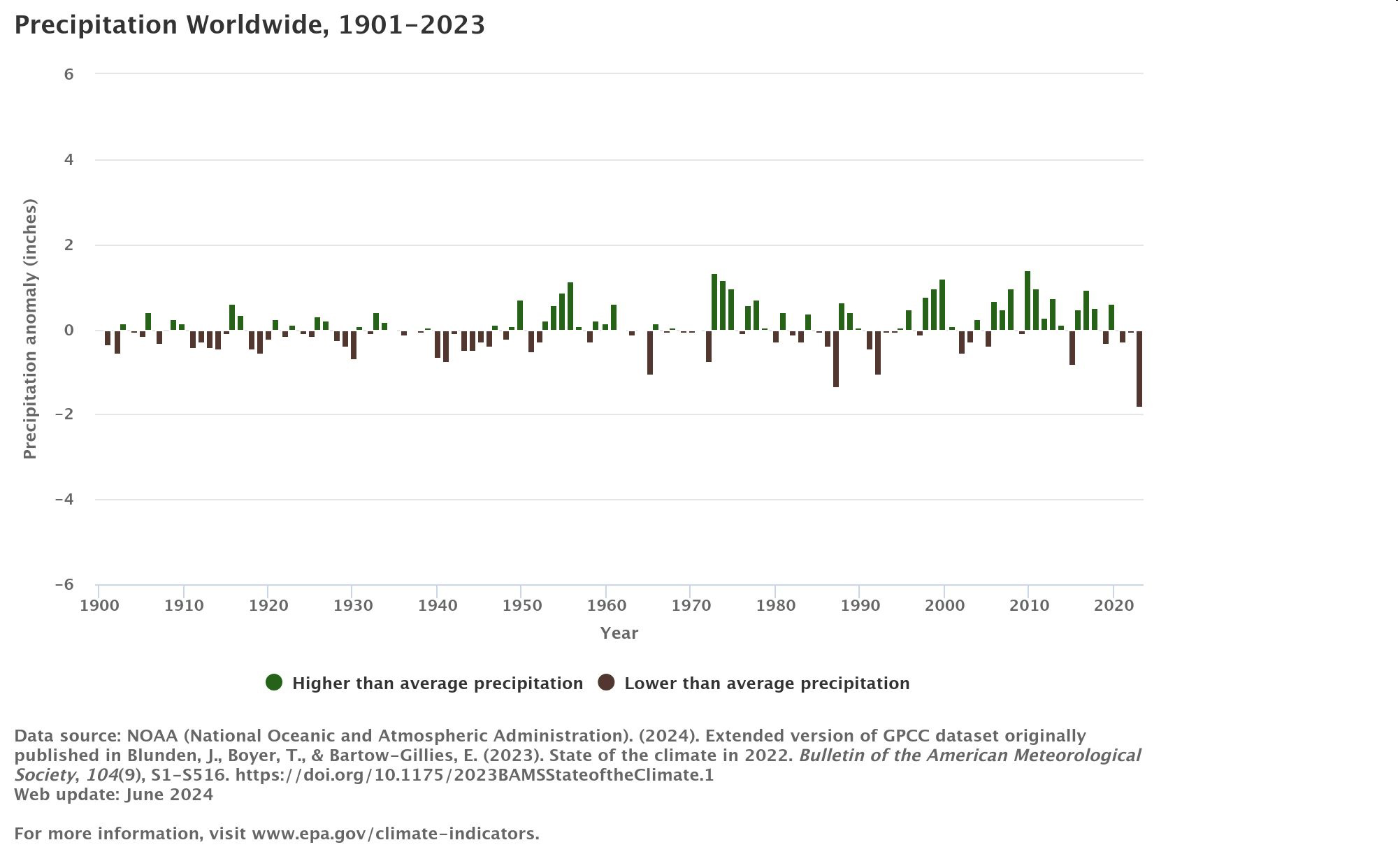
On average, total annual precipitation has increased over land areas in the United States and worldwide (see Figures 1 and 2). Since 1901, global precipitation has increased at an average rate of 0.03 inches per decade, while precipitation in the contiguous 48 states has increased at a rate of 0.18 inches per decade.
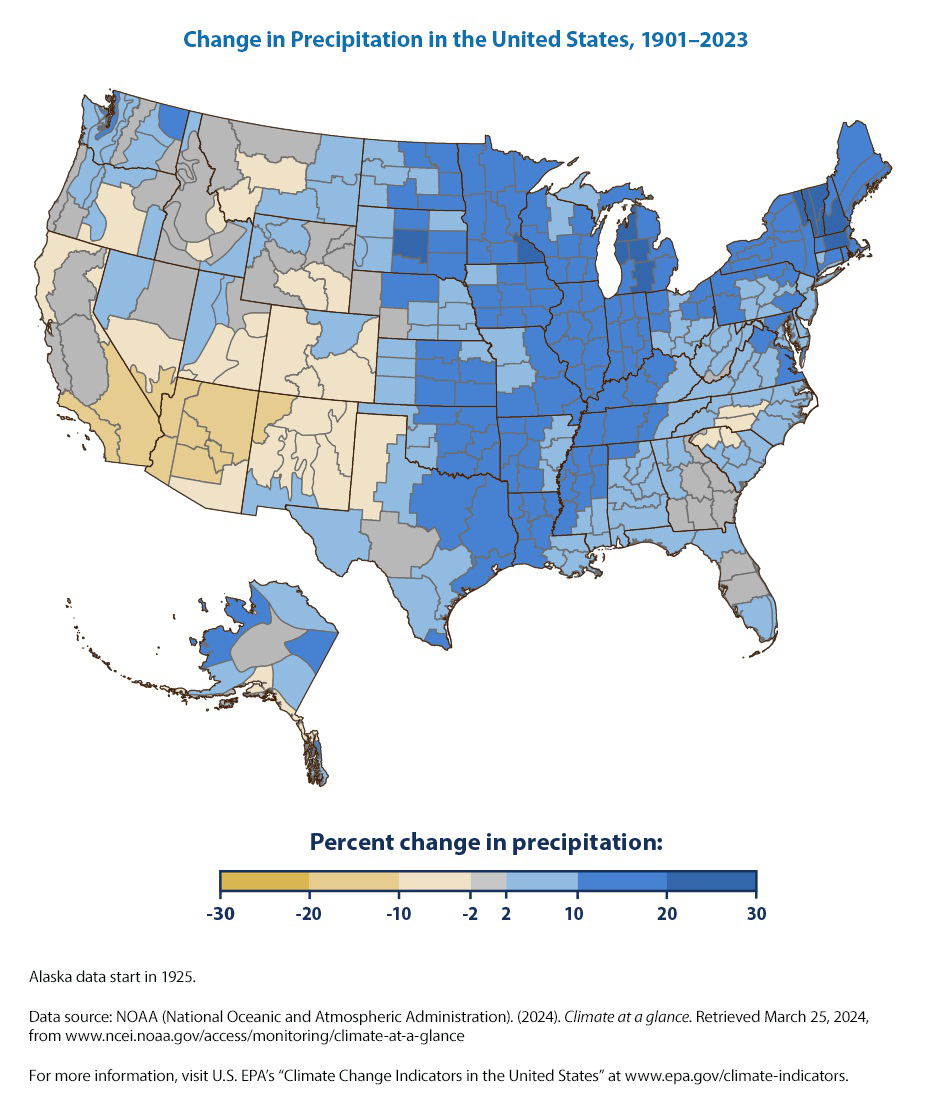
Some parts of the United States have experienced greater increases in precipitation than others. A few areas, such as the Southwest, have seen a decrease in precipitation (see Figure 3). Not all of these regional trends are statistically significant, however.
Background
Precipitation can have wide-ranging effects on human well-being and ecosystems. Rainfall, snowfall, and the timing of snowmelt can all affect the amount of surface water and groundwater available for drinking, irrigation, and industry. They also influence river flooding and can determine what types of animals and plants (including crops) can survive in a particular place. Changes in precipitation can disrupt a wide range of natural processes, particularly if these changes occur more quickly than plant and animal species can adapt.
As average temperatures at the Earth’s surface rise, more evaporation and transpiration occur, adding more moisture to the air, which in turn increases overall precipitation. Therefore, a warming climate is expected to increase precipitation in many areas. Just as precipitation patterns vary across the world, however, so do the effects of climate change on precipitation. By shifting the wind patterns and ocean currents that drive the world’s climate system, climate change will also cause some areas to experience decreased precipitation. In addition, areas with increased precipitation will not necessarily have more water available for people and ecosystems because higher temperatures also lead to more evaporation.
Graph of Information - Figure 1.
This figure shows how the total annual amount of precipitation in the contiguous 48 states has changed since 1901. This graph uses the 1901–2000 average as a baseline for depicting change. Choosing a different baseline period would not change the shape of the data over time.
Graph of Information - Figure 2.
This figure shows how the total annual amount of precipitation over land worldwide has changed since 1901. This graph uses the 1901–2000 average as a baseline for depicting change. Choosing a different baseline period would not change the shape of the data over time.
Graph of Information - Figure 3.
This figure shows the percent change in total annual precipitation in different parts of the United States since the early 20th century (since 1901 for the contiguous 48 states and 1925 for Alaska). The data are shown for climate divisions, as defined by the National Oceanic and Atmospheric Administration.