Sea Surface Temperature
Key Points
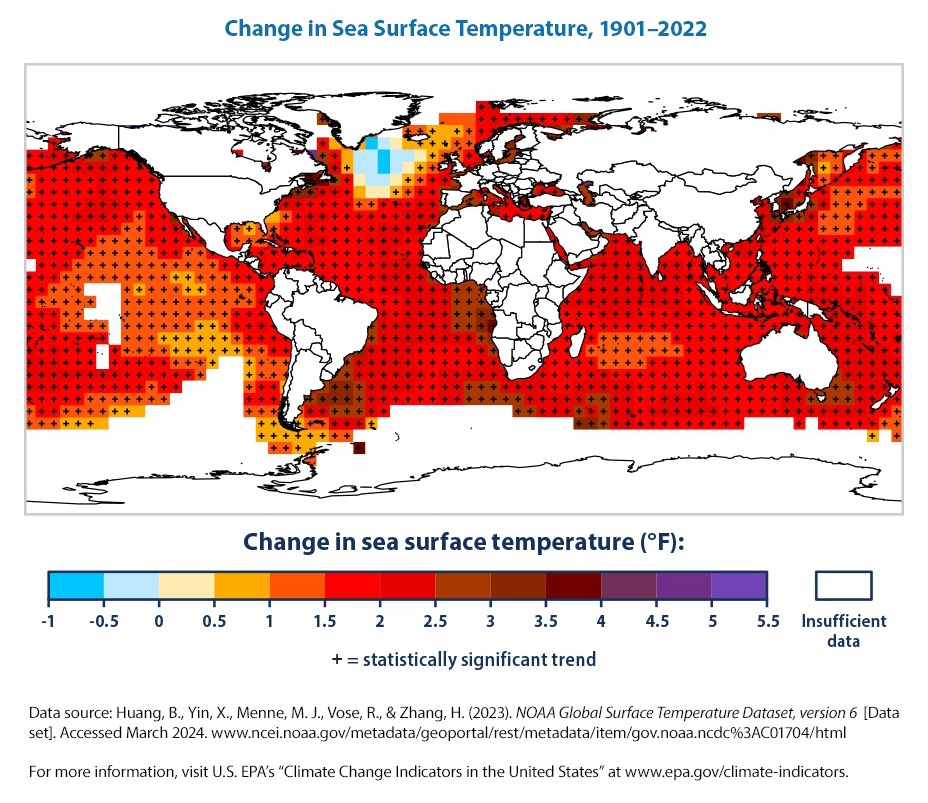
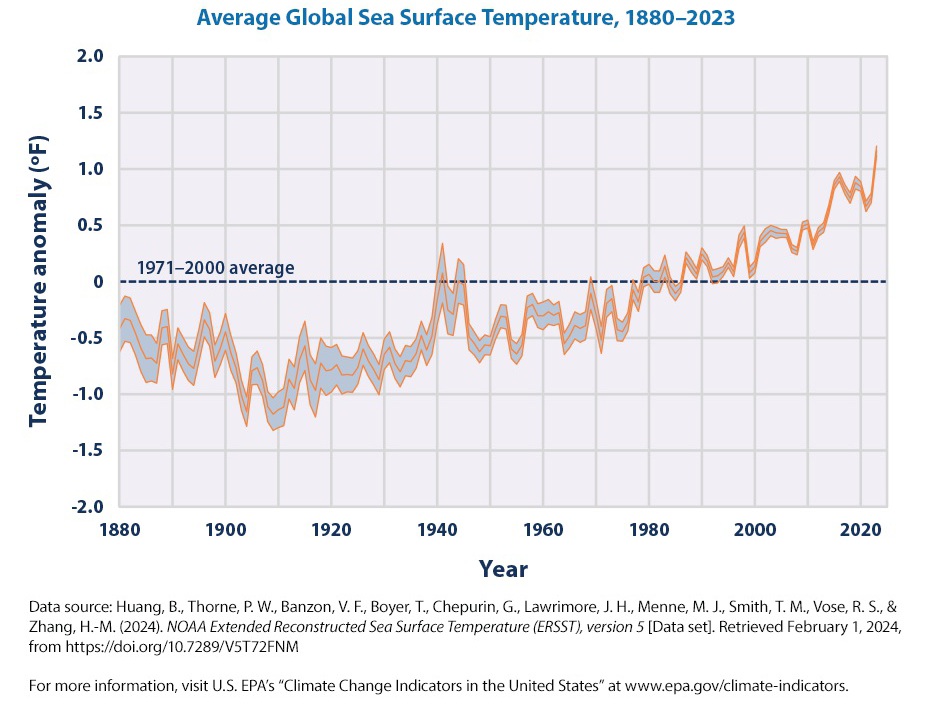
Sea surface temperature increased during the 20th century and continues to rise. From 1901 through 2023, temperature rose at an average rate of 0.14 oF per decade (Figure 1).
Sea surface temperature has been consistently higher during the past three decades than at any other time since reliable observations began in 1880. The year 2023 was the warmest ever recorded (Figure 1).
Based on the historical record, increases in sea surface temperature have largely occurred over two key periods: between 1910 and 1940 and from about 1970 to the present. Sea surface temperature appears to have cooled between 1880 and 1910 (Figure 1).
Changes in sea surface temperature vary regionally. While most parts of the world's oceans have seen temperature rise, a few areas have actually experienced cooling - for example, parts of the North Atlantic (Figure 2).
Background
Sea surface temperature - the temperature of the water at the ocean surface - is an important physical attribute of the world's oceans. The surface temperature of the world's oceans varies mainly with latitude, with the warmest waters generally near the equator and the coldest waters in the Arctic and Antarctic regions. As the oceans absorb more heat, sea surface temperature increases, and the ocean circulation patterns that transport warm and cold water around the globe change.
Changes in sea surface temperature can alter marine ecosystems in several ways. For example, variations in ocean temperature can affect what species of plants, animals, and microbes are present in a location, alter migration and breeding patterns, threaten sensitive ocean life such as corals, and change the frequency and intensity of harmful algal blooms such as "red tide".� Over the long term, increases in sea surface temperature could also reduce the circulation patterns that bring nutrients from the deep sea to surface waters. Changes in reef habitat and nutrient supply could dramatically alter ocean ecosystems and lead to declines in fish populations, which in turn could affect people who depend on fishing for food or jobs. Many coastal areas have a large share of people who depend on income from fishing, tourism, or both. This is especially common in areas that have fewer economic alternatives, including rural counties and the United States' Caribbean and Pacific island commonwealths and territories.
Because the oceans continuously interact with the atmosphere, sea surface temperature can also have profound effects on global climate. Increases in sea surface temperature have led to an increase in the amount of atmospheric water vapor over the oceans. This water vapor feeds weather systems that produce precipitation, increasing the risk of heavy rain and snow. Changes in sea surface temperature can shift storm tracks, potentially contributing to droughts in some areas. Increases in sea surface temperature are also expected to lengthen the growth season for certain bacteria that can contaminate seafood and cause foodborne illnesses, thereby increasing the risk of health effects.
Graph of Information - Figure 1.
This graph shows how the average surface temperature of the world’s oceans has changed since 1880. This graph uses the 1971 to 2000 average as a baseline for depicting change. Choosing a
different baseline period would not change the shape of the data over time. The shaded band shows the range of uncertainty in the data, based on the number of measurements collected and
the precision of the methods used.
Graph of Information - Figure 2.
This map shows how average sea surface temperature around the world changed between 1901 and 2022. It is based on a combination of direct measurements and satellite measurements. A black “+” symbol in the middle of a square on the map means the trend shown is statistically significant. White areas did not have enough data
to calculate reliable long-term trends.