Temperature Changes
Key Points
Since 1901, the average surface temperature across the contiguous 48 states has risen at an average rate of 0.17°F per decade (Figure 1). Average temperatures have risen more quickly since the late 1970s (0.32 to 0.51°F per decade since 1979). For the contiguous United States, nine of the 10 warmest years on record have occurred since 1998, and 2012 and 2016 were the two warmest years on record.
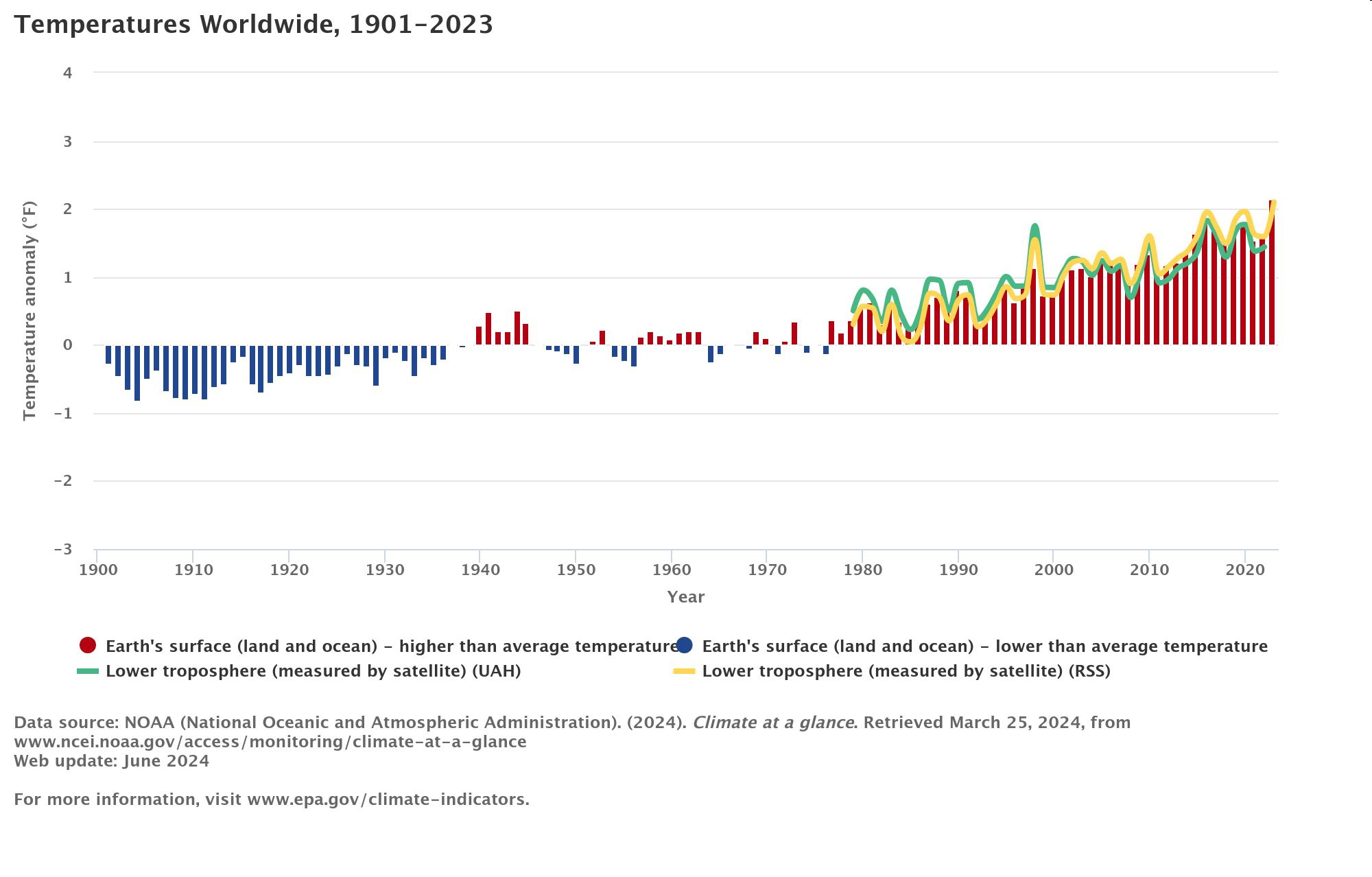
Worldwide, 2023 was the warmest year on record, 2016 was the second‑warmest year, and 2014–2023 was the warmest decade on record since thermometer‑based observations began. Global average surface temperature has risen at an average rate of 0.17°F per decade since 1901 (Figure 2), similar to the rate of warming within the contiguous United States. Since the late 1970s, however, the United States has warmed faster than the global rate.
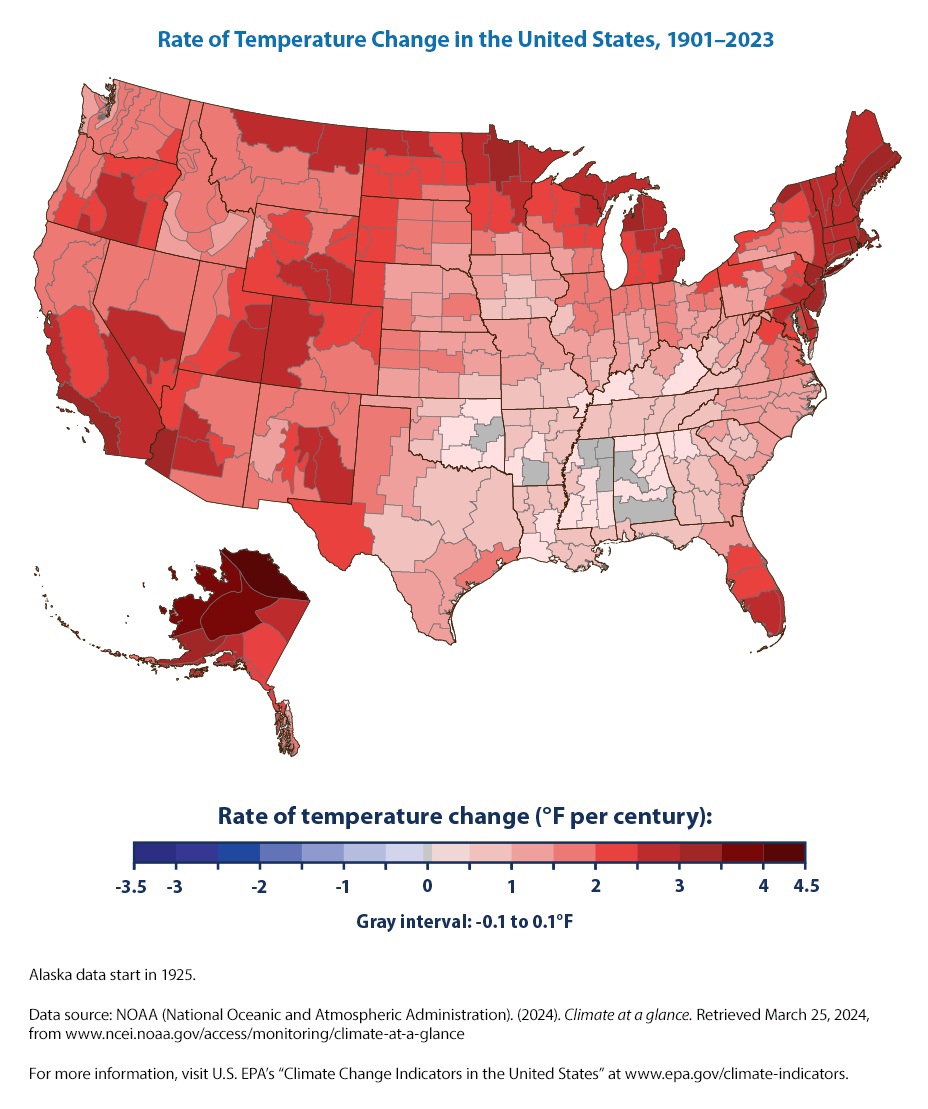
Some parts of the United States have experienced more warming than others (Figure 3). The North, the West, and Alaska have seen temperatures increase the most, while some parts of the Southeast have experienced little change. Not all of these regional trends are statistically significant, however.
Background
Temperature is a fundamental measurement for describing the climate, and the temperature in particular places can have wide‑ranging effects on human life and ecosystems. For example, increases in air temperature can lead to more intense heat waves, which can cause illness and death, especially in vulnerable populations. Annual and seasonal temperature patterns also determine the types of animals and plants that can survive in particular locations. Changes in temperature can disrupt a wide range of natural processes, particularly if these changes occur more quickly than plant and animal species can adapt.
Concentrations of heat‑trapping greenhouse gases are increasing in the Earth’s atmosphere. In response, average temperatures at the Earth’s surface are increasing and are expected to continue rising. Because climate change can shift the wind patterns and ocean currents that drive the world’s climate system, some areas are warming more than others, and some have experienced cooling.
Graph of Information - Figure 1.
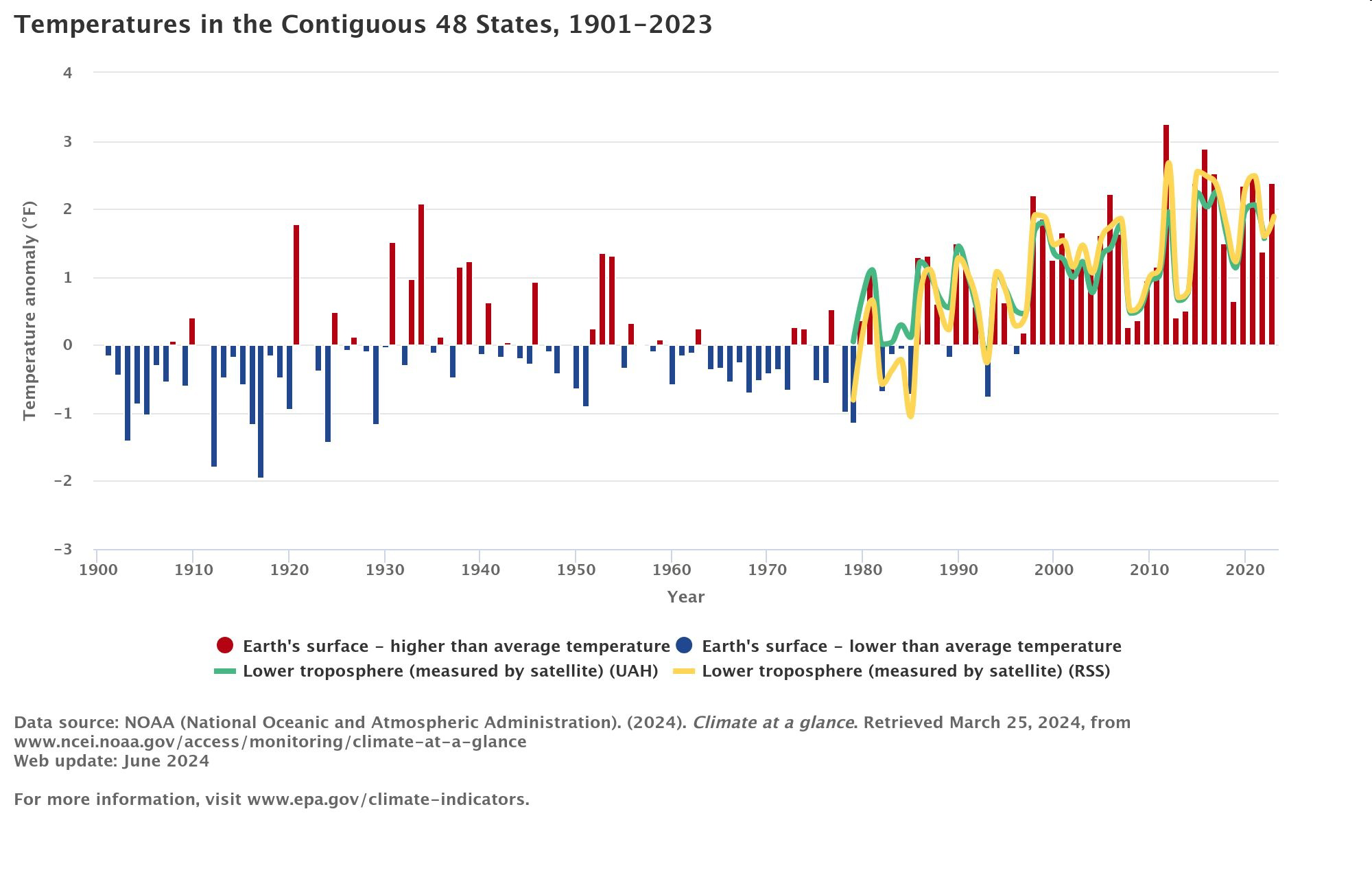
Graph of Information - Figure 2.
Graph of Information - Figure 3.