Coastal Flooding
Key Points
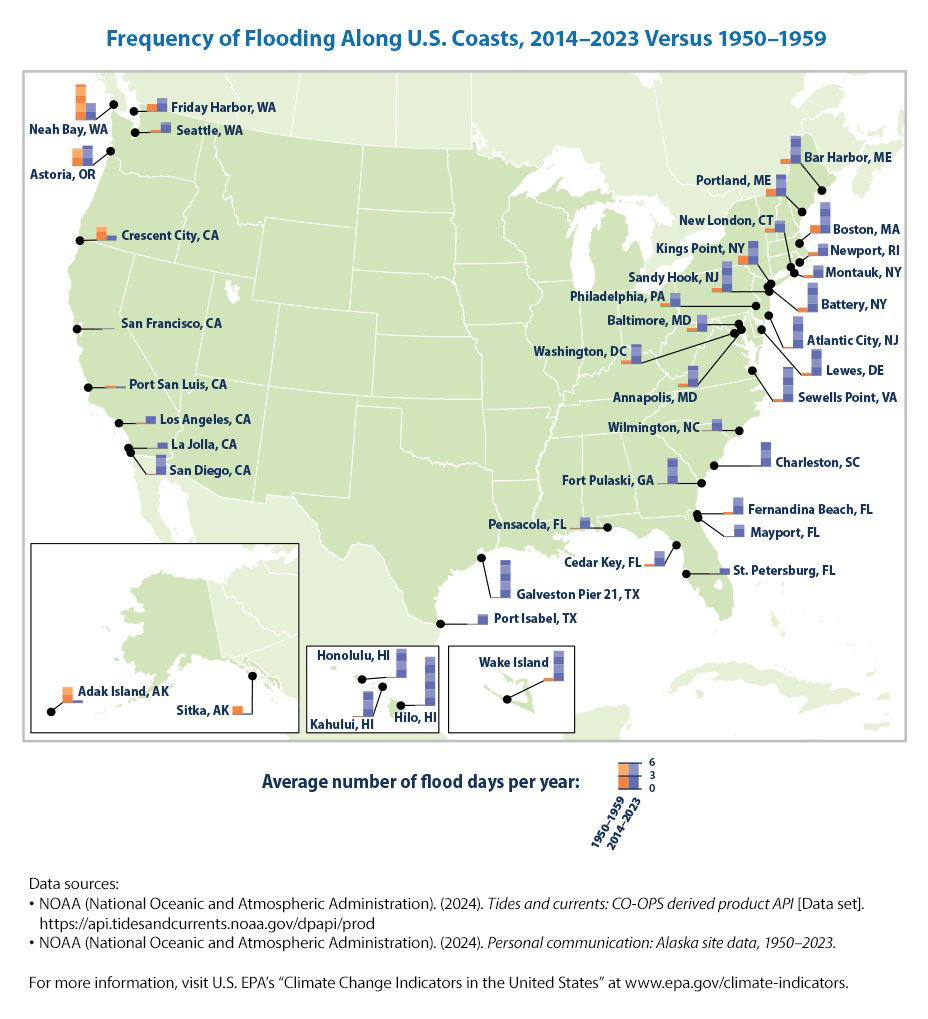
Flooding is becoming more frequent along much of the U.S. coastline. Most sites measured have experienced an increase in coastal flooding since the 1950s (Figure 1).
Over the last decade (i.e., since 2014), Hilo, Hawai‘i, has exceeded the flood threshold most often - an average of 18 days per year - followed by Galveston, Texas, and Sewells Point, Virginia (Figure 1). At more than half of the locations shown, floods are now at least five times more common than they were in the 1950s.
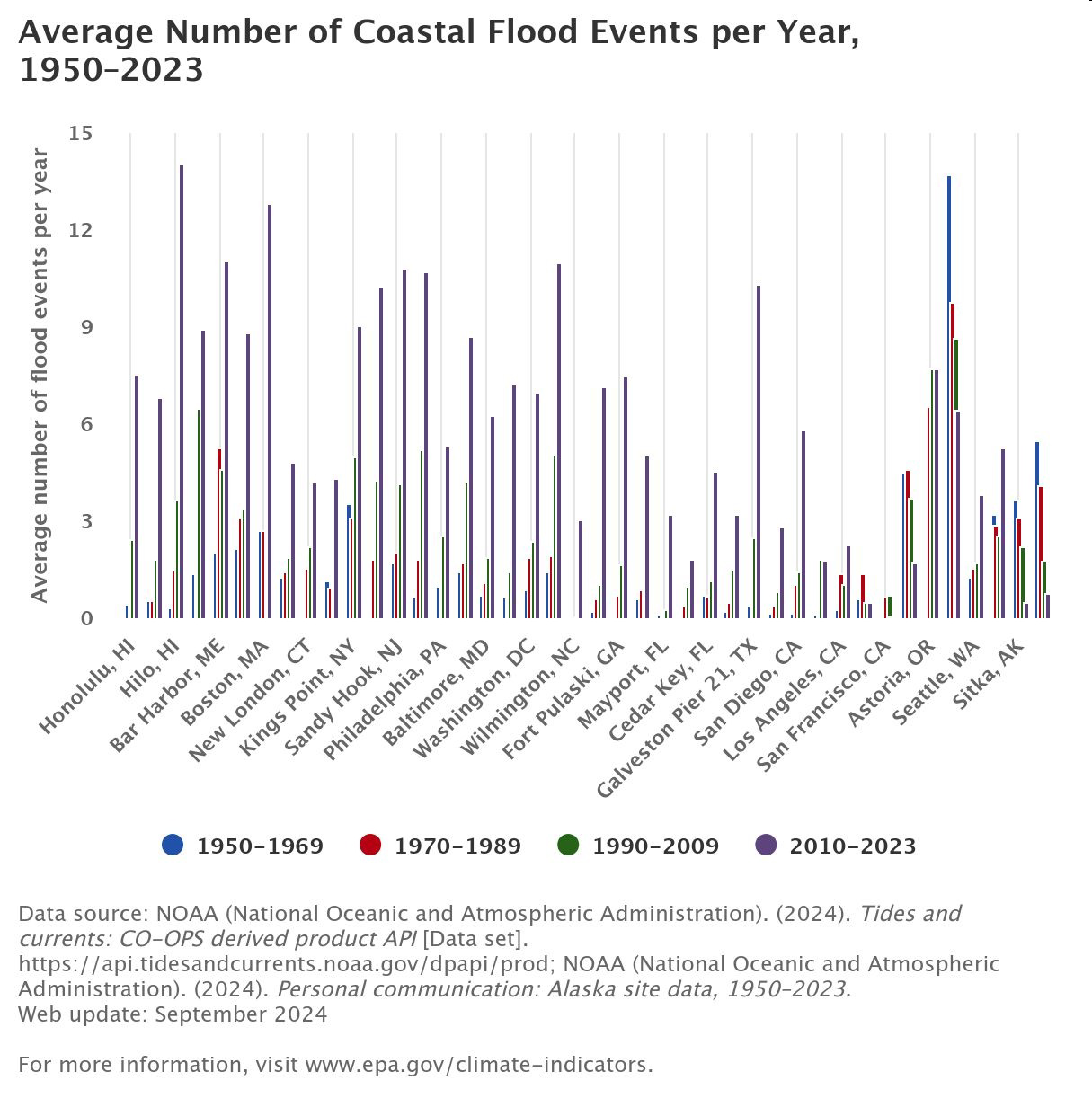
The average number of flood events per year has progressively accelerated across decades since 1950. The rate of increase of flood events per year is the largest at most locations in Hawai‘i and along the East and Gulf Coasts (Figure 2).
Flooding has increased less dramatically in places where relative sea level has not risen as quickly as it has elsewhere in the United States (as shown by the Sea Level indicator). Two sites in Alaska and three sites along the West Coast have experienced a decrease in coastal flooding (Figures 1 and 2), coinciding with decreasing relative sea level as the land itself is rising.
Background
Changing sea levels are affecting human activities in coastal areas. Rising sea level inundates low-lying wetlands and dry land, erodes shorelines, contributes to coastal flooding, and increases the flow of salt water into estuaries and nearby groundwater aquifers. Higher sea level also makes coastal infrastructure more vulnerable to damage from storms.
“Relative sea level change” refers to the height of the ocean relative to the land at a particular location. As relative sea level rises due to climate change, one of the most noticeable consequences is an increase in coastal flooding. Flooding typically occurs during seasonal high tides (“king tides”) and storms that push water toward the shore. In recent years, however, coastal cities are increasingly flooding on days with less extreme tides or little wind, even on sunny days. Floods are happening more often as rising sea level reduces the gap between average sea level and the height of the land. This type of tidal flooding is expected to increase in depth, frequency, and extent in the United States during this century.
Many coastal cities have defined “nuisance” flooding (also referred to as high tide flooding) thresholds. When water rises above this level, minor impacts from flooding typically occur in some streets, many storm drains become ineffective, and a coastal flood advisory may be issued. Recurrent coastal flooding can cause impacts such as frequent road closures, reduced stormwater drainage capacity, and deterioration of infrastructure not designed to withstand frequent inundation or exposure to salt water. These impacts are of particular concern because more than 40 percent of Americans live near the coast, and more than $1 trillion of property and structures is at risk. Coastal flooding can also affect human health - for example, by increasing the risk that wastewater infrastructure will fail, putting people at risk of being exposed to pathogens and harmful chemicals.
Graph of Information - Figure 1.
This map shows the average number of days per year in which coastal waters rose above a local threshold for flooding at 42 sites along U.S. coasts. Each small bar graph compares the first decade of widespread measurements (1950–1959 in orange) with the most recent decade
(2014–2023 in purple).
Graph of Information - Figure 2.
This graph shows the average number of days per year in which coastal waters rose above a local threshold for flooding at 42 sites along U.S. coasts. The data have been averaged over multi-year periods for comparison.