Heat Waves
Key Points
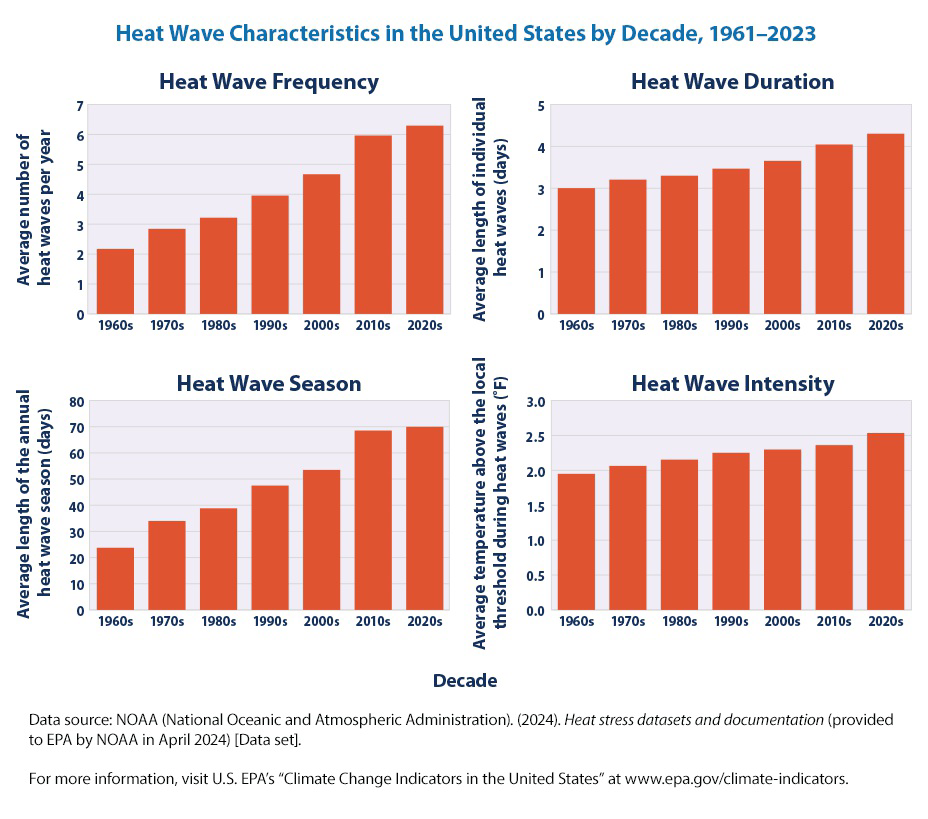
Heat waves are occurring more often than they used to in major cities across the United States. Their frequency has increased steadily, from an average of two heat waves per year during the 1960s to six per year during the 2010s and 2020s (Figure 1).
In recent years, the average heat wave in major U.S. urban areas has been about four days long. This is about a day longer than the average heat wave in the 1960s (Figure 1).
The average heat wave season across the 50 cities in this indicator is about 46 days longer now than it was in the 1960s (Figure 1). Timing can matter, as heat waves that occur earlier in the spring or later in the fall can catch people off-guard and increase exposure to the health risks associated with heat waves.
Heat waves have become more intense over time. During the 1960s, the average heat wave across the 50 cities in Figures 1 and 2 was 2.0oF above the local 85th percentile threshold. During the 2020s, the average heat wave has been 2.5oF above the local threshold (Figure 1).
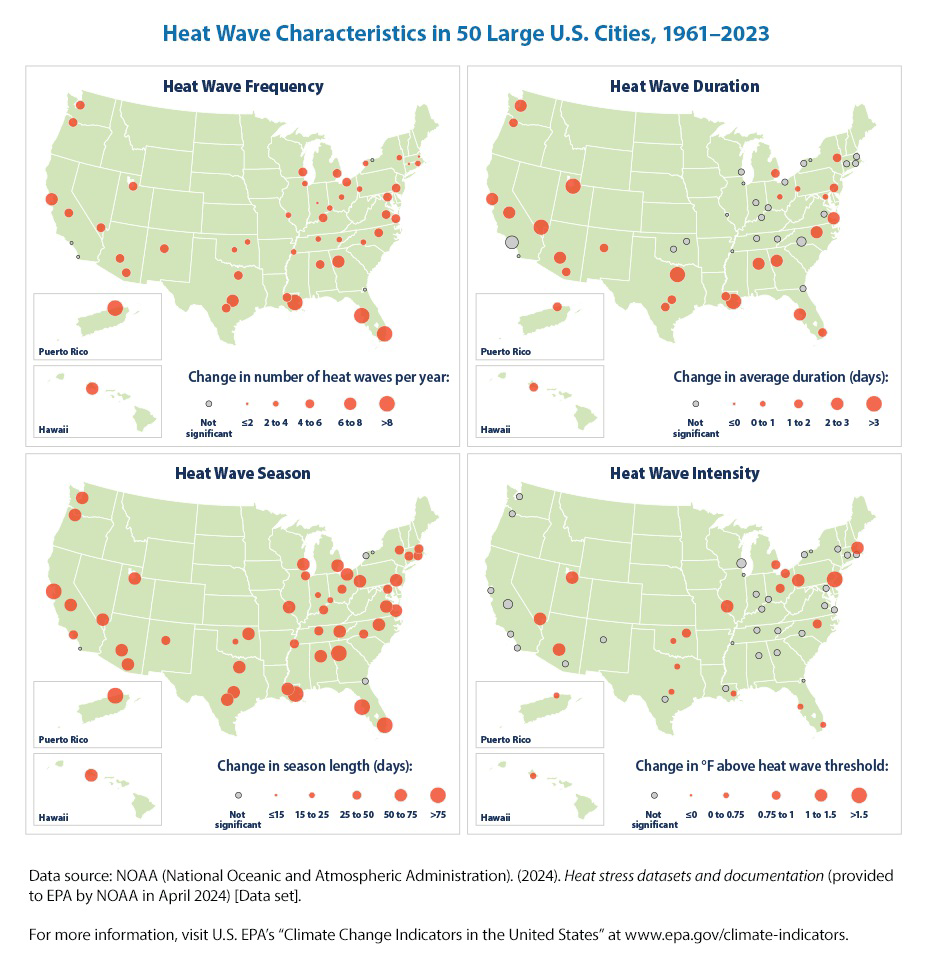
Of the 50 metropolitan areas in this indicator, 46 experienced a statistically significant increase in heat wave frequency between the 1960s and 2020s. Heat wave duration has increased significantly in 28 of these locations, the length of the heat wave season in 46, and intensity in 20 (Figure 2).
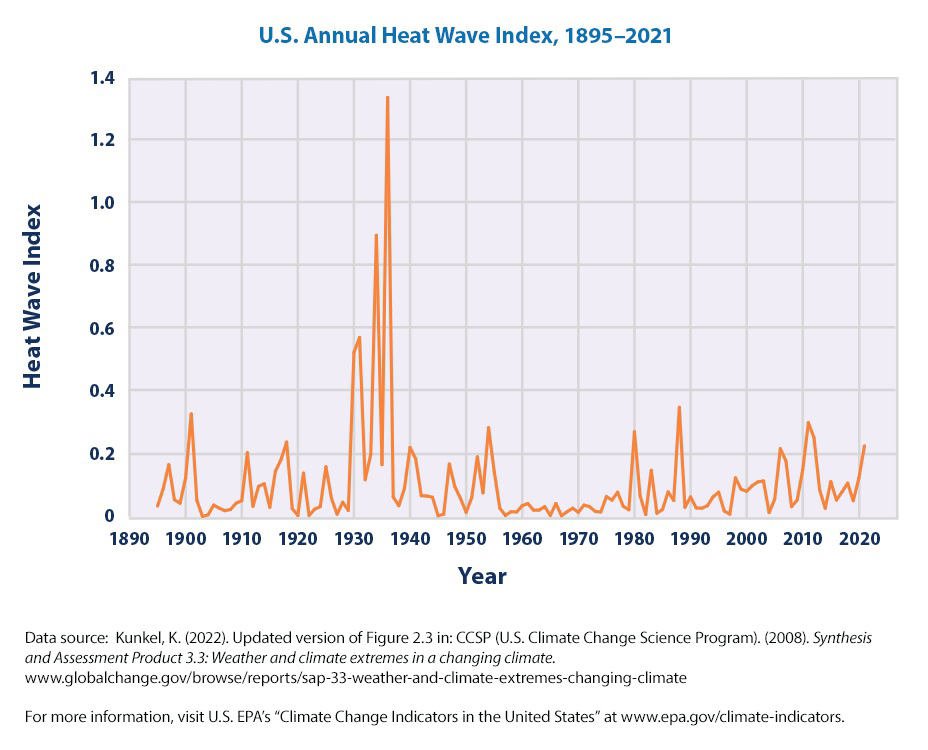
Longer-term records show that heat waves in the 1930s remain the most severe in recorded U.S. history (Figure 3). The spike in Figure 3 reflects extreme, persistent heat waves in the Great Plains region during a period known as the “Dust Bowl.” Poor land use practices and many years of intense drought contributed to these heat waves by depleting soil moisture and reducing the moderating effects of evaporation.
Background
A persistent period of unusually hot days is referred to as an extreme heat event or a heat wave. Heat waves are more than just uncomfortable: they can lead to illness and death, particularly among older adults, the very young, and other vulnerable populations. Prolonged exposure to excessive heat can lead to other impacts as well - for example, damaging crops, injuring or killing livestock, and increasing the risk of wildfires. Prolonged periods of extreme heat can lead to power outages as heavy demands for air conditioning strain the power grid.
Unusually hot days and heat wave events are a natural part of day-to-day variation in weather. As the Earth’s climate warms, however, hotter-than-usual days and nights are becoming more common and heat waves are expected to last longer and become more frequent and intense. Increases in these extreme heat events can lead to more heat-related illnesses and deaths, especially if people and communities do not take steps to adapt. Even small increases in extreme heat can result in increased deaths and illnesses.
Graph of Information - Figure 1.
This figure shows changes in the number of heat waves per year (frequency); the average length of heat waves in days (duration); the number of days between the first and last heat wave of the year (season length); and how hot the heat waves were, compared with the local temperature threshold for defining a heat wave (intensity). These data were analyzed from 1961 to 2023 for 50 large metropolitan areas. The graphs show averages across all 50 metropolitan areas by decade.
Graph of Information - Figure 2.
These maps show changes in the number of heat waves per year (frequency); the average length of heat waves in days (duration); the number of days between the first and last heat wave of the year (season length); and how hot the heat waves were, compared with the local temperature threshold for defining a heat wave (intensity). These data were analyzed from 1961 to 2023 for 50 large metropolitan areas. The size of each circle indicates the total change over the period measured. Solid-color circles represent cities where the trend was statistically significant.
Graph of Information - Figure 3.
This figure shows the annual values of the U.S. Heat Wave Index from 1895 to 2021. These data cover the contiguous 48 states. An index value of 0.2 (for example) could mean that 20 percent of the country experienced one heat wave, 10 percent of the country experienced two heat waves, or some other combination of frequency and area resulted in this value.