River Flooding
Key Points
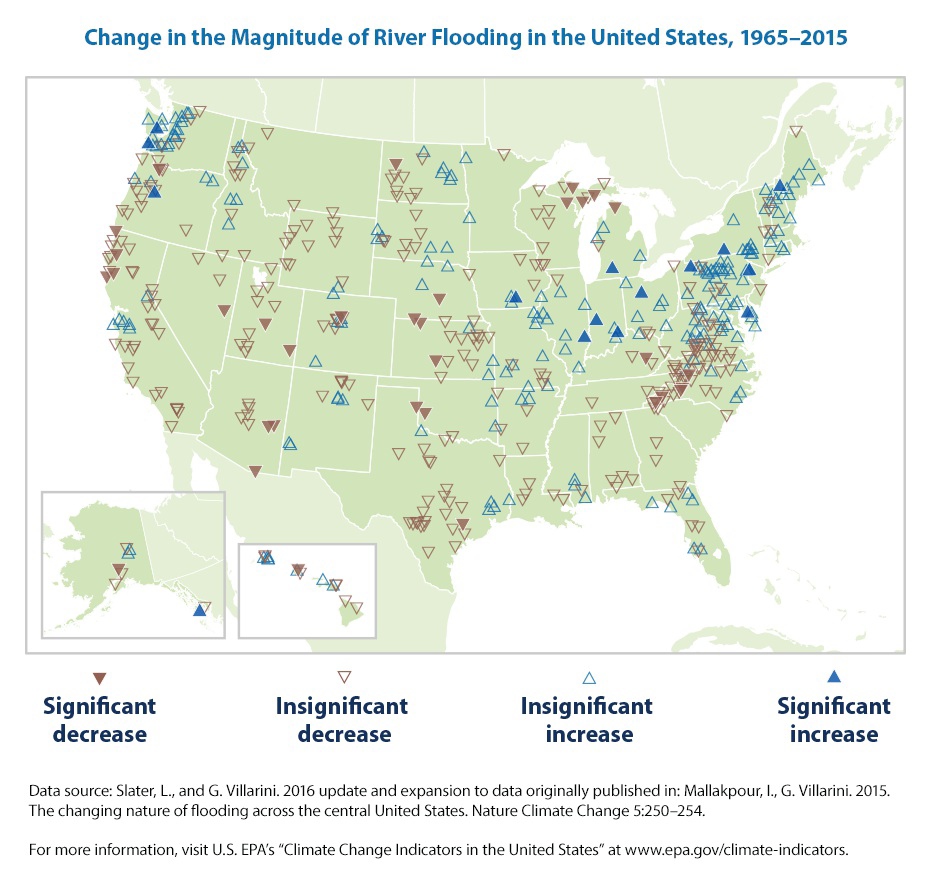
Floods have generally become larger in rivers and streams across large parts of the Northeast and Midwest. Flood magnitude has generally decreased in the West, southern Appalachia, and northern Michigan (see Figure 1).
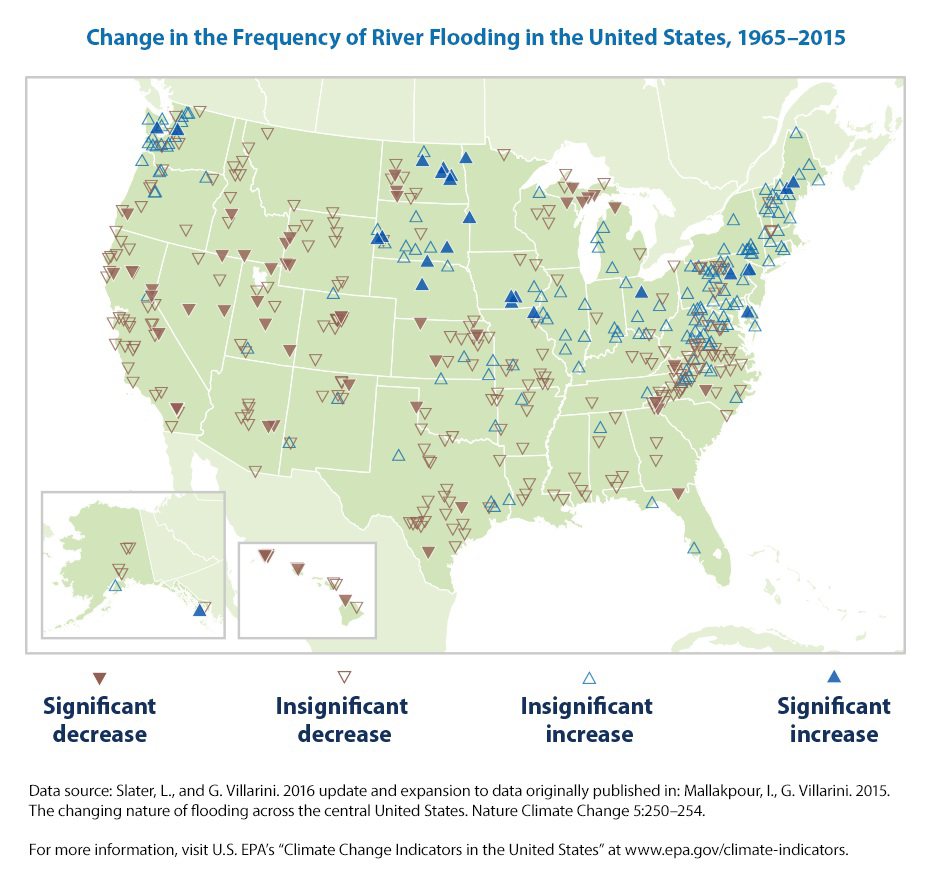
Large floods have become more frequent across the Northeast, Pacific Northwest, and northern Great Plains. Flood frequency has decreased in some other parts of the country, especially the Southwest and the Rockies (see Figure 2).
Increases and decreases in frequency and magnitude of river flood events generally coincide with increases and decreases in the frequency of heavy rainfall events.
Background
Rivers and streams experience flooding as a natural result of large rain storms or spring snowmelt that quickly drains into streams and rivers. Although the risk for flooding varies across the United States, most areas are susceptible to floods, even in dry and mountainous regions. The size, or magnitude, of flood events is influenced by how much water enters the waterway upstream - and how quickly. Flood frequency largely depends on the frequency of weather events.
Large flood events can damage homes, roads, bridges, and other infrastructure; wipe out farmers’ crops; and harm or displace people. Although regular flooding helps to maintain the nutrient balance of soils in the flood plain, larger or more frequent floods could disrupt ecosystems by displacing aquatic life, impairing water quality, and increasing soil erosion. By inundating water treatment systems with sediment and contaminants, and promoting the growth of harmful microbes, floods can directly affect the water supplies that communities depend on.
Climate change may cause river floods to become larger or more frequent than they used to be in some places, yet become smaller and less frequent in other places. As warmer temperatures cause more water to evaporate from the land and oceans, changes in the size and frequency of heavy precipitation events may in turn affect the size and frequency of river flooding. Changes in streamflow, the timing of snowmelt, and the amount of snowpack that accumulates in the winter can also affect flood patterns.
Graph of Information - Figure 1.
This figure shows changes in the size of flooding events in rivers and streams in the United States between 1965 and 2015. Blue upward-pointing symbols show locations where floods have become larger; brown downward-pointing symbols show locations where floods have become smaller. The larger, solid-color symbols represent stations where the change was statistically significant.
Graph of Information - Figure 2.
This figure shows changes in the frequency of flooding events in rivers and streams in the United States between 1965 and 2015. Blue upward-pointing symbols show locations where floods have become more frequent; brown downward-pointing symbols show locations where floods have become less frequent. The larger, solid-color symbols represent stations where the change was statistically significant.