Freeze-Thaw Conditions
Key Points
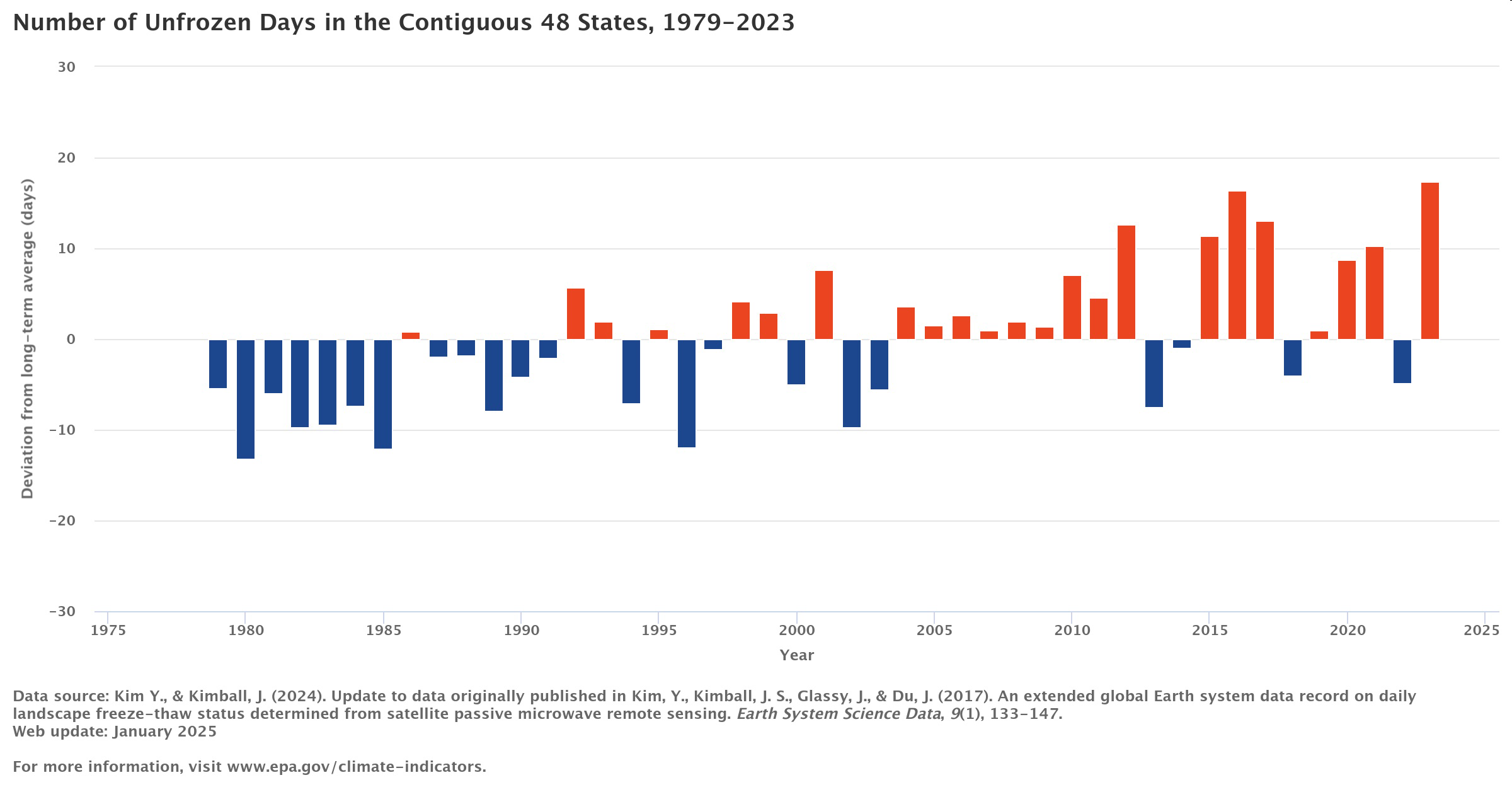
Within the contiguous 48 states, 2023 had 17 more unfrozen days than the long-term average (1979–2023). Six of the 10 least frozen years on record have all occurred within the last decade. The number of unfrozen days in the contiguous 48 states has increased at an average rate of about four days per decade (Figure 1).
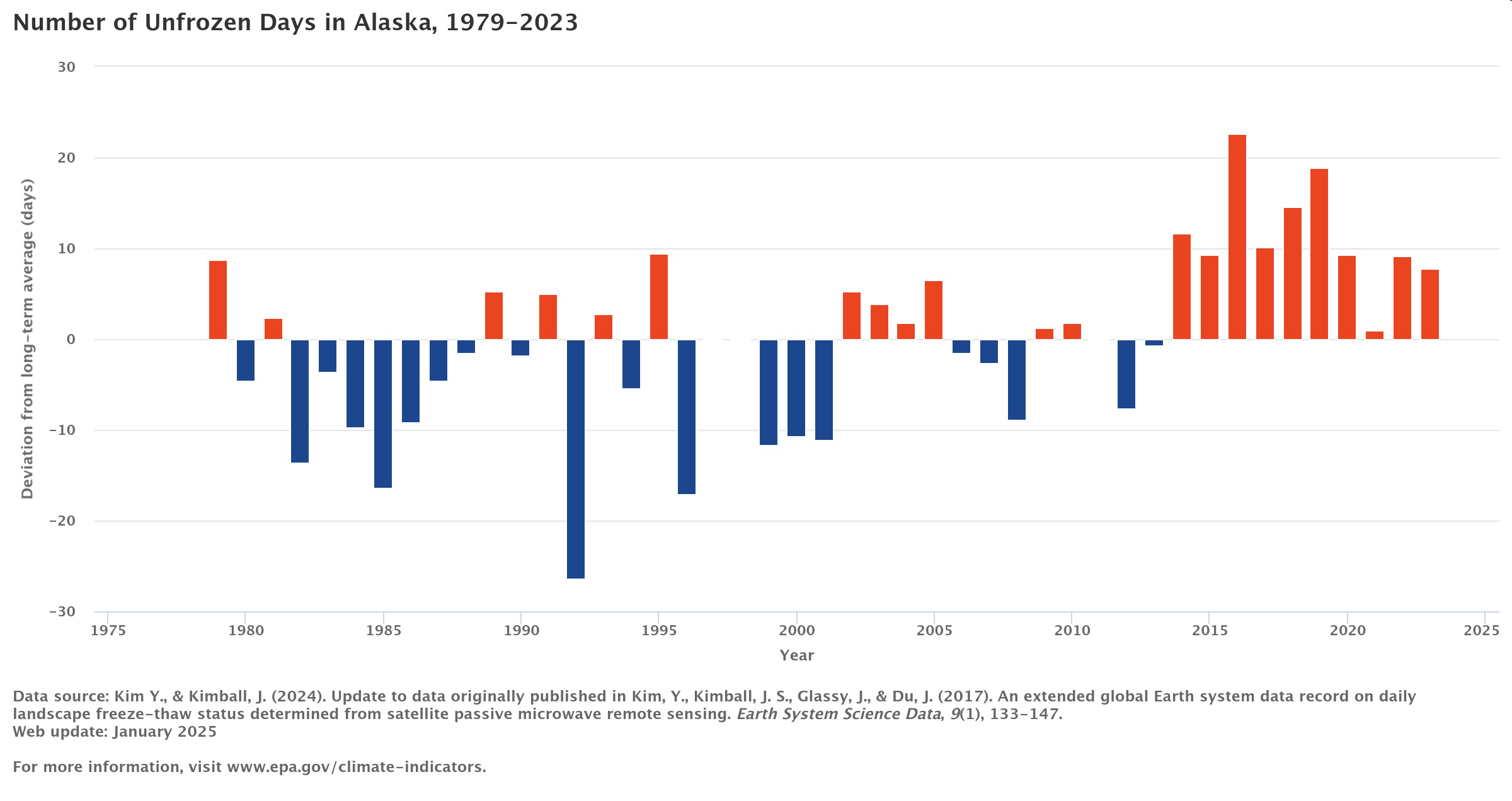
Alaska’s unfrozen days have increased at an average rate of about four days per decade (Figure 2). Eight of the 10 least frozen years on record in Alaska have all occurred within the last decade.
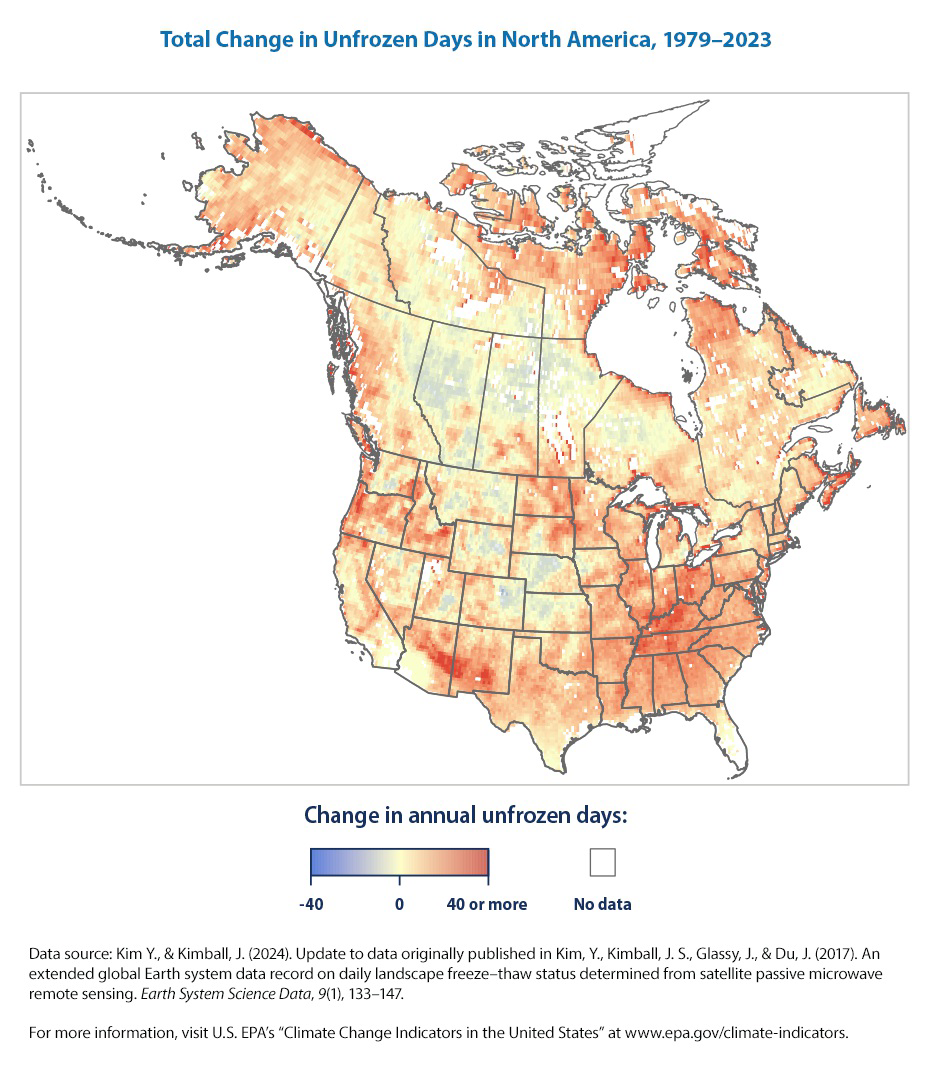
Across North America, the number of unfrozen days in a year has increased since 1979, but trends vary widely with broad-scale regional patterns (Figure 3). Within the United States, the number of unfrozen days per year has increased the most in parts of the West, Mid-South, and North Central states. Parts of Alaska and northern Canada have also seen a sizable increase in unfrozen conditions. Conversely, some areas in the U.S. and Canadian interior have experienced a long-term increase in frozen conditions.
Background
The freezing point (32°F) is a critical temperature threshold for many aspects of life. The number and timing of days with temperatures below freezing affect ecosystems and many sectors of the economy. For example, many crops only grow during periods when they are not limited by frost damage.
The number of days below freezing during a year determines which plants can thrive, what food sources are available for animals, and when and how animals migrate or hibernate. Freezing temperatures also help reduce populations of certain insects and other pests that can damage crops and forests or spread diseases to humans; conversely, a mild winter with fewer days of frost can lead to more of these pests during the following spring and summer. Temperatures below freezing also allow precipitation to fall as snow rather than rain, which is important for regional water supplies and for places where winter activities, like skiing and snowmobiling, are an important part of the economy. Regional temperature conditions also drive the freezing and thawing of lakes and rivers.
As the Earth’s climate warms overall (see the U.S. and Global Temperature indicator), the number of days below freezing has decreased in most parts of the United States. Continued reduction in frozen days could lead to a variety of effects on ecosystems, drought, wildfire risk, agriculture, natural resources, and the economy.
Graph of Information - Figure 1.
This figure shows the number of days the ground is considered unfrozen in the contiguous 48 states compared with the 1979–2023 average. For each year, the bar represents the number of days shorter or longer than average. Positive numbers represent years with more unfrozen days
than average. Choosing a different long-term average for comparison would not change the shape of the data over time.
Graph of Information - Figure 2.
This figure shows the number of days the ground is considered unfrozen in Alaska compared with the 1979–2023 average. For each year, the bar represents the number of days shorter or longer than average.
Positive numbers represent years with more unfrozen days than average. Choosing a different long-term average
for comparison would not change the shape of the data over time.
Graph of Information - Figure 3.
This map of North America shows where the number of annual unfrozen days either increased or decreased from 1979 to 2023. Colors show total change over this 44-year period, based on the long-term average rate of change. White areas were not included in this analysis because they are either open water, barren land,
permanently frozen (glaciers, for example), or land that almost never freezes.