Scientific Investigation February 2026 SOL Review Quick Check
star
star
star
star
star
Last updated 5 months ago
10 Nsɛmmisa
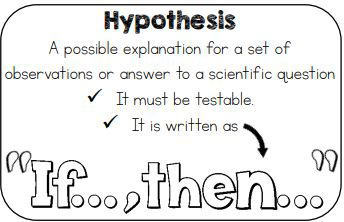
Scientific investigation is all about exploring questions and finding answers by thinking like a scientist. When scientists investigate, they use skills like observing (noticing details with their senses), making inferences (drawing conclusions based on what they see), and predicting (making educated guesses about what might happen). They also follow steps known as the scientific method, which helps them keep their experiments organized and fair.

the IV…
the DV…
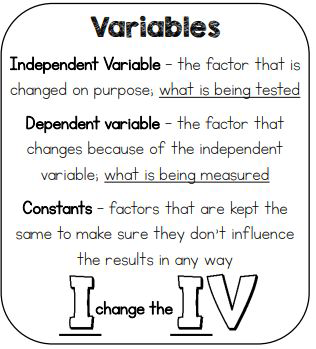
What I change.
The data we collect!
What I keep the same.
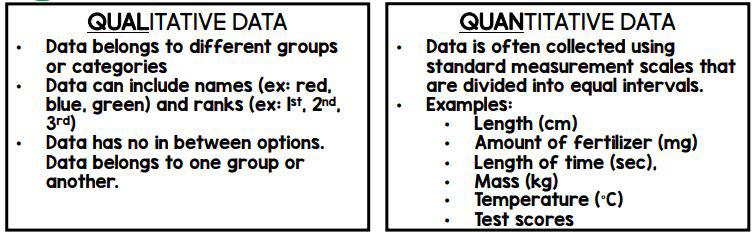
Qualities or how things look.

Quantities or numbers
Your memory strategy goes here:
Match the variable type to its definition.
| Draggable item | arrow_right_alt | Corresponding Item |
|---|---|---|
Dependent variable | arrow_right_alt | What I keep the same throughout testing. |
Independent variable | arrow_right_alt | The data we collect from changes. |
Controlled variables | arrow_right_alt | What I change in the experiment. |
Scientists collect data using the International System of Units (SI), a.k.a. the metric system. This table summarizes important facts about measuring with SI units.
Measurement | SI Unit | Abbreviation | Measuring Instrument |
|---|---|---|---|
length | meter | m | Metric ruler |
mass | gram | g | Balance (triple beam balance or electronic) |
volume (liquid) | liter | L | Graduated cylinder |
volume (solid) | Centimeter cubed | cm | Ruler or graduated cylinder |
density | Grams per centimeter cubed | g/cm | Balance and measuring device for volume |
weight | Newton | N | Spring scale |
temperature | Degrees Celsius or Kelvin | Thermometer | |
time | second | Sec or s | Clock or stopwatch |
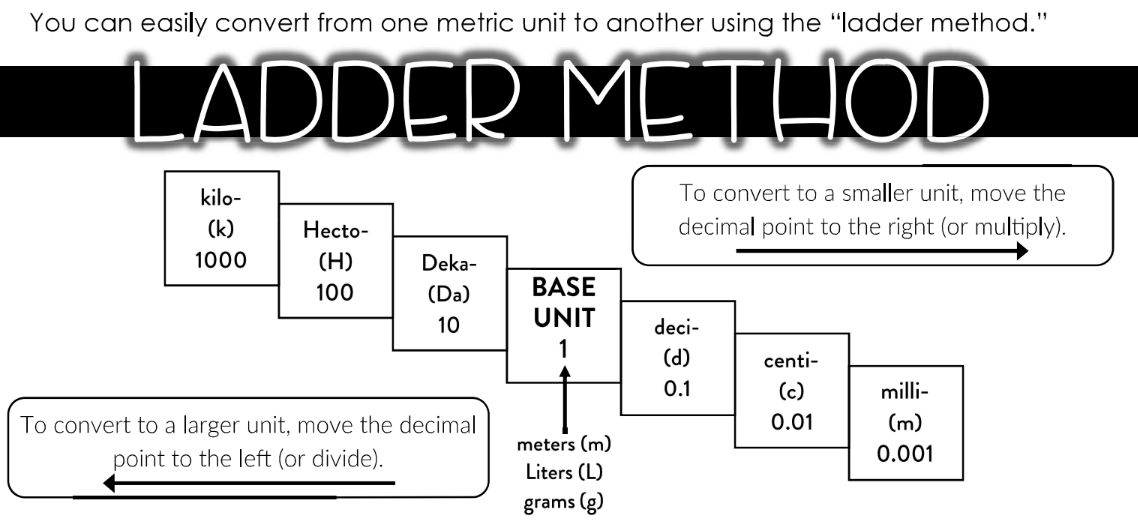
You can easily convert from one metric unit to another using the “ladder method.”
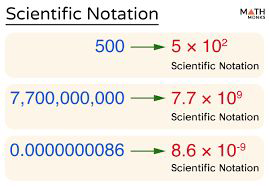
Scientific notation is an easy way to write and compare very large and very small numbers, including measurements.
Match each SI unit to its corresponding measuring instrument.
| Draggable item | arrow_right_alt | Corresponding Item |
|---|---|---|
meter | arrow_right_alt | Graduated cylinder |
gram | arrow_right_alt | Metric ruler |
liter | arrow_right_alt | Balance |
What is the purpose of the scientific method?
What is an inference?
Which type of data describes qualities or appearance?
Match the terms to their descriptions.
| Draggable item | arrow_right_alt | Corresponding Item |
|---|---|---|
Hypothesis | arrow_right_alt | Qualities or how things look in observation. |
Quantitative data | arrow_right_alt | An educated guess about the experiment's results. |
Qualitative data | arrow_right_alt | Quantities or numbers collected during experimentation. |
Match the investigation steps to their purposes.
| Draggable item | arrow_right_alt | Corresponding Item |
|---|---|---|
Making inferences | arrow_right_alt | Noticing details with senses for investigation. |
Predicting | arrow_right_alt | Drawing conclusions based on observations made. |
Making observations | arrow_right_alt | Guessing what might happen in the experiment. |
Match each measurement type to its correct SI unit.
| Draggable item | arrow_right_alt | Corresponding Item |
|---|---|---|
volume (solid) | arrow_right_alt | Degrees Celsius |
weight | arrow_right_alt | Centimeter cubed |
temperature | arrow_right_alt | Newton |
Match each unit abbreviation to its actual measurement type.
| Draggable item | arrow_right_alt | Corresponding Item |
|---|---|---|
L | arrow_right_alt | time |
s | arrow_right_alt | mass |
g | arrow_right_alt | volume (liquid) |
Identify the numbers given in scientific notation: