Environmental and Genetic Factors in Growth
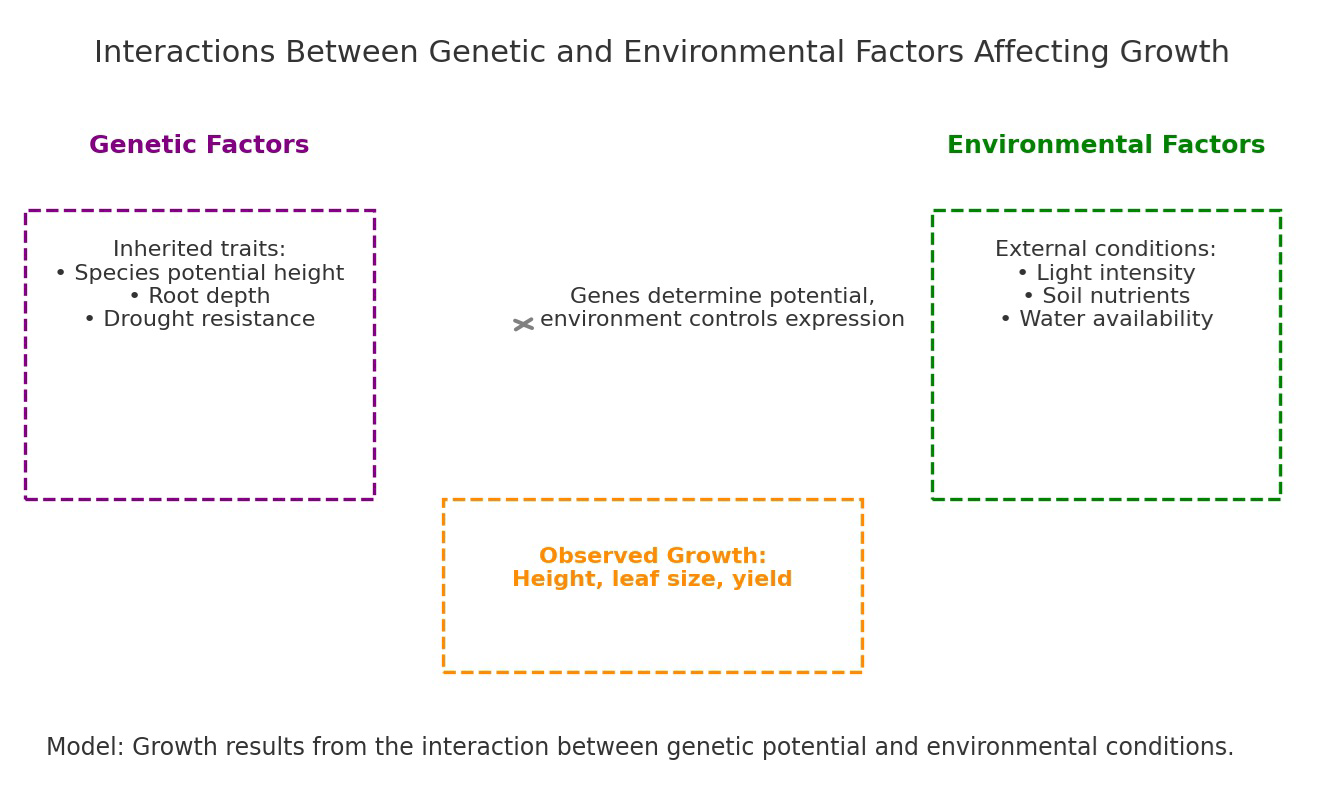
All organisms grow and develop as a result of two main influences: genetic factors and environmental factors. Genes, inherited from parent organisms, provide the instructions that determine potential traits such as height, leaf size, or body mass. However, the environment determines how much of that genetic potential is realized.
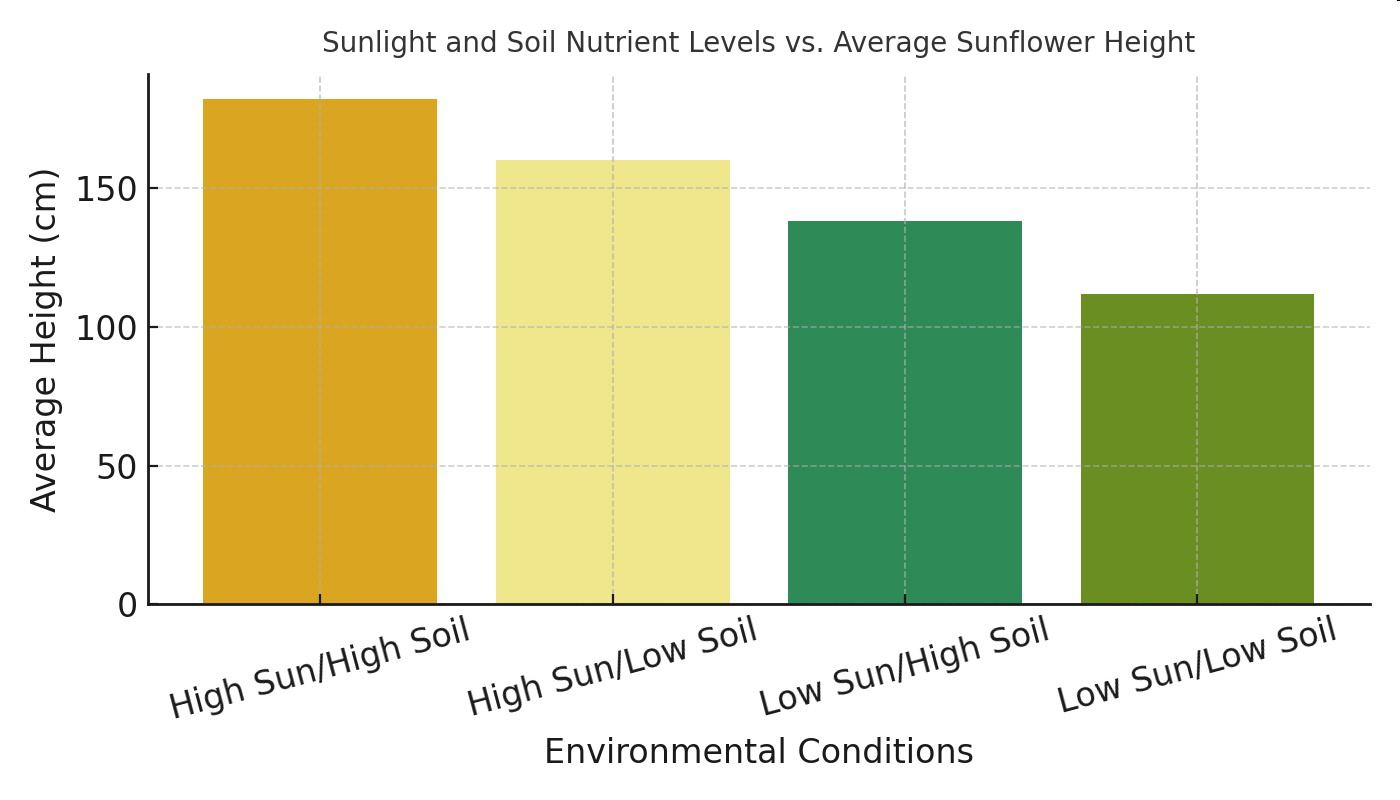
In plants, genes may control maximum height or flowering time, but environmental factors like light, water, and nutrients determine whether those traits are expressed fully. For example, two sunflower plants may share identical genes for height. If one grows in full sunlight with rich soil, it may reach 180 cm, while another shaded by a tree might grow only 120 cm. The genetic code provides the “blueprint,” but the environment supplies the “building materials.”
Similarly, in animals, genetic factors control body size and metabolism, but environmental conditions - such as diet, temperature, and stress - influence how those genes function. Studies on fish and amphibians show that populations in colder environments grow more slowly even when they share the same genes as those in warmer habitats. This is because lower temperatures reduce metabolic activity and nutrient absorption.
Modern experiments in agriculture show how these two influences interact. Scientists grow genetically identical plants (called clones) under different conditions to observe the effects of light, soil, and nutrients. Results consistently show that environmental variation can cause up to 40% differences in growth even when genetics are constant. Conversely, selectively bred varieties - such as drought-resistant corn or high-yield wheat - perform better under stress because of favorable genetic traits.
Understanding this balance between genes and environment helps us explain why no two organisms are exactly alike. Even identical twins or clones can differ in size and appearance due to environmental influences after birth. Together, genetic inheritance and environmental factors form a dynamic system that determines how organisms grow and thrive.

Graph of Information - Figure 1.

Graph of Information - Figure 2.
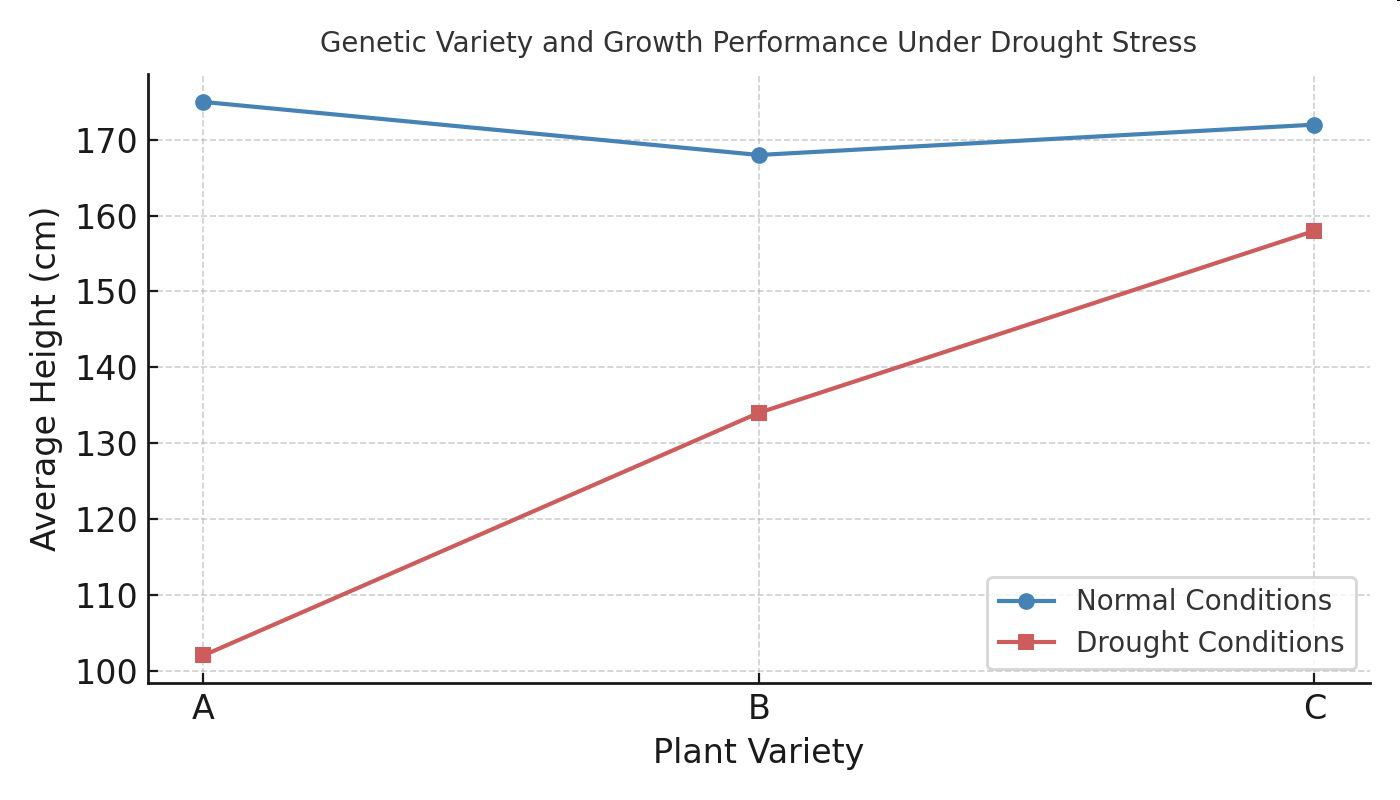
Figure 3.