Migration and Spawning
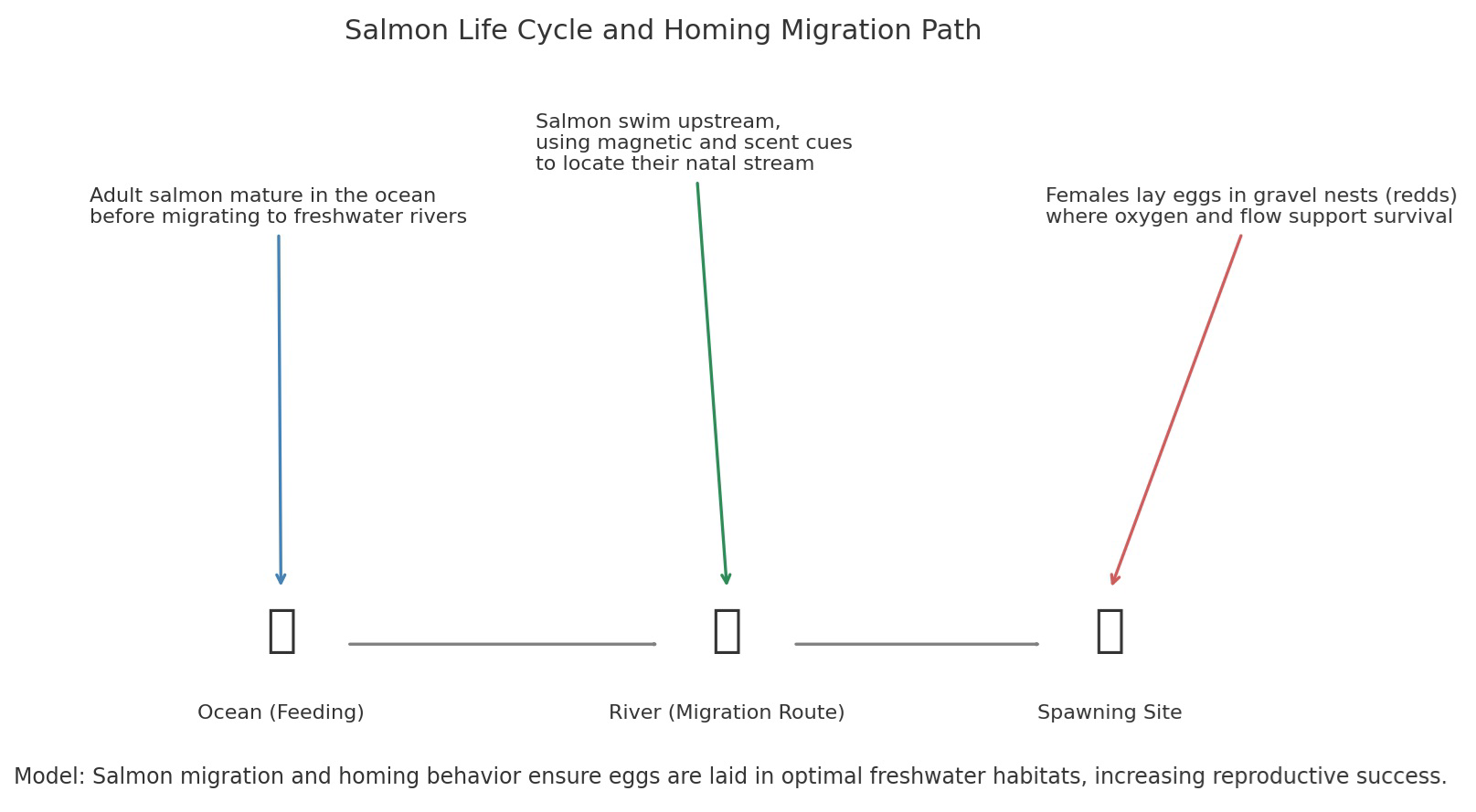
Salmon are born in freshwater rivers and streams, where oxygen levels are high and predators are few. After hatching, juvenile salmon - called fry - feed and grow before migrating downstream to the ocean. There, they spend several years maturing before returning to freshwater to spawn. The journey back is often long and dangerous, requiring salmon to swim against strong currents, leap over waterfalls, and avoid predators like bears and eagles.
What makes this behavior extraordinary is the precision with which salmon return to their birthplace. Each fish uses a combination of environmental cues - the Earth's magnetic field, the angle of the sun, and especially chemical scent cues from the water - to navigate. Scientists discovered that salmon imprint on the chemical "signature" of their home stream as fry. Years later, when it's time to spawn, they follow that unique scent trail upstream with remarkable accuracy - often returning to within a few meters of where they hatched.
This homing behavior greatly increases reproductive success. Because the parent salmon survived and thrived in that specific stream, it's likely to offer the right temperature, oxygen levels, and gravel conditions for eggs to develop. By returning to the same habitat, salmon give their offspring the best chance to survive.
However, this migration carries risks. Obstacles like dams, low water levels, or pollution can block the journey or reduce egg survival. To conserve salmon populations, engineers design fish ladders and restoration channels that help fish complete their migration successfully.
Field research shows a clear pattern: populations that maintain homing behavior have higher egg survival and stronger population recovery after disturbances. This evidence shows how a specialized behavior, shaped by evolution, can sustain an entire species' reproductive success.

Graph of Information - Figure 1.
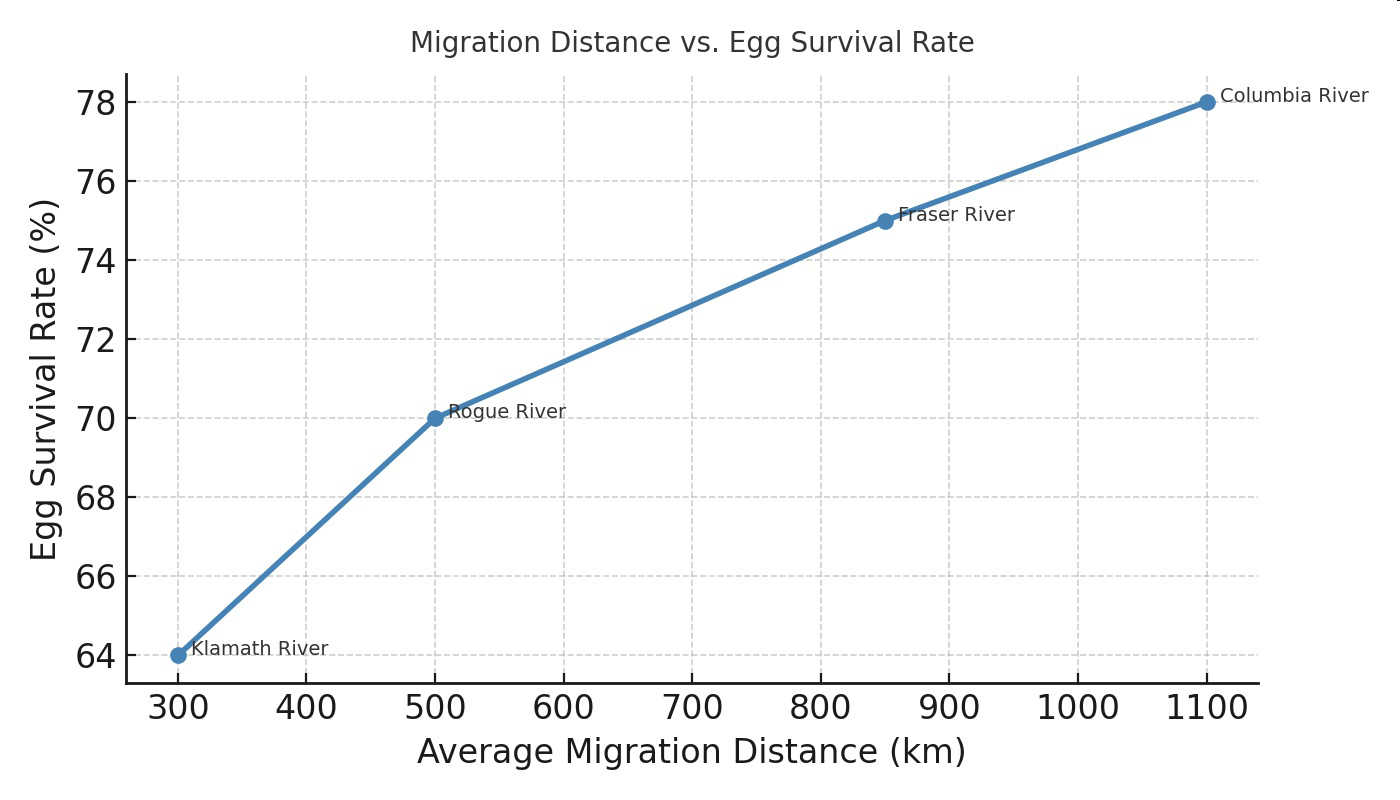

Graph of Information - Figure 2.
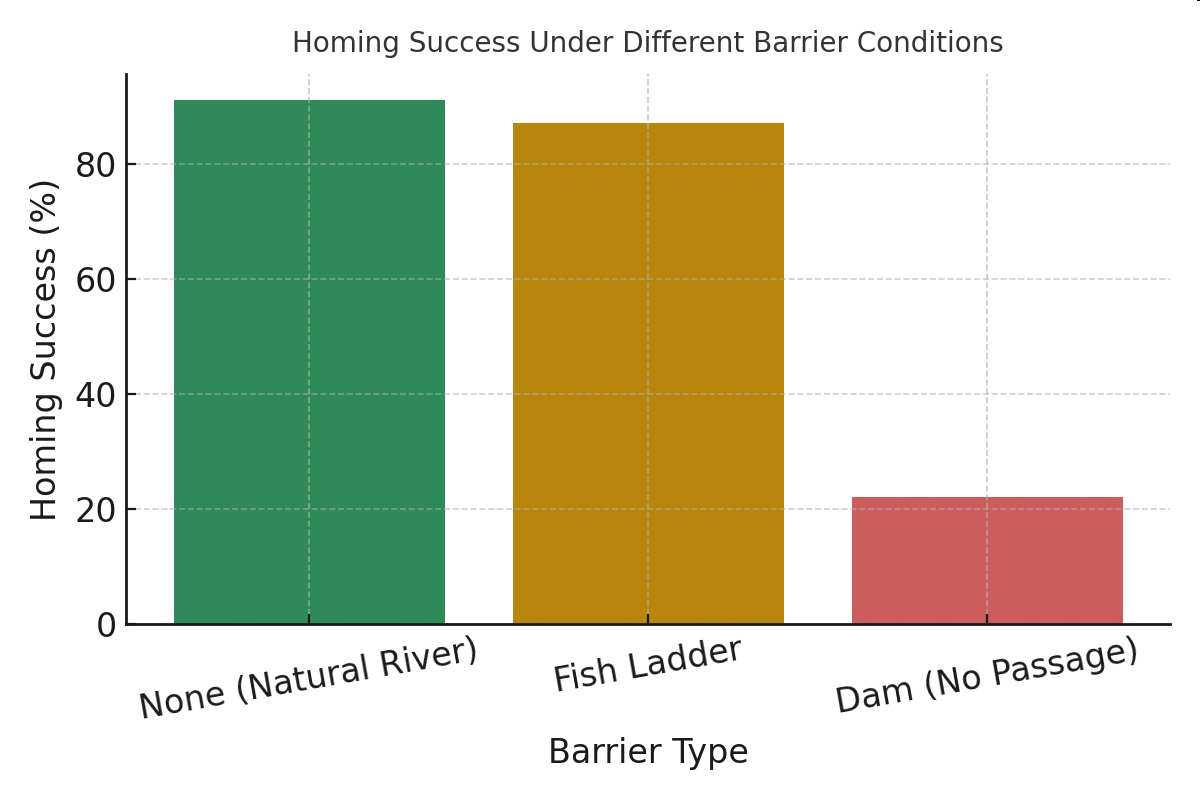
Figure 3.