Cloning and Conservation
Cloning is the process of creating a new organism with the exact same DNA as an existing one. While this might sound like science fiction, it’s already being used in conservation biology to save endangered species.
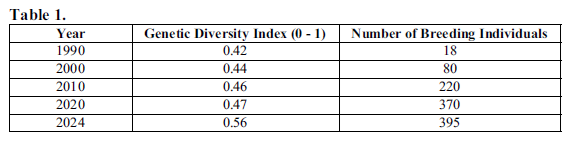
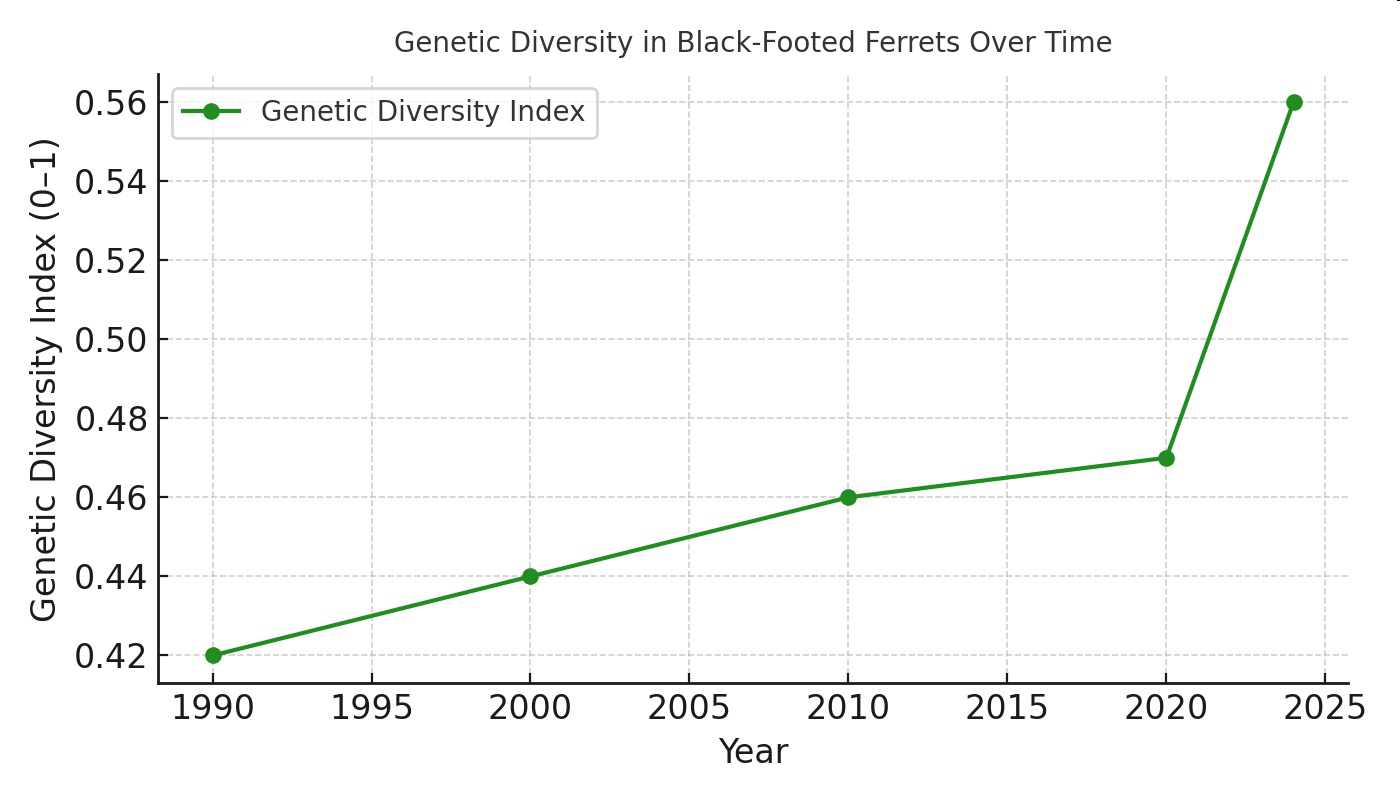
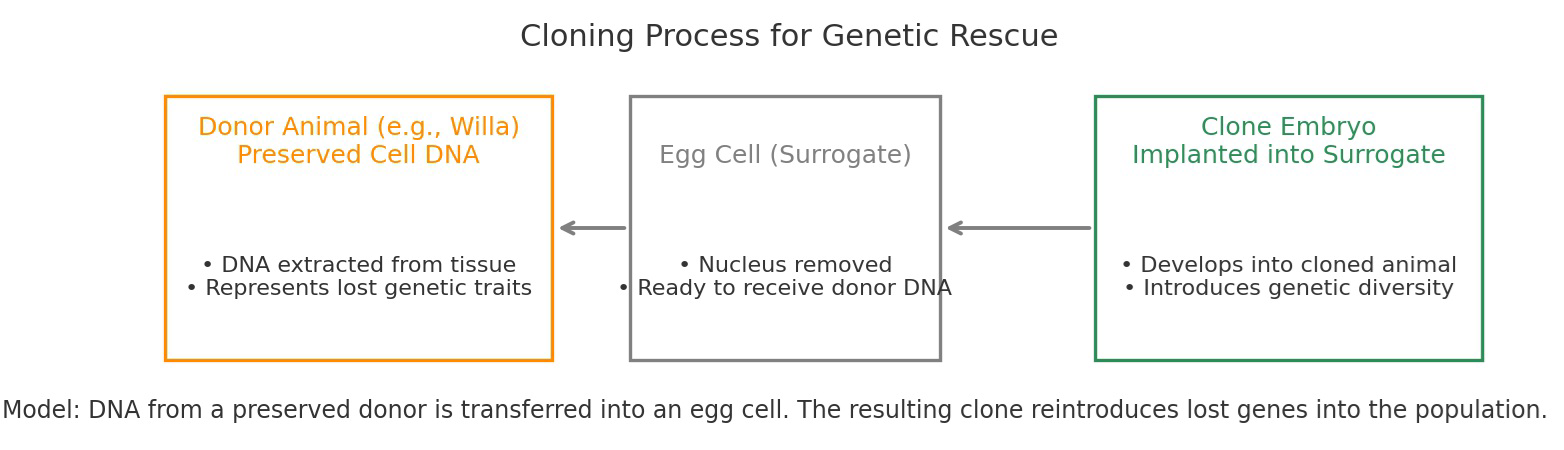
The black-footed ferret was believed extinct until a few survivors were found in the 1980s. All living ferrets descended from only seven individuals, meaning they shared nearly identical genes - a risky situation for long-term survival. To increase diversity, scientists used frozen skin cells from a female ferret named Willa, who had no living descendants. Using somatic cell nuclear transfer (the same method used for Dolly the sheep), Willa’s DNA was inserted into an egg cell from another ferret, creating a clone named Elizabeth Ann. Born in 2020, Elizabeth Ann represents genes that had vanished from the population for over 30 years.
This process is part of a growing field called genetic rescue. By introducing DNA from preserved or related individuals, scientists can increase the genetic diversity index of a species, improving disease resistance and reproduction success. Similar techniques are being explored with the Przewalski’s horse, northern white rhino, and even extinct species like the woolly mammoth using ancient DNA.
Although cloning can’t solve habitat loss or poaching, it shows how humans can now use biotechnology not only to modify inheritance but also to restore it - reintroducing traits that nature lost.
Ethical debates continue, but many conservation biologists see cloning as one of the few remaining tools to protect species on the edge of extinction.