Courtship Displays in Birds
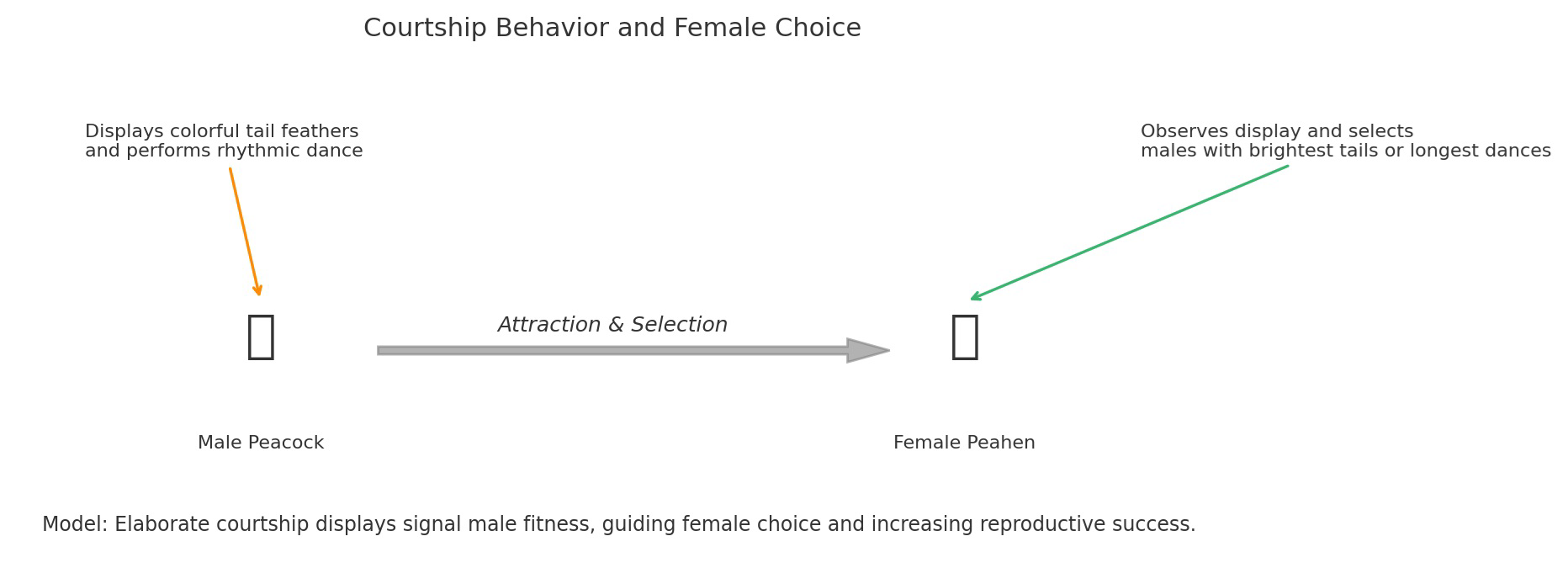
Across the bird world, courtship is a finely tuned balance between attracting mates and avoiding predators. Peacocks fan out iridescent tail feathers that shimmer in the sunlight, sage grouse inflate air sacs to produce deep “booming” calls, and hummingbirds perform mid-air dives that whistle through tail feathers. These displays require energy and precision - but males that perform them most effectively often secure the most mates.
Scientists describe this relationship using sexual selection, a process first proposed by Charles Darwin. While natural selection favors traits that improve survival, sexual selection favors traits that improve mating success. In many bird species, females choose mates based on specific display features - bright plumage, loud songs, or complex dances - which indicate good health or strong genes. For instance, peahens often prefer males with longer, more symmetrical tail feathers, while female zebra finches prefer males with more frequent, higher-pitched songs.
Researchers measure these effects by observing courtship rate and success. In field studies of sage grouse in Wyoming, males that performed more “struts” per hour and maintained larger display territories attracted more females. Similarly, experiments with peacocks show that removing tail eyespots reduces mating success by more than half. These patterns show that elaborate displays function as honest signals of fitness - traits too costly to fake.
However, showy displays come with trade-offs. Bright feathers or loud calls can draw the attention of predators, and the energy used for display can reduce foraging or immune defense. This balance keeps courtship behavior stable within species - only individuals fit enough to survive these costs can afford to perform elaborate displays.
The connection between behavior and reproduction provides strong evidence that sexual selection drives the evolution of mating strategies. Courtship displays may vary by species, but they share a common purpose: increasing the probability of reproductive success.


Graph of Information - Figure 1.
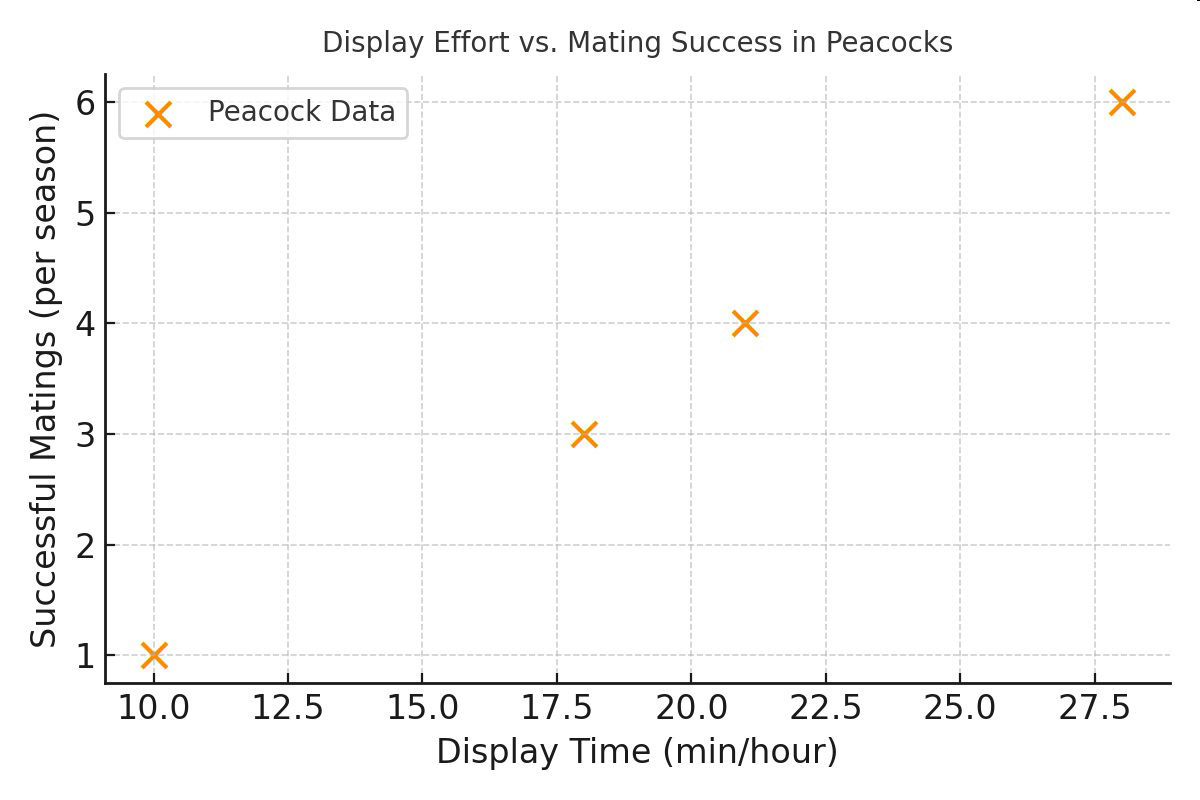
Graph of Information - Figure 2.
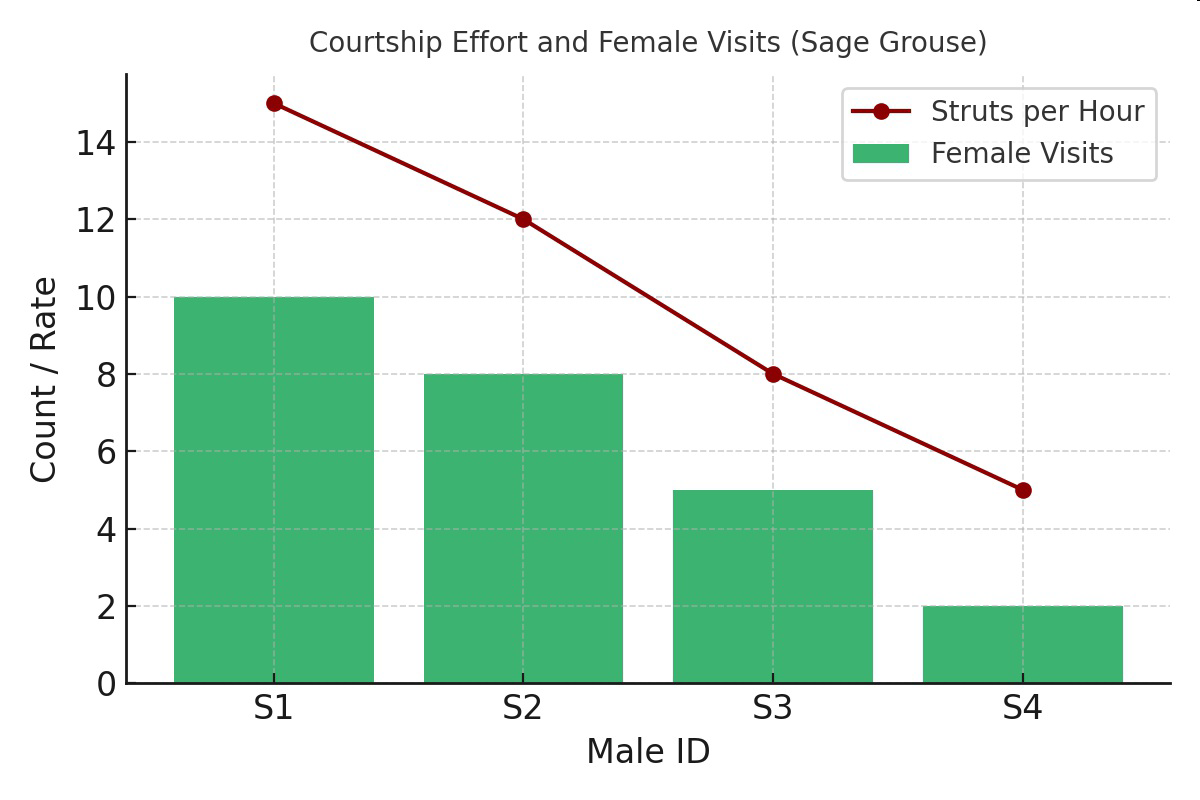
Figure 3.