Gene Editing in Medicine
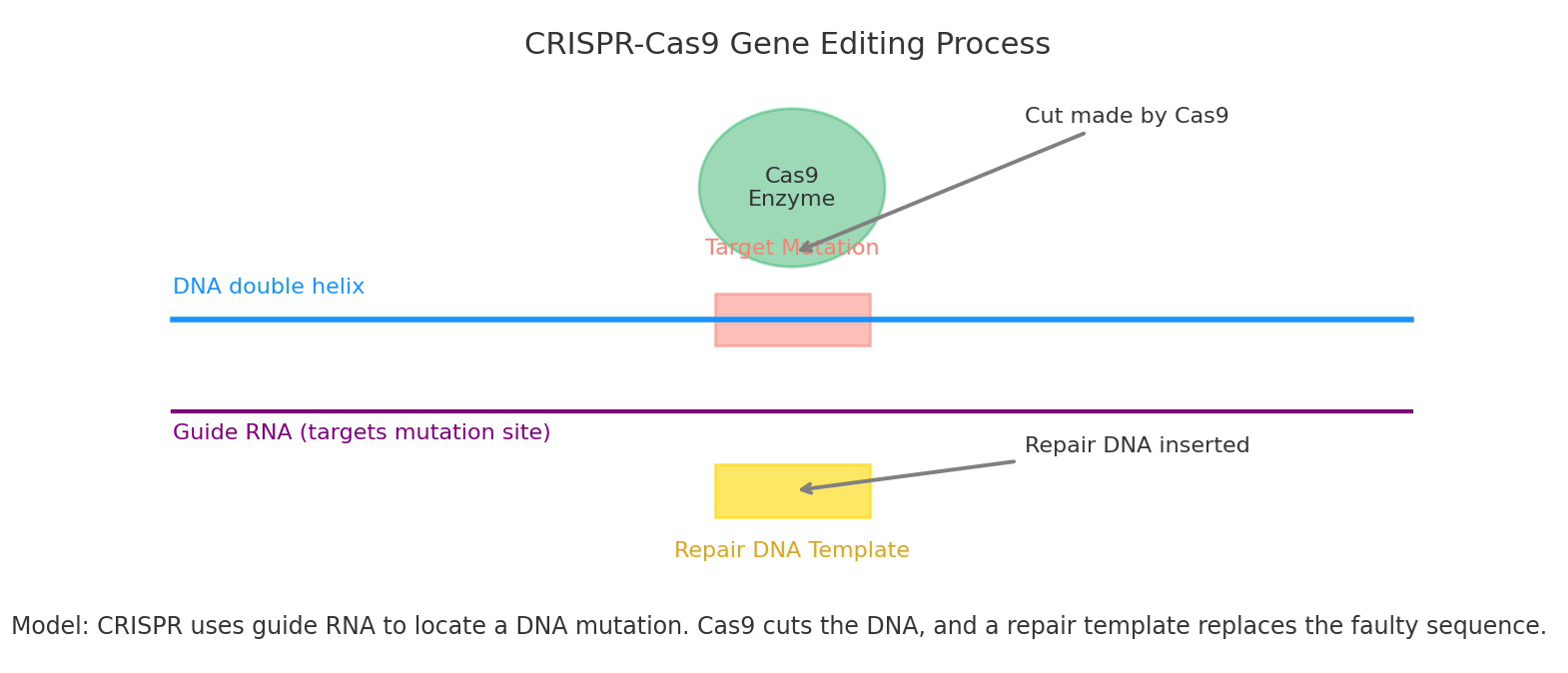
CRISPR-Cas9 is a revolutionary gene-editing tool that allows scientists to make precise changes to DNA inside living cells. The name CRISPR stands for “Clustered Regularly Interspaced Short Palindromic Repeats,” a system originally found in bacteria that helps defend against viruses. Scientists adapted this system to find and cut DNA at specific locations, just like molecular scissors.
In genetic disorders like sickle cell anemia, a single change in the DNA code causes the body to produce abnormal hemoglobin. This mutation makes red blood cells stiff and curved, leading to pain, fatigue, and organ damage. With CRISPR, scientists can target this specific mutation, cut the faulty DNA, and guide the cell to repair it with a normal sequence.
In clinical trials, stem cells from patients with sickle cell disease were removed, edited using CRISPR, and then returned to their bodies. The edited cells began producing healthy red blood cells, dramatically reducing symptoms. Because the corrected gene becomes part of the patient’s own DNA, the new, healthy trait is inherited by all future blood cells that come from those edited stem cells.
While CRISPR offers life-changing potential, it also raises ethical questions about how far humans should go in controlling genetic inheritance. Should it be used only to cure disease, or could it also enhance traits like intelligence or athletic ability? Scientists and policymakers are now working to establish guidelines that balance medical progress with responsibility.
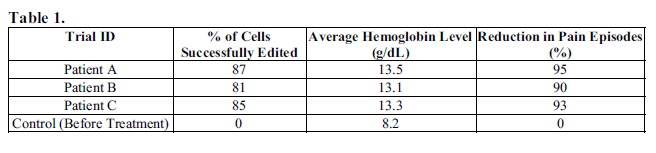
Graph of Information - Figure 1.
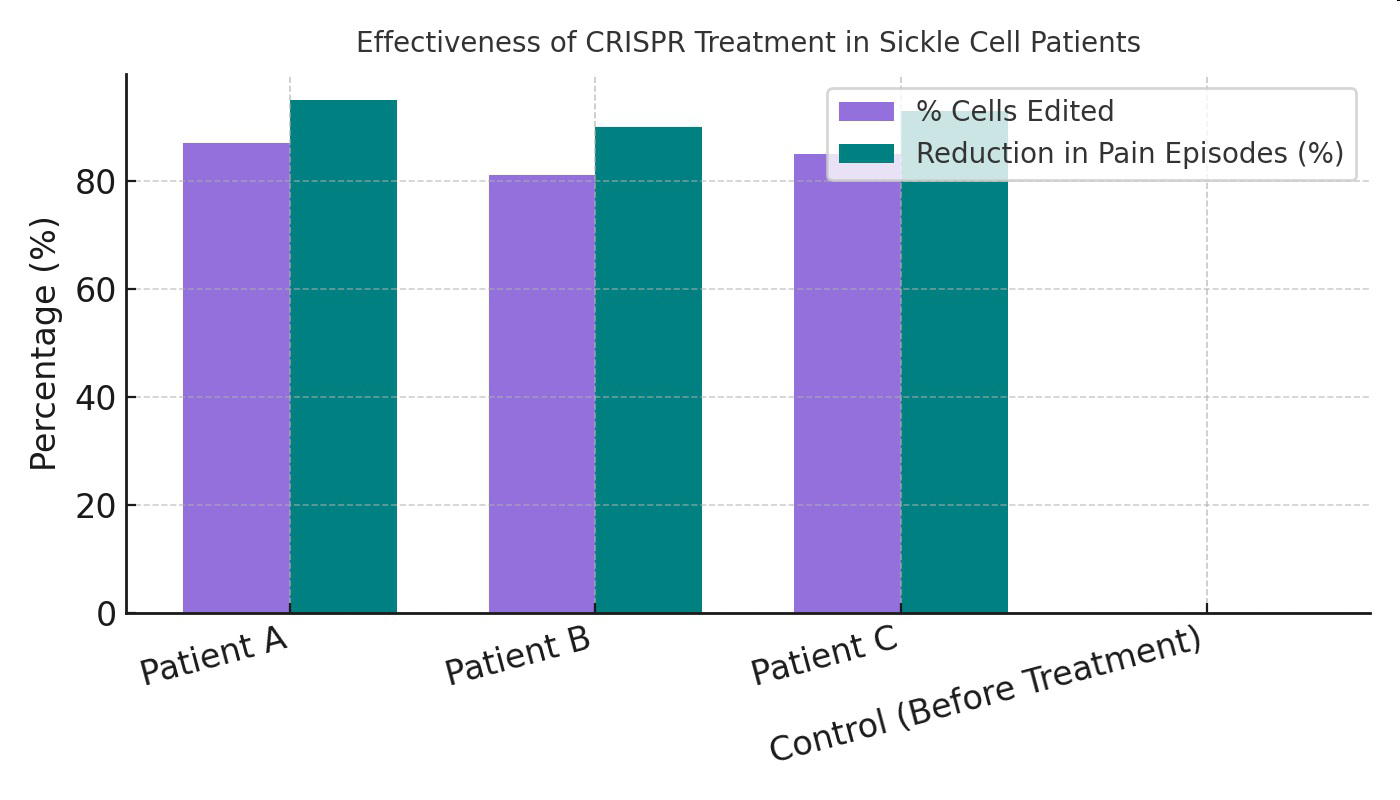
Figure 2.