Genetic Engineering in Agriculture Cluster
Traditional breeding takes many generations to introduce new traits, but genetic engineering allows scientists to change inheritance immediately. The Bt corn example shows how a specific gene from one organism can be moved to another using biotechnology.
The Bacillus thuringiensis bacterium produces a Bt toxin protein that naturally kills caterpillars and beetle larvae. Scientists isolated the Bt gene and inserted it into corn DNA using a gene gun or bacterial plasmid. When the modified plant grows, its cells produce the Bt protein - which damages the digestive system of pest larvae but is harmless to humans and animals.
The inherited Bt gene means every seed from the engineered plant will also produce the protective protein. This reduces the need for chemical insecticides, lowers environmental impact, and increases yield. However, overuse of Bt crops can lead to resistant pest populations. To slow resistance, farmers are required to plant refuge areas of non-Bt corn nearby, ensuring that some pests remain sensitive to the Bt toxin.
Bt corn demonstrates how humans use biotechnology to alter inheritance precisely, transferring genes across species boundaries to meet agricultural challenges quickly. Modern gene-editing tools like CRISPR now extend this capability even further - targeting or silencing specific genes within an organism’s own DNA. These advances raise important questions about balancing food production, ecosystem health, and genetic responsibility.

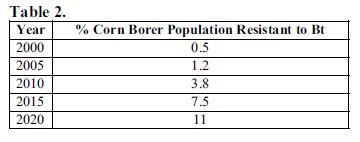
Graph of Information - Figure 1.
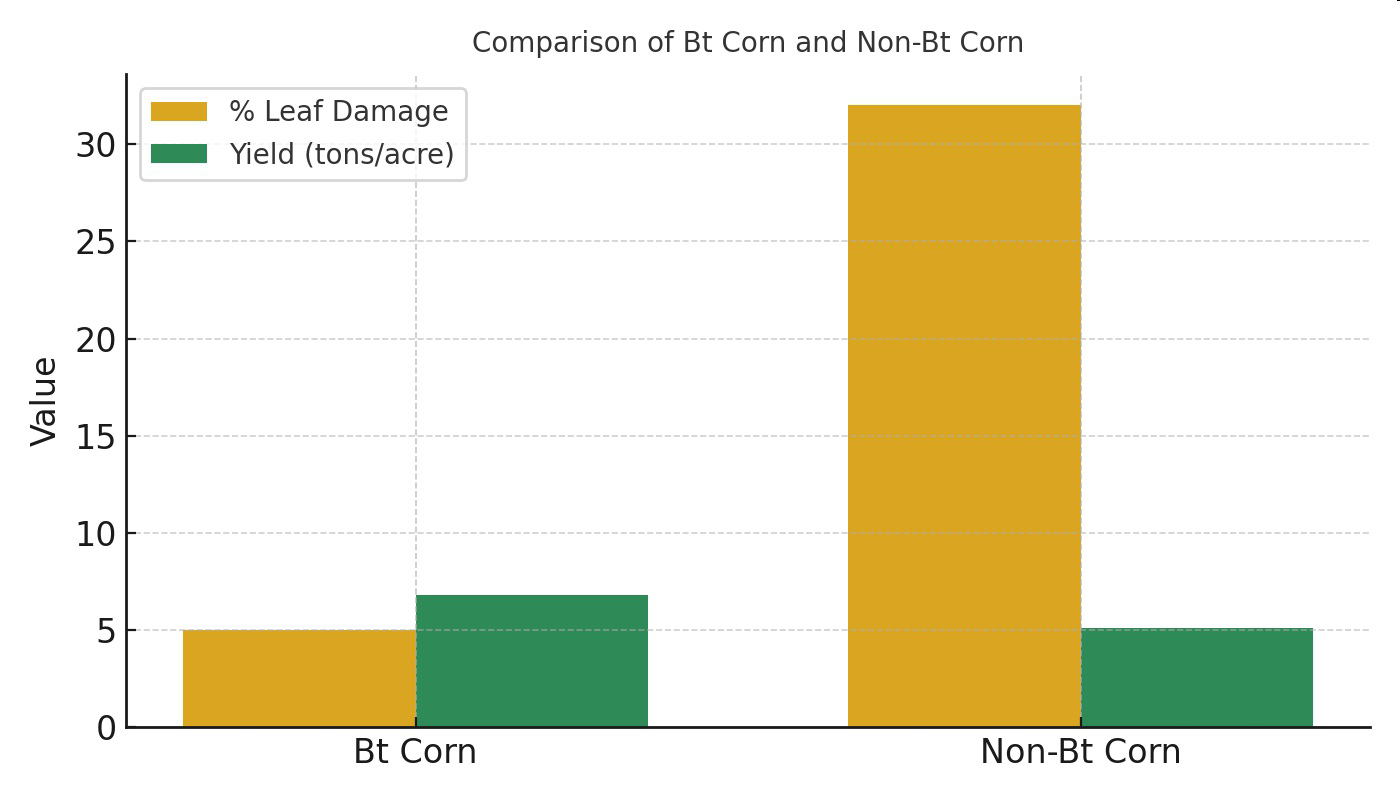
Figure 2.
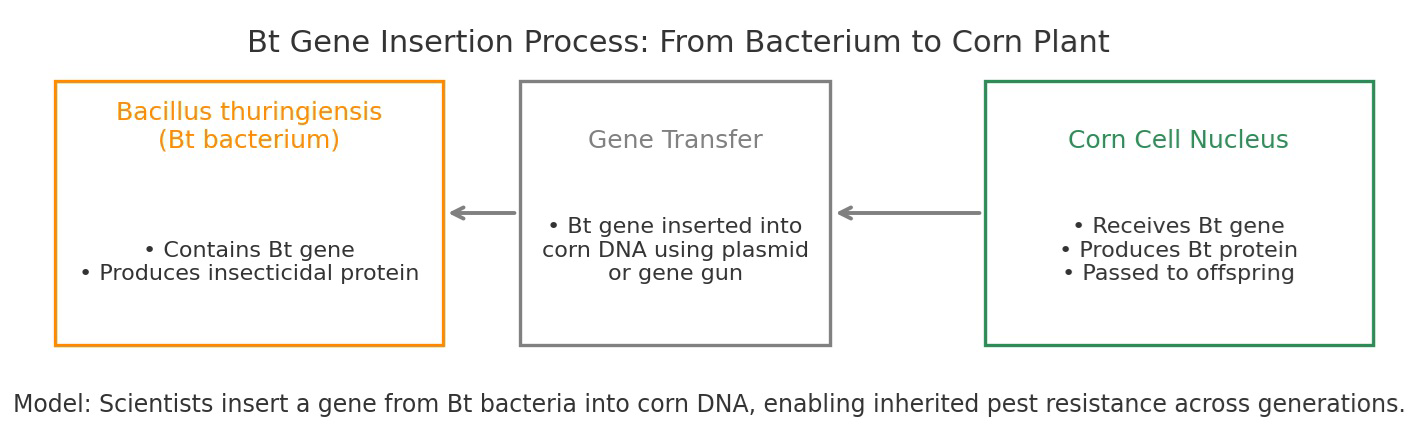
Bt Gene Insertion Process: From Bacterium to Corn Plant. Model: Scientists insert a gene from Bt bacteria into corn DNA, enabling inherited pest resistance across generations.