Genetic Mutations and Their Effects
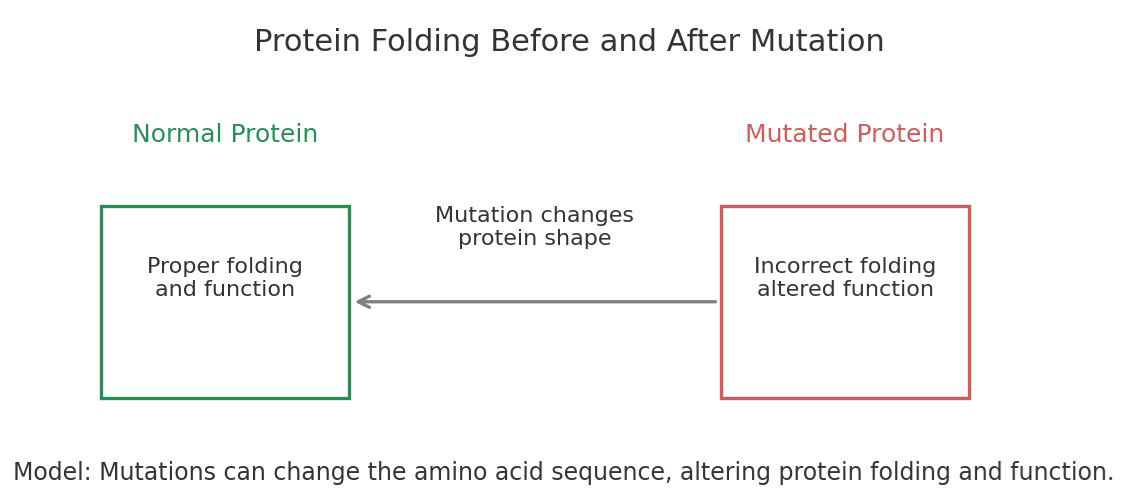
DNA is made of sequences of four chemical bases - adenine (A), thymine (T), cytosine (C), and guanine (G) - arranged like letters in a code. Every three bases form a codon, which tells the cell which amino acid to add to a growing protein chain. Proteins fold into specific shapes that determine their function, such as enzymes speeding up reactions or hemoglobin carrying oxygen.
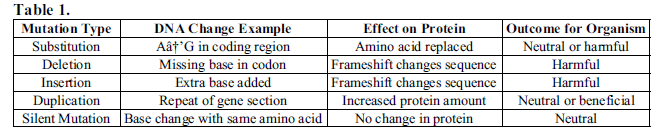
A mutation occurs when a base in the DNA sequence is changed, inserted, or deleted. This can happen during DNA replication or be caused by environmental factors like radiation or chemicals. When a mutation alters a codon, the wrong amino acid might be inserted - slightly or dramatically changing the protein’s shape and function.
Mutations can have three general outcomes:
Harmful mutations: Change a protein so it no longer works properly. For example, a mutation in the CFTR gene causes cystic fibrosis by preventing chloride ions from moving across cell membranes.
Neutral mutations: Have no noticeable effect. For instance, a change might still code for the same amino acid or occur in noncoding DNA.
Beneficial mutations: Improve survival or reproduction. One famous example is a mutation in the CCR5 gene that makes some humans resistant to HIV infection.
In bacteria, beneficial mutations can lead to antibiotic resistance, allowing them to survive treatment that kills others. In contrast, harmful mutations in plants or animals can reduce growth or fertility. Because mutations happen randomly but selection acts non-randomly, over time, beneficial mutations spread within populations - the foundation of evolution.
Scientists often model the effects of mutations by analyzing changes in DNA sequences and resulting protein function, using laboratory experiments and computational simulations.

Graph of Information - Figure 1.
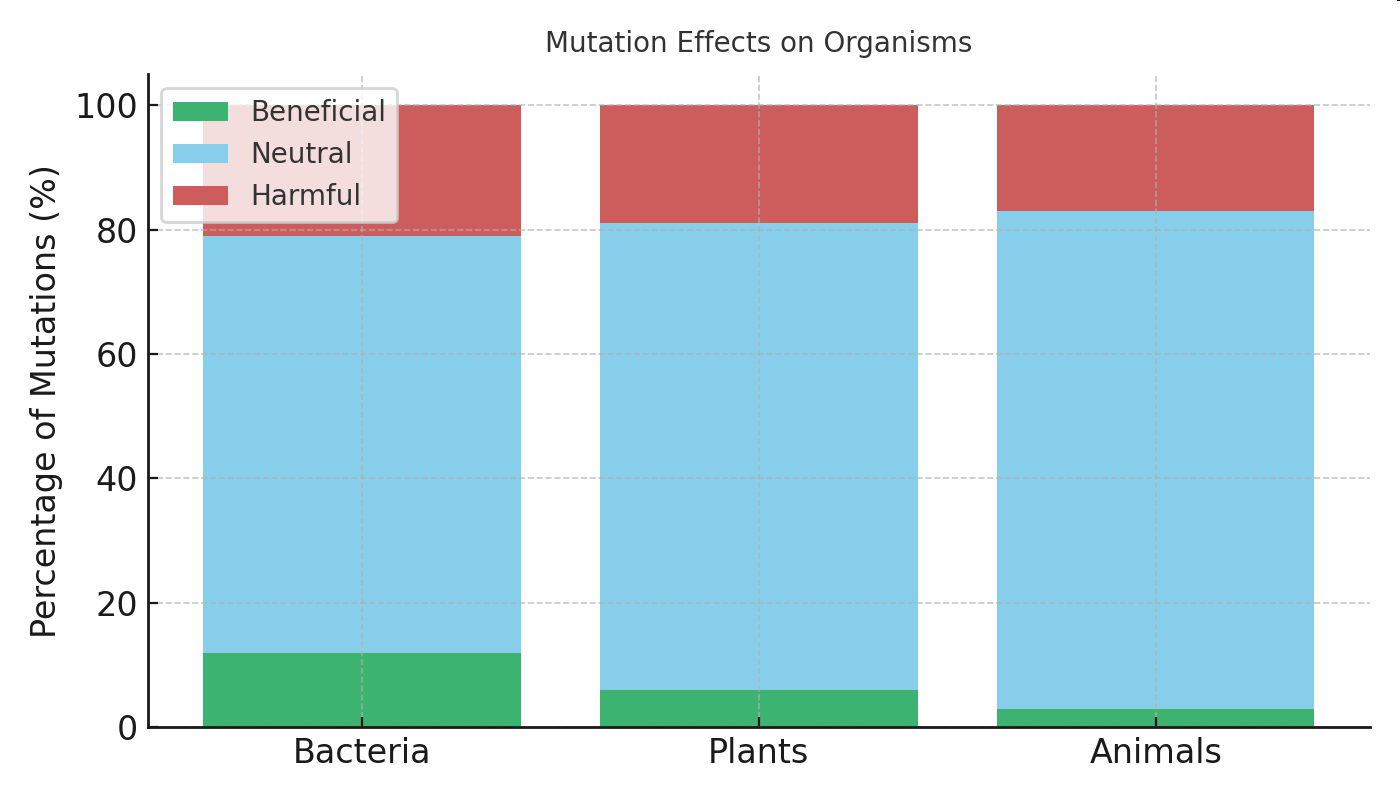
Figure 3.
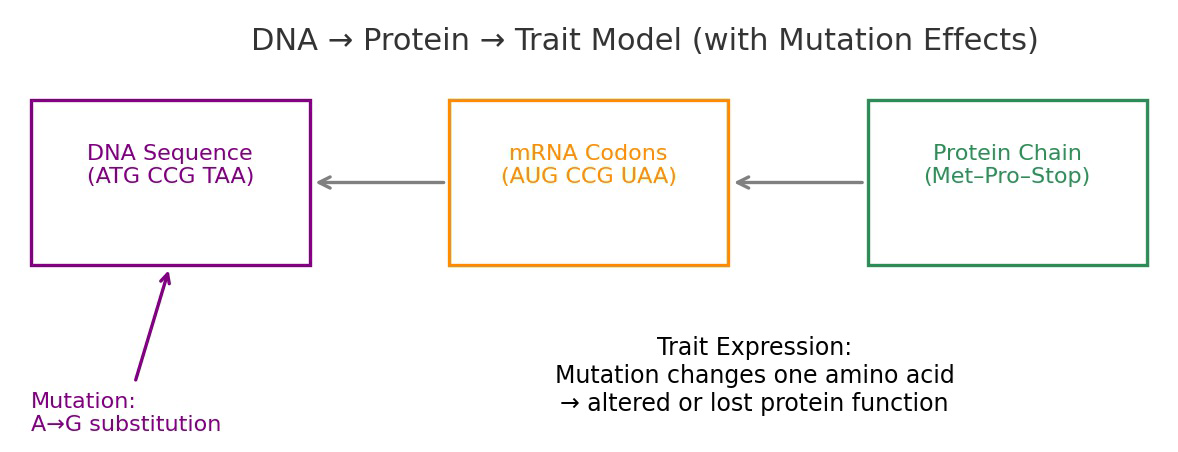
Figure 4.