How Single Cells Achieve Variation
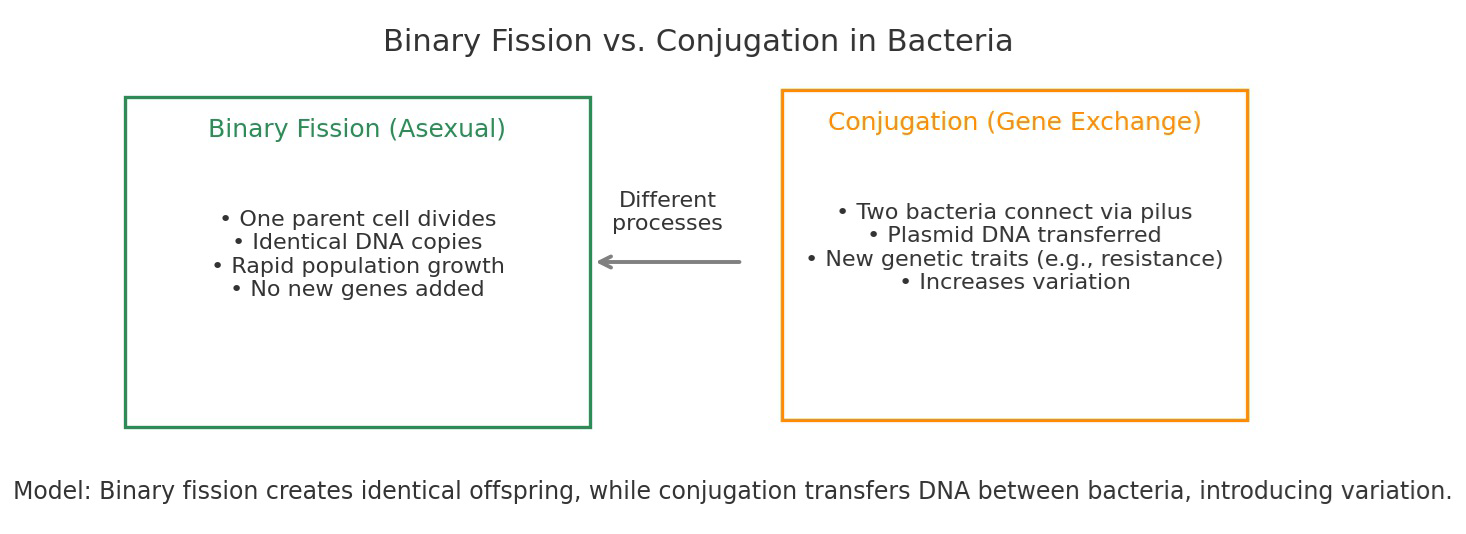
Bacteria reproduce primarily through binary fission, a type of asexual reproduction. In this process, the cell duplicates its circular DNA, and then divides into two genetically identical cells. Each offspring has the same DNA sequence as the parent - a perfect clone. This allows bacteria to reproduce rapidly and fill environments like soil, water, or the human gut within hours.
However, identical offspring also mean identical weaknesses. If an antibiotic or virus can kill one bacterium, it can usually kill them all. That’s why genetic variation is so important - and bacteria have a way to achieve it without traditional sexual reproduction.
Through conjugation, one bacterium connects to another using a thin bridge called a pilus. A small piece of DNA, called a plasmid, is copied and passed from one cell to the other. This new DNA may contain genes that provide new abilities - like breaking down toxins, surviving extreme conditions, or resisting antibiotics.
Conjugation doesn’t create offspring immediately, but it increases diversity within the bacterial population. Afterward, each bacterium can divide asexually again, spreading those new genes through many identical copies. This combination of rapid cloning and occasional DNA exchange makes bacterial populations incredibly adaptable.
A famous example is the spread of antibiotic resistance. A single conjugation event can turn a harmless bacterium into one that resists multiple drugs - a growing challenge in medicine.
By comparing binary fission and conjugation, students can see how asexual reproduction maintains stability, while gene transfer introduces diversity, ensuring long-term survival.
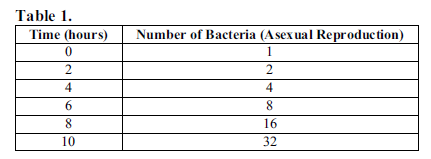

Graph of Information - Figure 1.
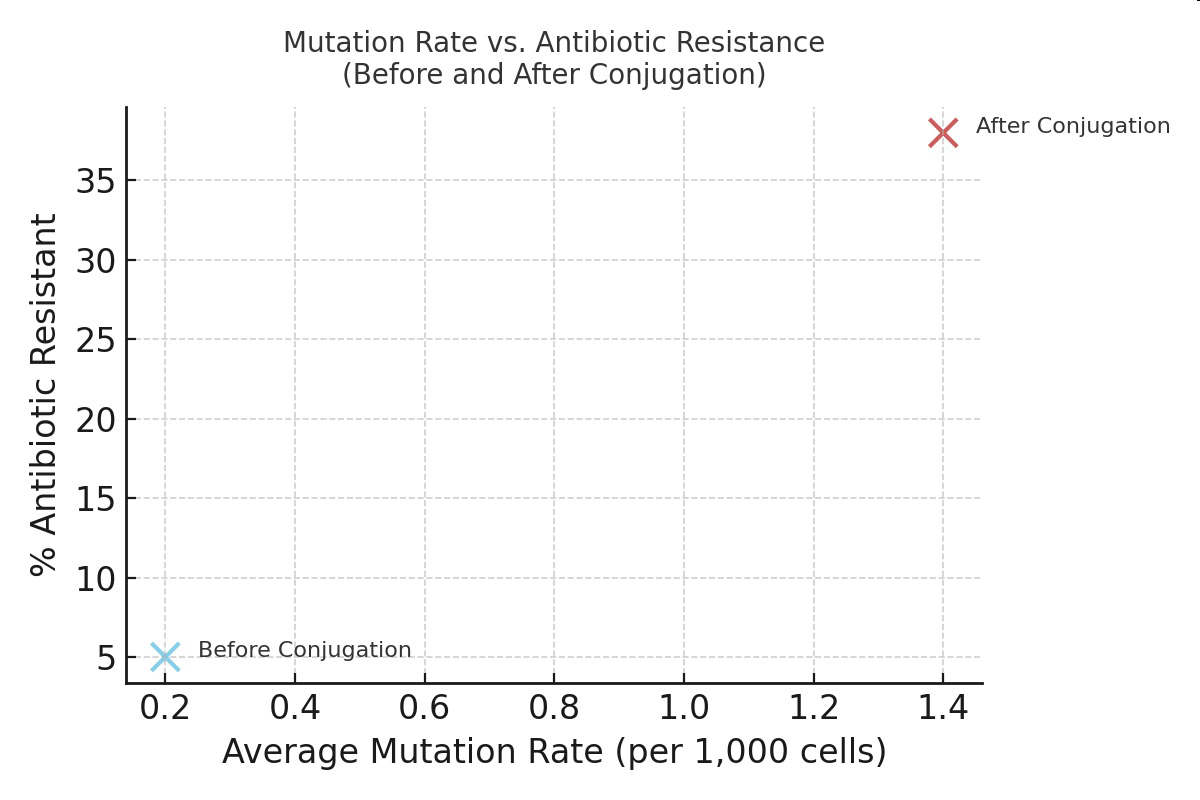
Figure 2.