Lactose Tolerance in Humans
Inside the small intestine, the enzyme lactase breaks down the sugar lactose into glucose and galactose, which can be absorbed into the bloodstream for energy. Infants produce high levels of lactase, but in most people, production drops sharply after weaning. As a result, adults who drink milk may experience bloating and discomfort - a condition called lactose intolerance.
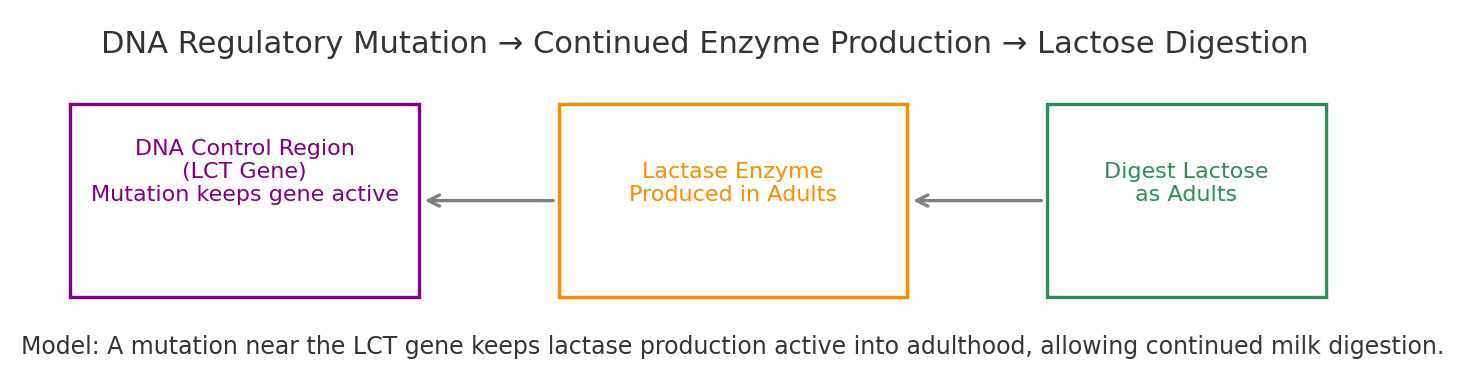
However, around 7,000–10,000 years ago, a mutation occurred near the LCT gene on chromosome 2. This mutation didn’t change the enzyme itself but altered a regulatory switch (a DNA control region) so that lactase continues to be made throughout life. People with this mutation can digest milk as adults - a clear survival advantage in pastoral societies that depended on dairy animals like cows, goats, and camels.
Studies of ancient DNA show that the lactase-persistence mutation first appeared in populations living in Europe, parts of Africa, and the Middle East - exactly where herding and dairy farming began. Over generations, people with the mutation had more consistent food sources and better nutrition, increasing their survival and reproductive success. This beneficial mutation spread rapidly through natural selection.
Interestingly, there are different versions of the same trait - separate mutations in African and European populations both allow adult lactase production, showing convergent evolution (similar adaptations evolving independently).
Today, about 35% of the world’s population is lactose-tolerant as adults. The global pattern of lactose tolerance closely matches regions where dairy farming has been practiced longest.
This example shows that not all mutations are harmful - some help populations adapt to changing environments and cultural innovations, demonstrating the evolutionary relationship between genes and human history.


Graph of Information - Figure 1.
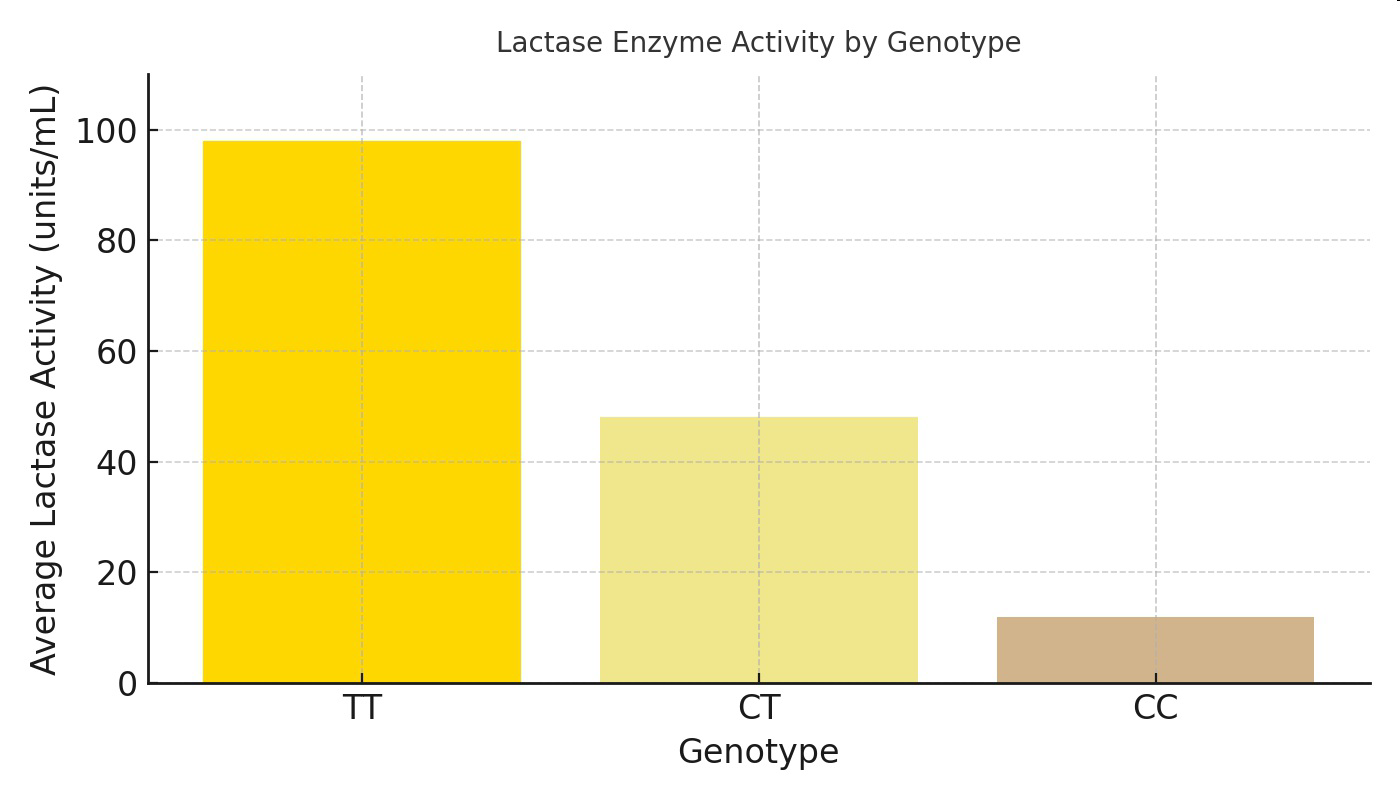
Figure 2.