Plant Reproduction Strategies
Aspen trees and wildflowers represent two extremes of how plants reproduce. Asexual reproduction, as seen in aspens, produces new individuals without seeds or pollen. Instead, roots beneath the soil send up new shoots called suckers. Because these shoots arise from the same root system, all trees in a grove share identical DNA. This kind of population is called a clone colony. The largest known aspen clone, called Pando, in Utah, covers more than 100 acres and weighs an estimated 6,000 tons - making it one of the largest living organisms on Earth.
Asexual reproduction offers a fast, efficient way to spread in stable environments. Every tree in the colony can share nutrients and water, and because they are genetically identical, they grow and change together. However, that lack of diversity can be dangerous. If a new insect, disease, or drought strikes, the entire colony may be at risk since no individual has a different set of genes to resist it.
By contrast, wildflowers reproduce sexually, using pollination to mix genes from two parents. Each seed has a new genetic combination, leading to variation in height, color, flowering time, and resistance to stress. This diversity helps populations survive environmental change.
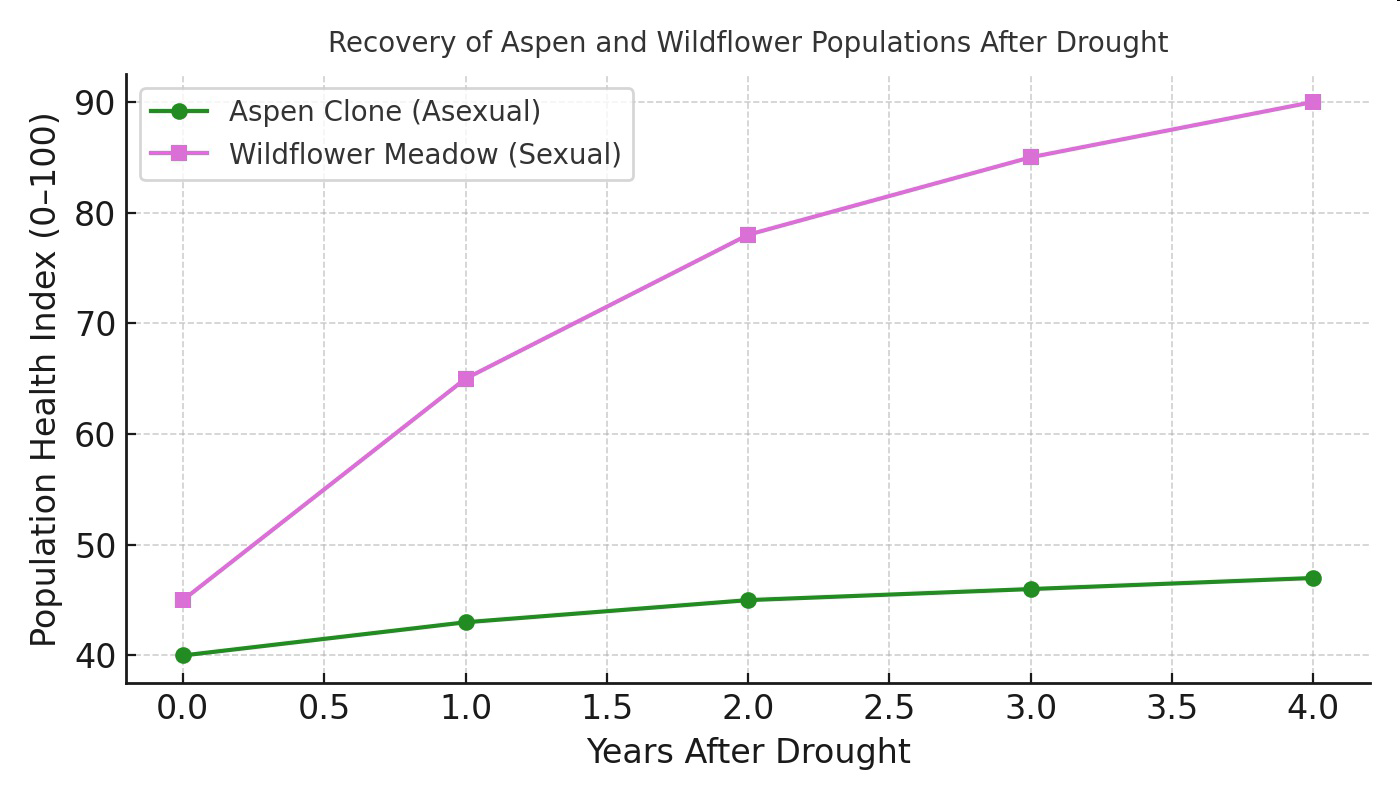
Researchers studying ecosystems find that diverse populations recover faster after disturbances, while clonal populations may decline or take longer to rebound. This comparison shows that while asexual reproduction allows rapid growth, sexual reproduction ensures long-term resilience - both essential strategies for ecosystem health.

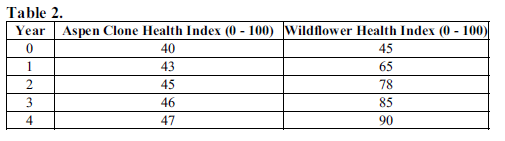
Graph of Information - Figure 1.
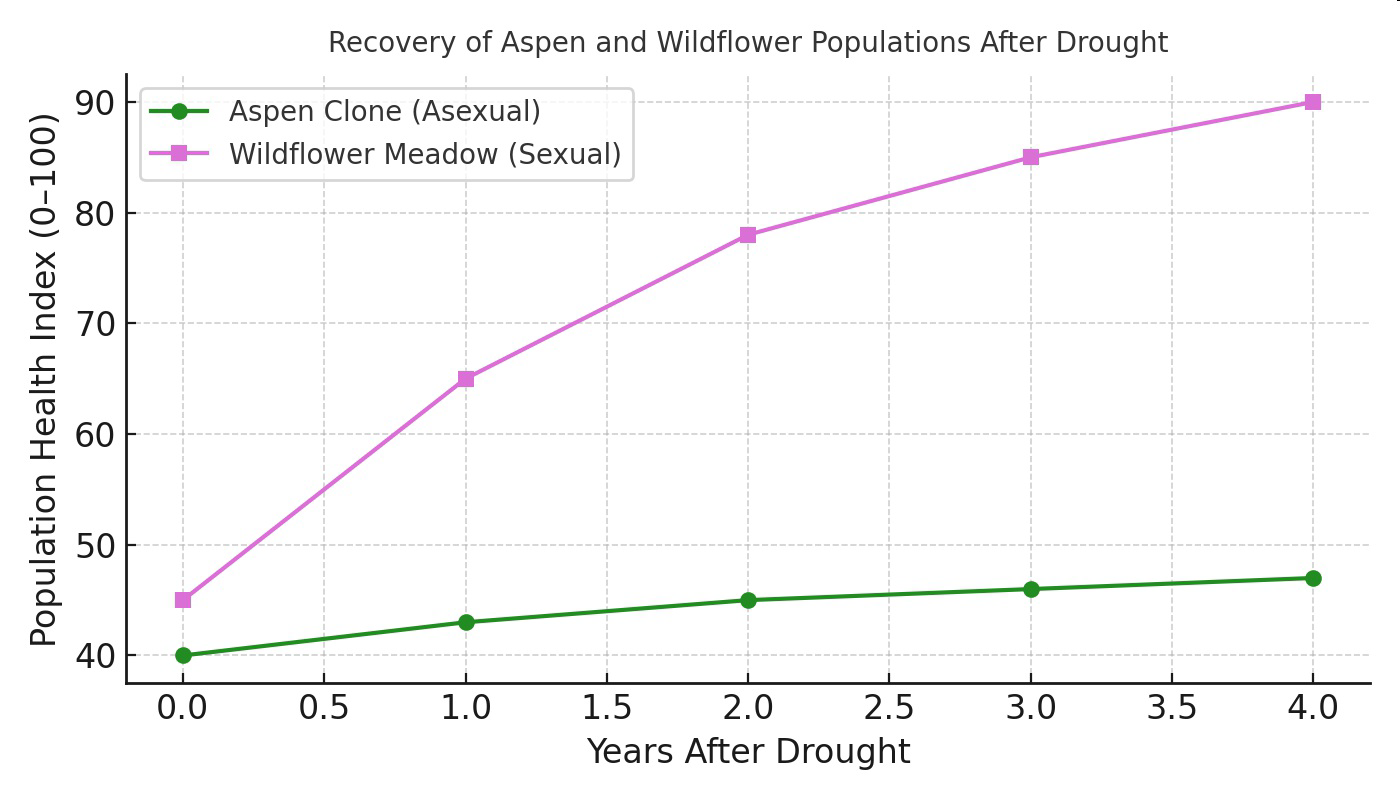
Figure 2.