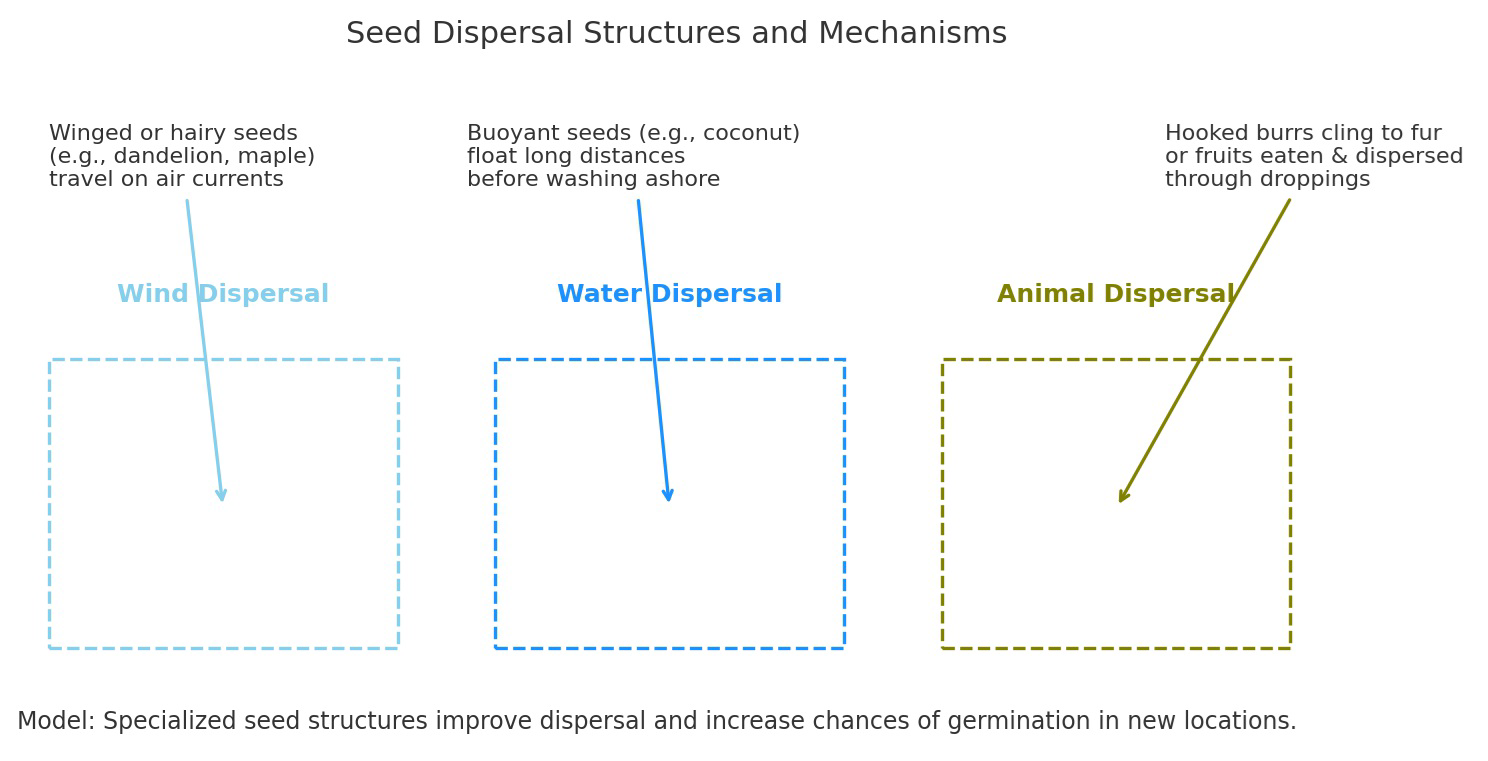
Seed Dispersal Structures
Every flowering plant faces a challenge: how to spread its seeds far enough to avoid competition with the parent plant while still reaching a suitable environment. Through evolution, plants have developed a wide range of adaptations for seed dispersal, each designed to take advantage of natural forces like wind or animals.
Wind-dispersed seeds are often lightweight and equipped with wings, hairs, or parachutes that slow their fall and allow them to drift long distances. Maple trees produce winged fruits called samaras that spin like helicopters, while dandelions have feathery structures that catch air currents. These designs allow seeds to colonize open areas where sunlight is plentiful.
Animal-dispersed seeds use entirely different strategies. Plants like burrs or bedstraw produce seeds with tiny hooks or barbs that cling to fur or clothing. As animals move, they carry seeds to new locations before they eventually drop off. Other plants produce fleshy fruits such as berries, which attract animals that eat them. The seeds pass unharmed through the digestive system and are deposited far away in nutrient-rich droppings - an ideal environment for germination.
Water-dispersed seeds - such as those of coconut palms or mangroves - can float long distances before washing up on a beach or riverbank. The protective husks prevent drowning and keep the seeds viable for months.
Scientists studying seed dispersal use both field experiments and wind tunnel simulations to measure how far different seed types travel. They also track germination rates to determine how well each structure supports survival. Across studies, seeds dispersed by animals typically have higher germination rates, while wind-dispersed seeds achieve wider distribution. Together, these strategies maximize reproductive success across different environments.


Graph of Information - Figure 1.
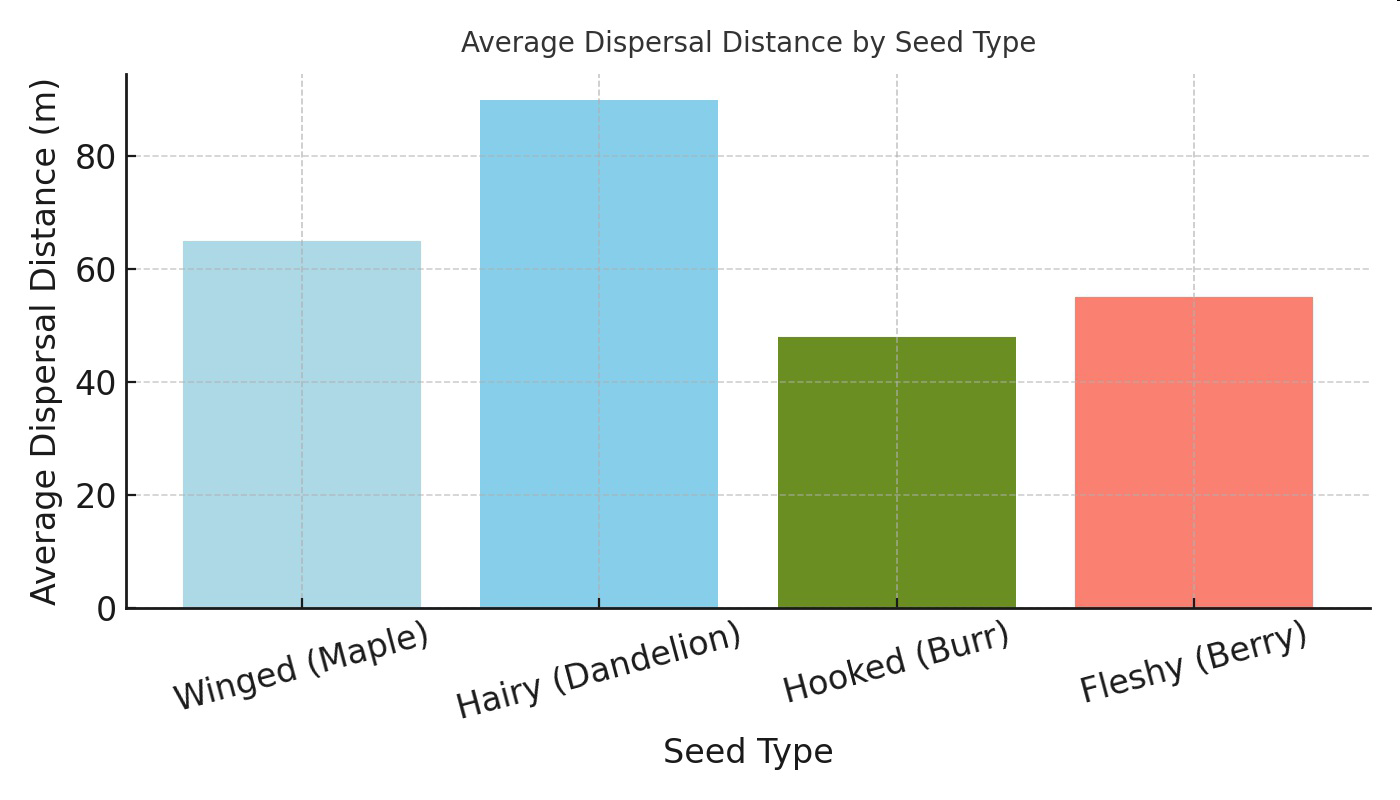
Graph of Information - Figure 2.
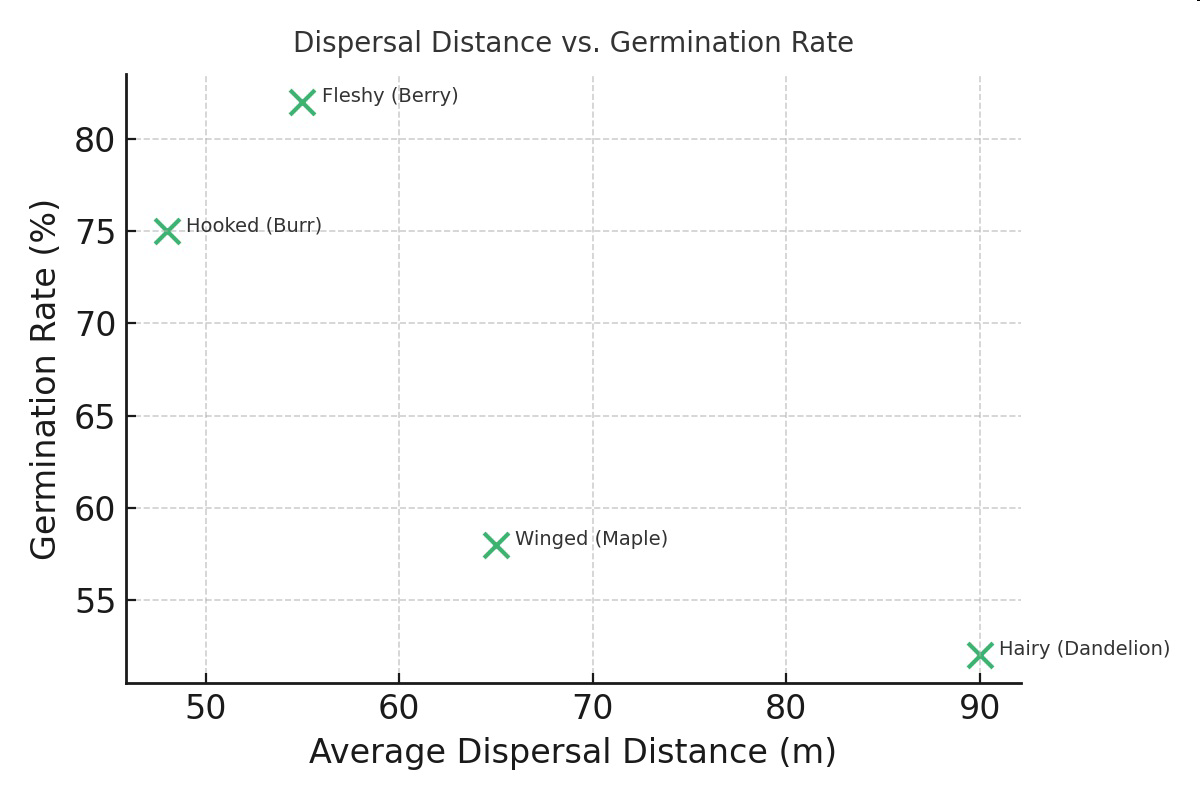
Figure 3.