Selective Breeding in Agriculture
Selective breeding, also called artificial selection, is the process by which humans choose which plants or animals will reproduce based on desired traits. It’s one of the earliest and most powerful ways people have influenced inheritance.
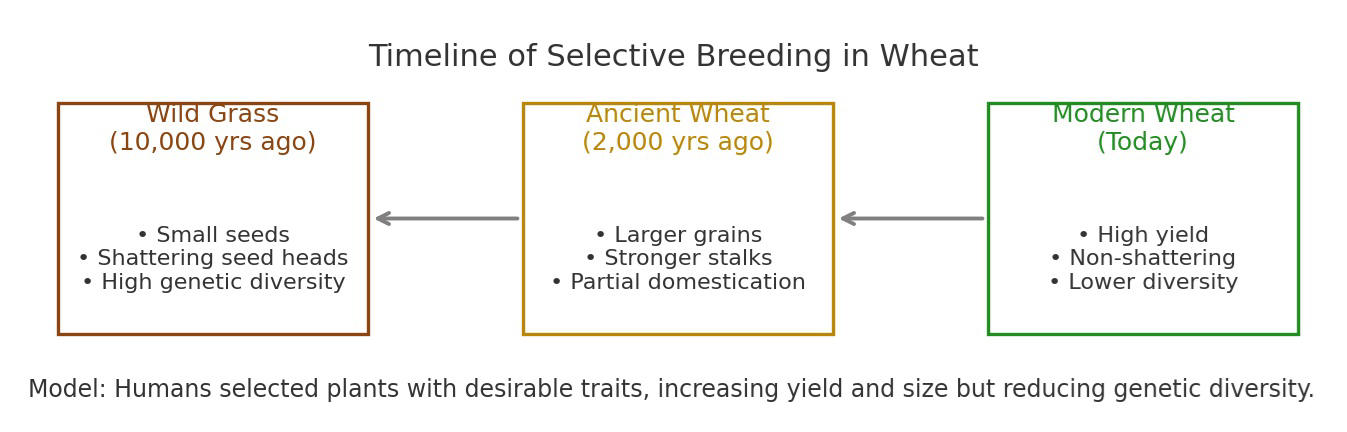
The first farmers noticed that some wild plants had slightly larger seeds or grew better under dry conditions. By saving and planting seeds from those individuals year after year, they increased the frequency of the genes responsible for those traits in the population. After many generations, these plants became so different from their wild ancestors that they could no longer interbreed easily. This gradual change, guided by human selection, is similar to natural selection - but humans, rather than the environment, decide which traits are favored.
In wheat, selective breeding led to key inherited changes:
Larger seed size for better food yield.
Stronger stalks to prevent plants from falling over before harvest.
Non-shattering seed heads, meaning seeds stay on the plant rather than scattering in the wind.
Today, scientists use advanced breeding methods and biotechnology to make improvements faster. Hybridization - crossing two different plant varieties - can combine the best traits from both parents. Genetic analysis helps identify which offspring carry desirable genes before they mature.
Modern wheat varieties produce up to ten times more grain per plant than ancient wild grass. However, because selective breeding narrows genetic diversity, it can make crops more vulnerable to diseases or climate change. That’s why plant geneticists now maintain seed banks to preserve ancient and wild varieties for future breeding.
This long history shows how technology and selection - from simple observation to modern genomics - have shaped the inheritance of traits in the plants that feed the world.

Graph of Information - Figure 1.
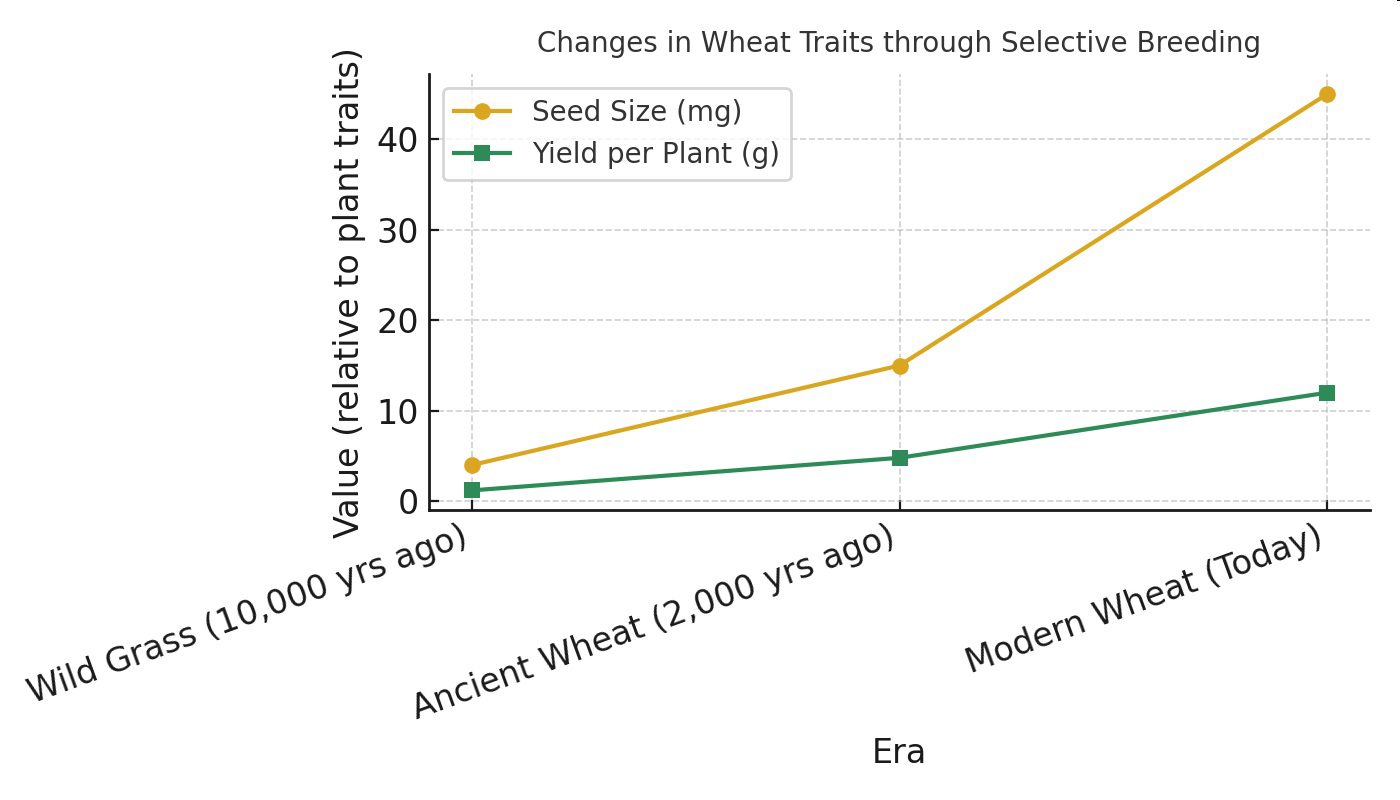
Figure 2.