Sickle Cell Disease
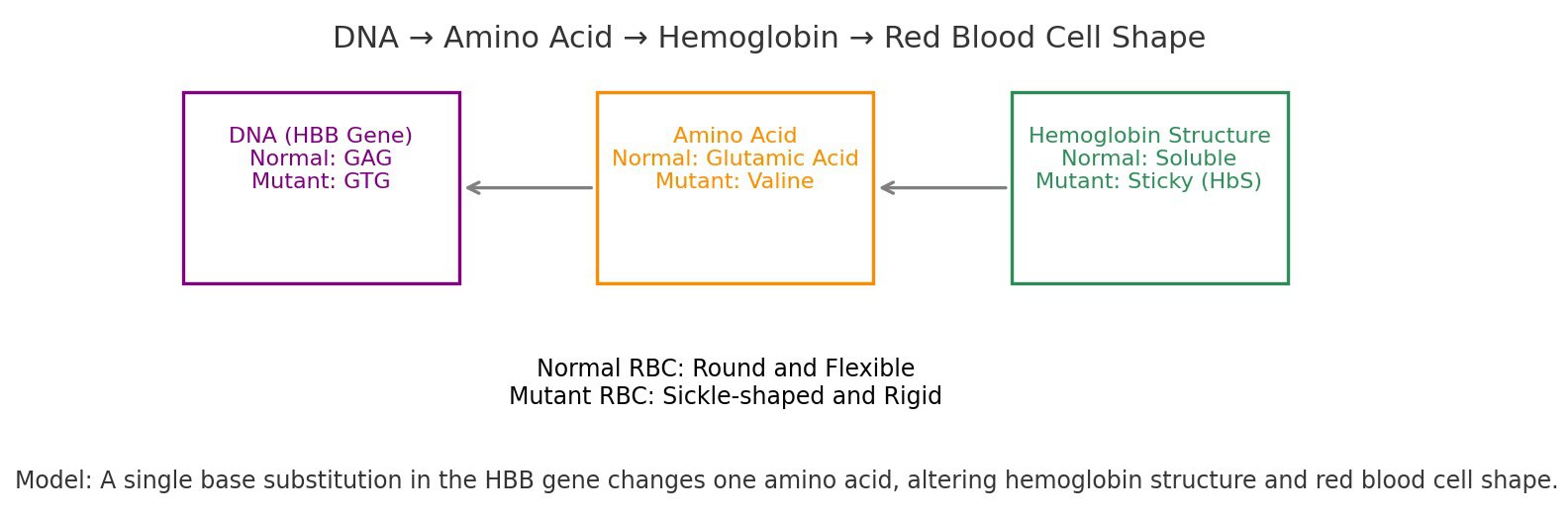
Blood cells owe their round shape and flexibility to a protein called hemoglobin, which carries oxygen throughout the body. Hemoglobin is built from amino acids following the instructions in the HBB gene on chromosome 11. In most people, the sixth codon of this gene reads GAG, which codes for the amino acid glutamic acid. In people with sickle cell disease, a single base changes from A to T, so the codon becomes GTG, coding for valine instead.
That single substitution - one letter in three billion bases - changes how the hemoglobin protein folds. Normal hemoglobin (HbA) remains soluble, while the mutated form (HbS) clumps together when oxygen levels drop. These clumps distort red blood cells into a sickle shape, making them less flexible and more likely to block blood flow.
The results can be severe: pain crises, fatigue, organ damage, and reduced life expectancy if untreated. Yet this same mutation provides an unexpected benefit in regions where malaria is common. Carriers of one sickle cell gene (heterozygotes, or HbAS) have some sickled cells but usually no symptoms - and they are more resistant to malaria infection. This is because the Plasmodium parasite that causes malaria struggles to reproduce inside slightly misshapen red blood cells.
This trade-off - harmful in one environment but beneficial in another - is a classic example of balanced polymorphism in evolution. It demonstrates how natural selection can maintain a harmful mutation in populations when it provides a survival advantage under specific conditions.
Sickle cell disease shows students how a structural change in DNA alters a protein, which in turn affects cell structure and organism function. It connects the molecular scale of genetics to the human scale of health and adaptation.

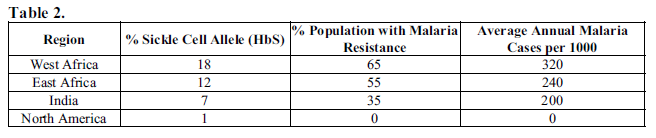
Graph of Information - Figure 1.
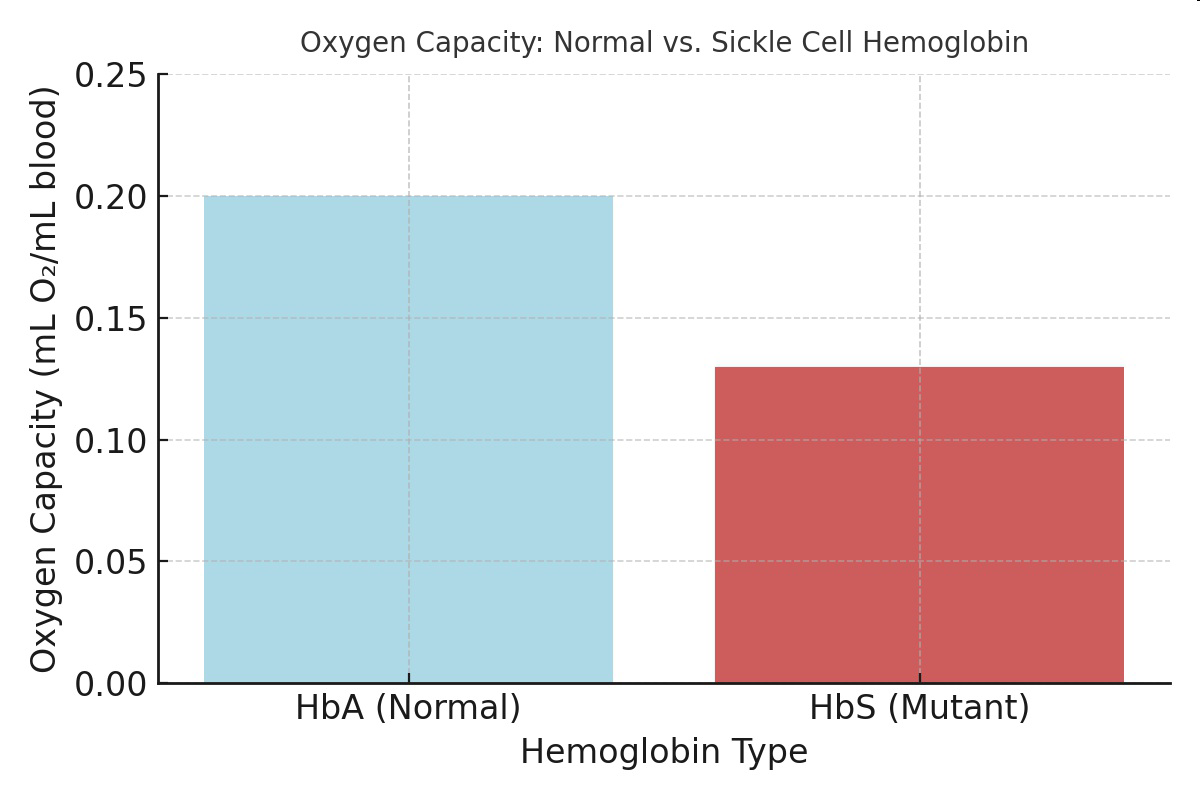
Figure 2.