Strawberry Runners vs. Seeded Plants
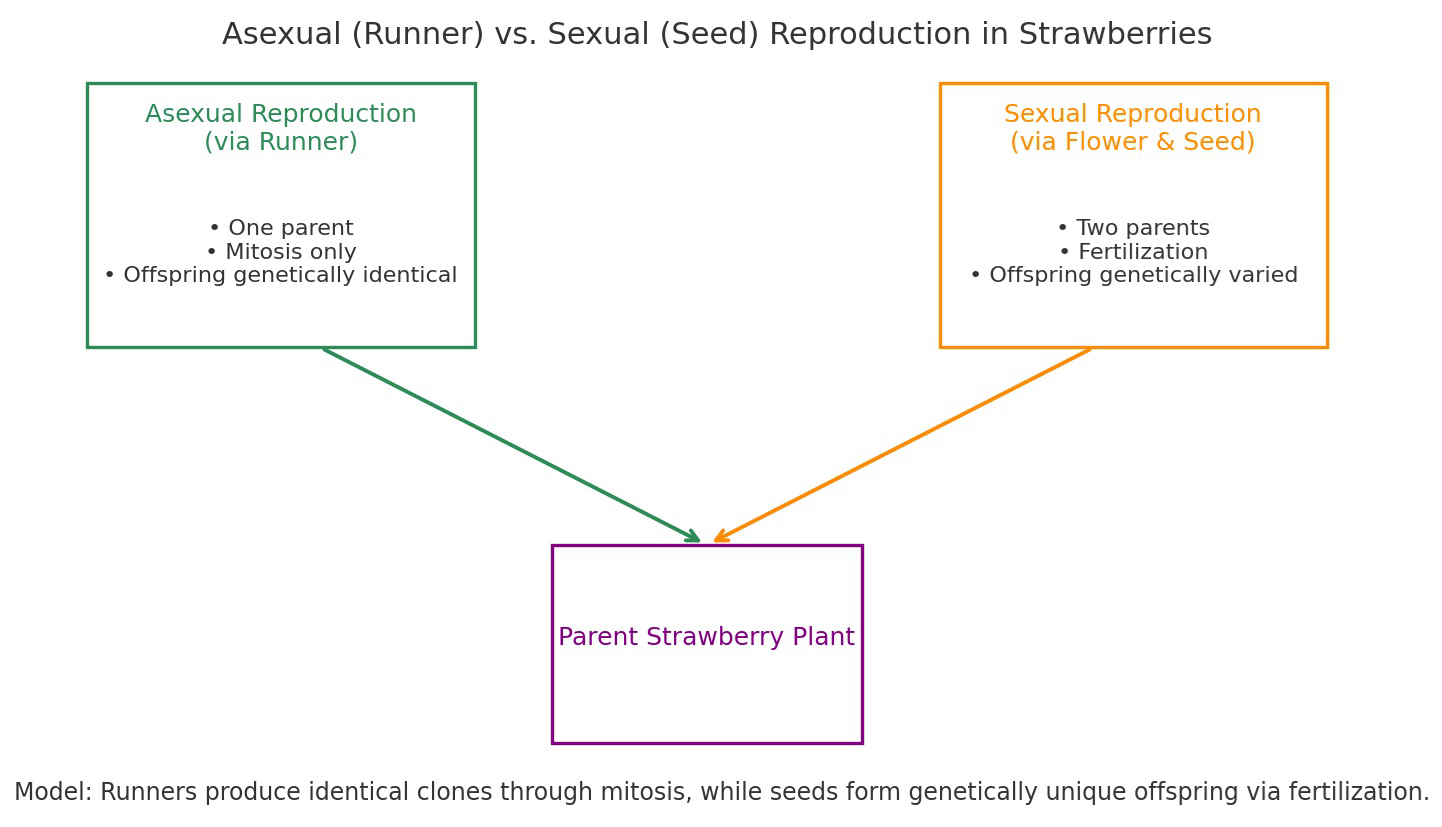
Reproduction is how living things make more of their kind, but not all reproduction produces the same kind of offspring. Asexual reproduction involves just one parent and produces offspring with identical genetic information - essentially clones. Sexual reproduction combines genetic material from two parents, producing offspring with unique genetic combinations.
Strawberries are an ideal example of both processes. In asexual reproduction, the parent plant sends out horizontal stems called runners (or stolons). Cells in the runner divide by mitosis, creating new plants that are genetically identical to the parent. Because they share the same DNA, cloned plants look the same and have the same strengths - but also the same weaknesses. If a fungus or insect harms one, it can harm them all.
In contrast, when strawberries reproduce sexually, flowers are pollinated, and seeds form. Each seed contains DNA from two parents, creating a new combination of traits. This diversity helps the species survive changes in the environment - such as new pests, droughts, or temperature shifts.
Farmers often use asexual reproduction for uniform crops with predictable flavor and size, while plant breeders use sexual reproduction to develop new varieties with disease resistance or different fruit colors.
This dual strategy highlights a key biological principle:
Asexual reproduction offers speed and consistency,
Sexual reproduction provides diversity and resilience.
Both are successful under different conditions - one ensures stability, the other ensures adaptability.

Graph of Information - Figure 1.
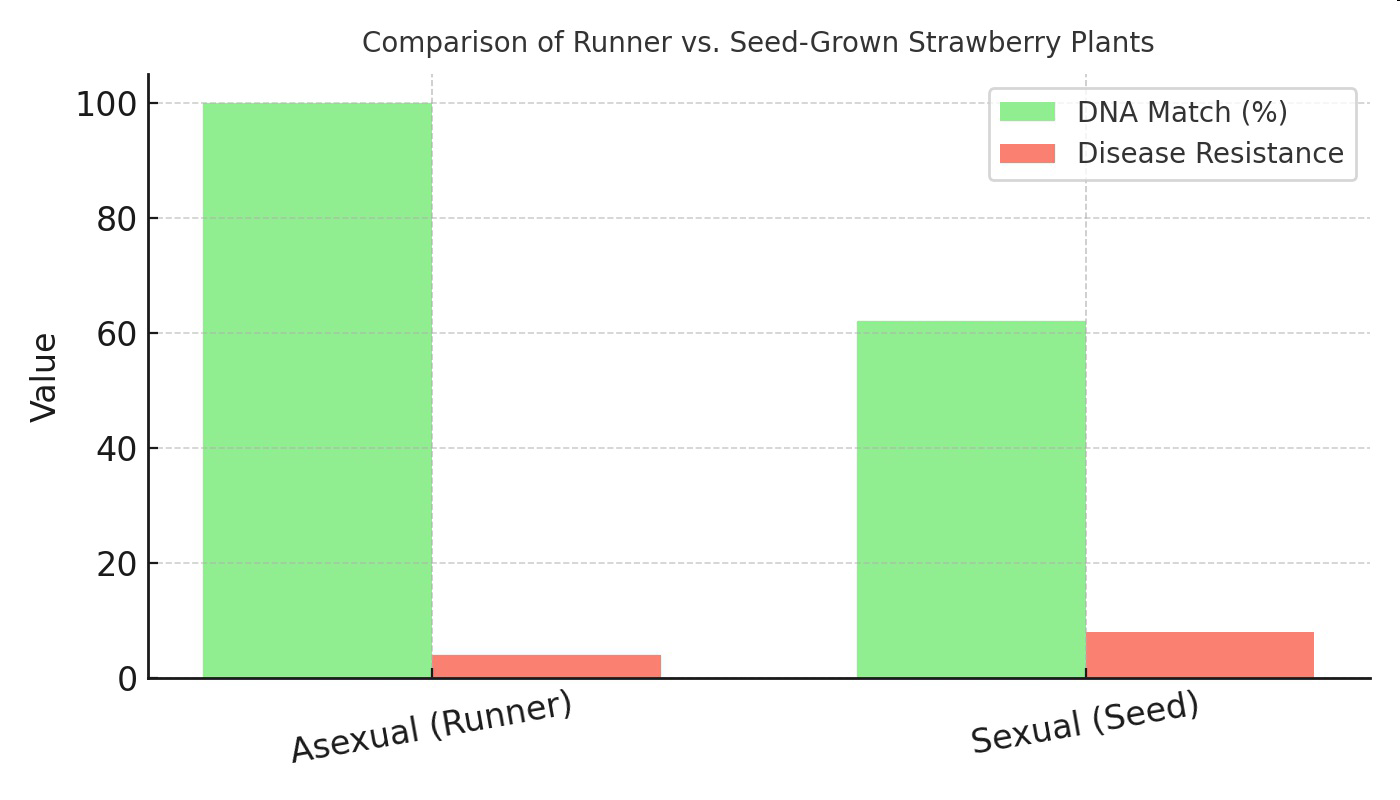
Figure 2.