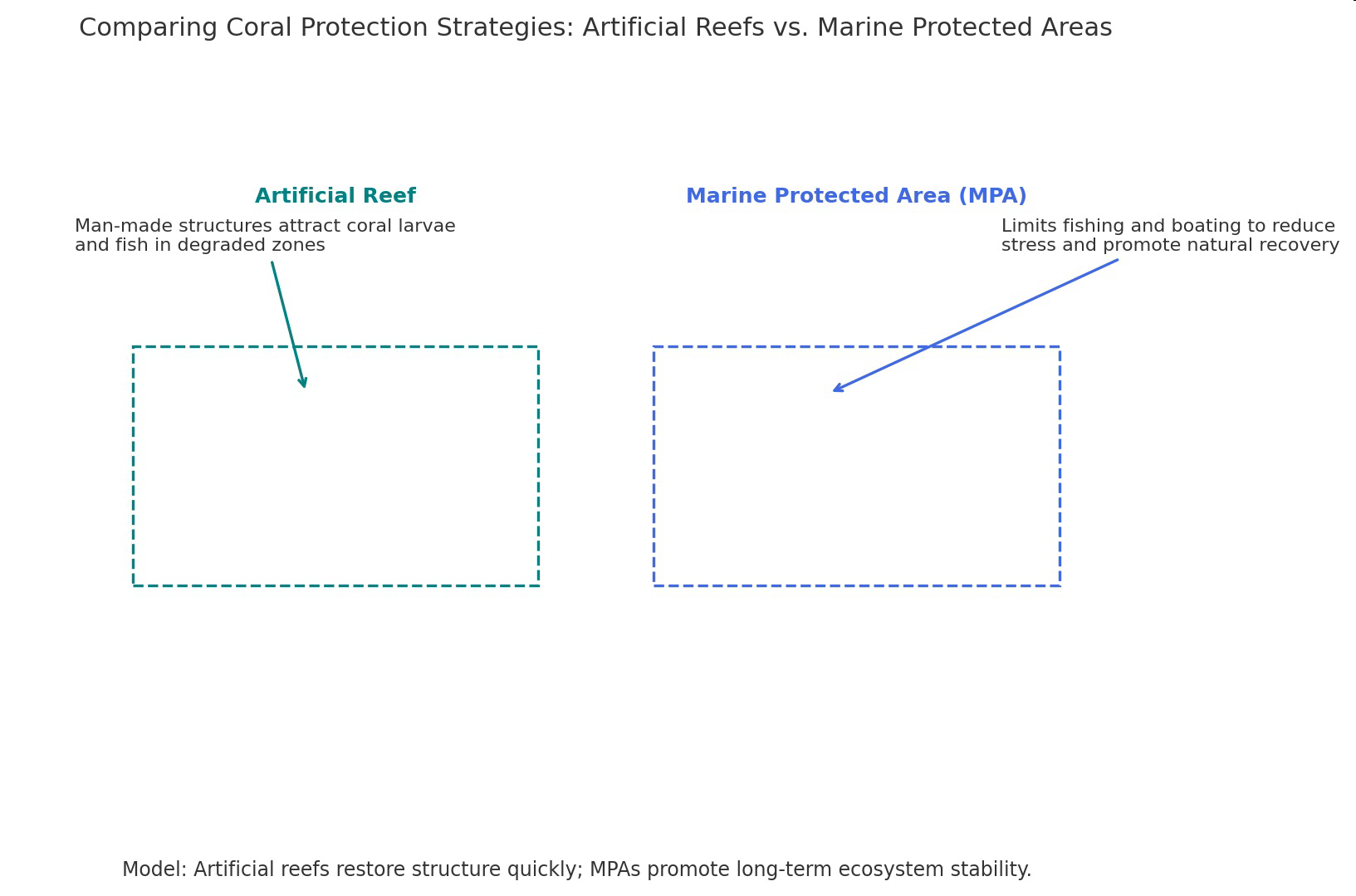
Coral Reef Protection
Artificial reefs are human-made structures designed to mimic natural reefs. They can be built from materials such as concrete, steel, limestone, or even specially formulated biodegradable substrates. Once placed on the ocean floor, these structures provide surfaces for coral larvae to attach and grow. They also attract fish and invertebrates that use the reef for shelter and feeding.
Artificial reefs can quickly boost local biodiversity and provide new habitat in damaged or barren areas. They are often used near tourist beaches or fishing communities because they can support both conservation and economic activity. However, their long-term success depends on careful material choice and placement. Poorly designed or unstable reefs can collapse, leach chemicals, or fail to support coral growth over time.
In contrast, Marine Protected Areas (MPAs) limit or ban activities like fishing, boating, or tourism in natural reef zones. By reducing human disturbance, MPAs allow coral populations to recover naturally. Over time, healthy coral cover increases, and fish species return in greater abundance and diversity. MPAs also promote ecosystem resilience - the ability of a reef to bounce back after stress events like bleaching or storms.
However, MPAs can be politically and socially complex. Restricting fishing may affect local livelihoods, and enforcement is costly. Meanwhile, some areas may take decades to recover, especially if water quality or ocean temperatures continue to worsen.
Scientists studying coral recovery across different regions find that both strategies can be effective, depending on context. Artificial reefs may work best in heavily degraded or urban coastal areas, where natural reefs are too damaged to recover on their own. MPAs may be more effective in biodiverse, low-impact regions, where natural coral can still reproduce and spread.
Evaluating these competing design solutions helps students understand that ecological management requires balancing biodiversity, economics, and sustainability - not just short-term results.


Graph of Information - Figure 1.
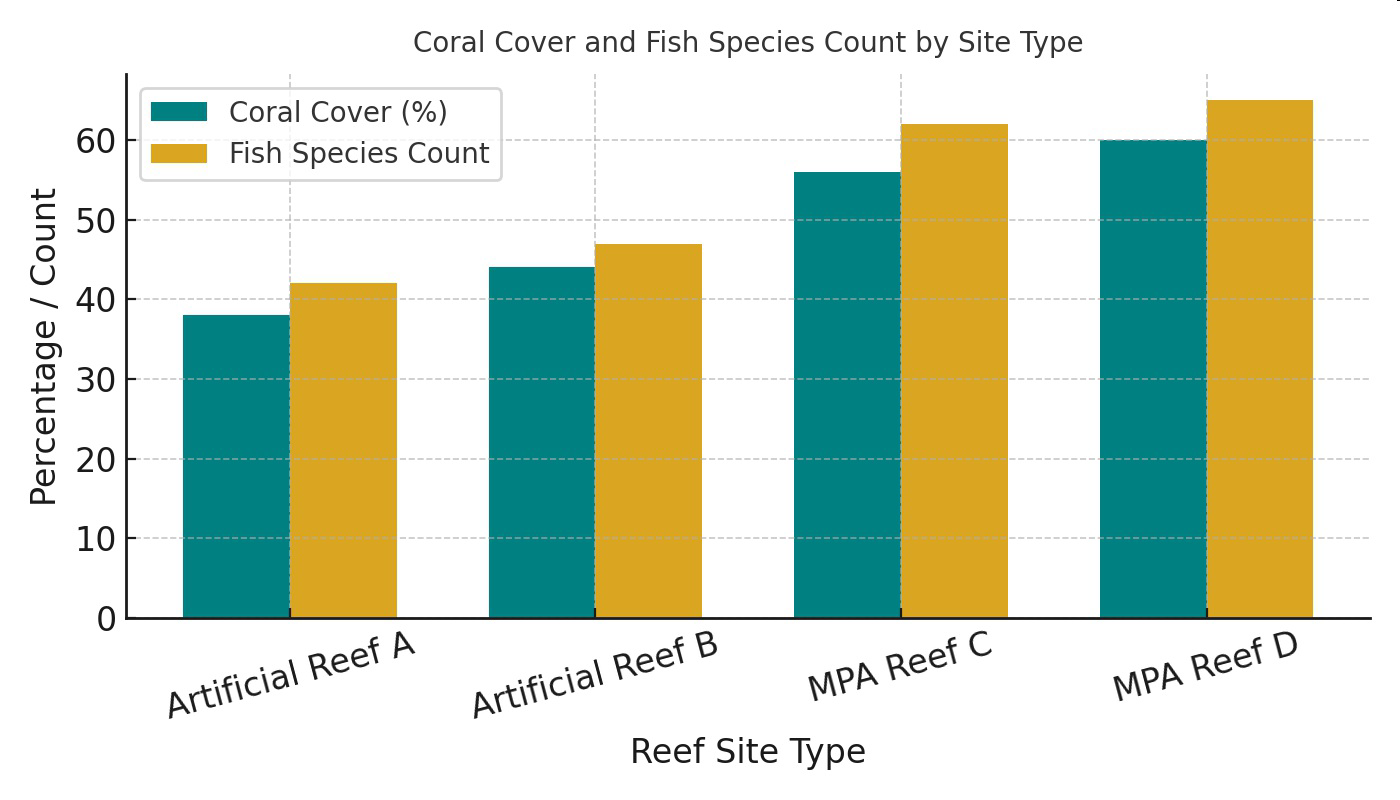
Graph of Information - Figure 2.
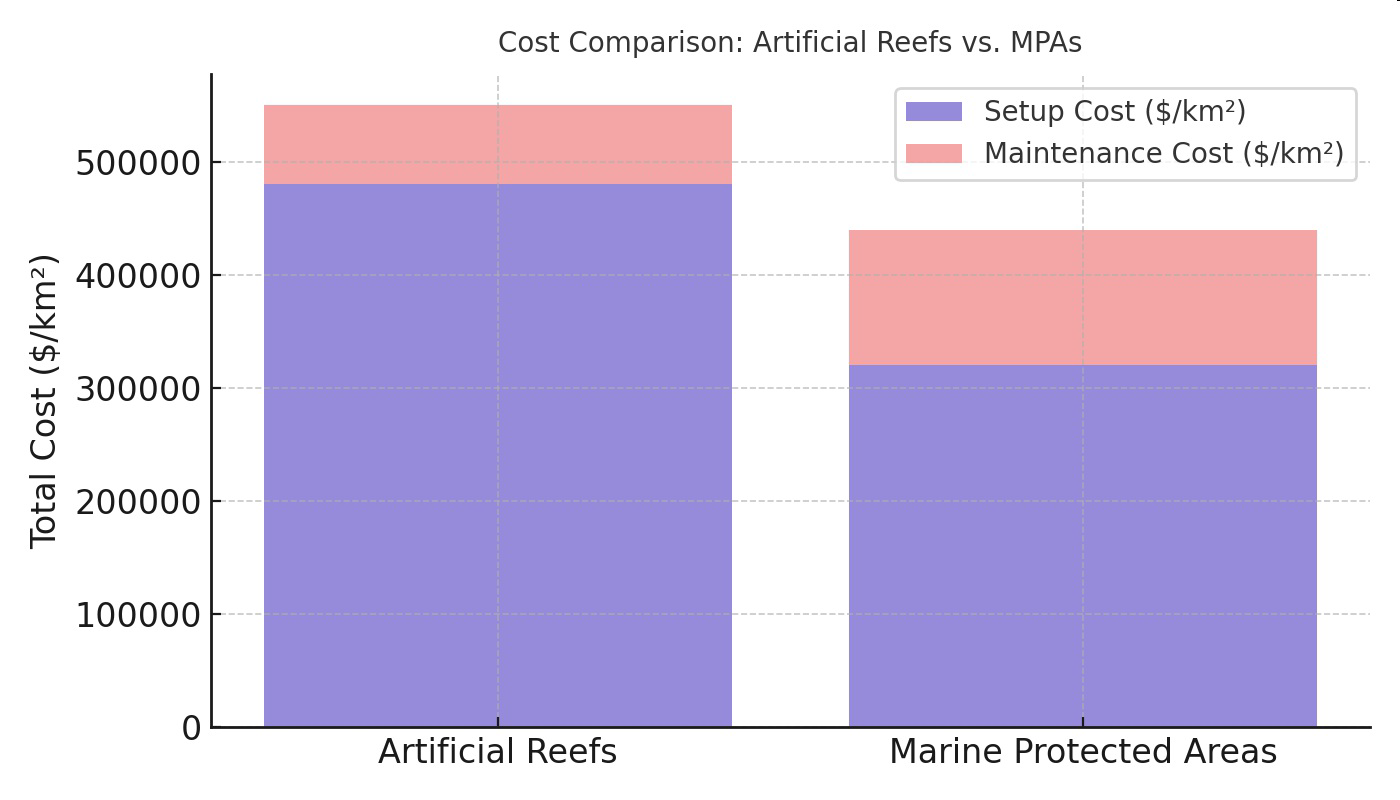
Figure 3.