Parasitic Tapeworms in Mammals
Parasitism is a relationship in which one organism, the parasite, benefits by feeding on another organism, the host, which is harmed but not usually killed. Parasites are found in nearly every ecosystem, affecting species from insects to whales. They play a critical role in shaping population dynamics, food webs, and even evolution.
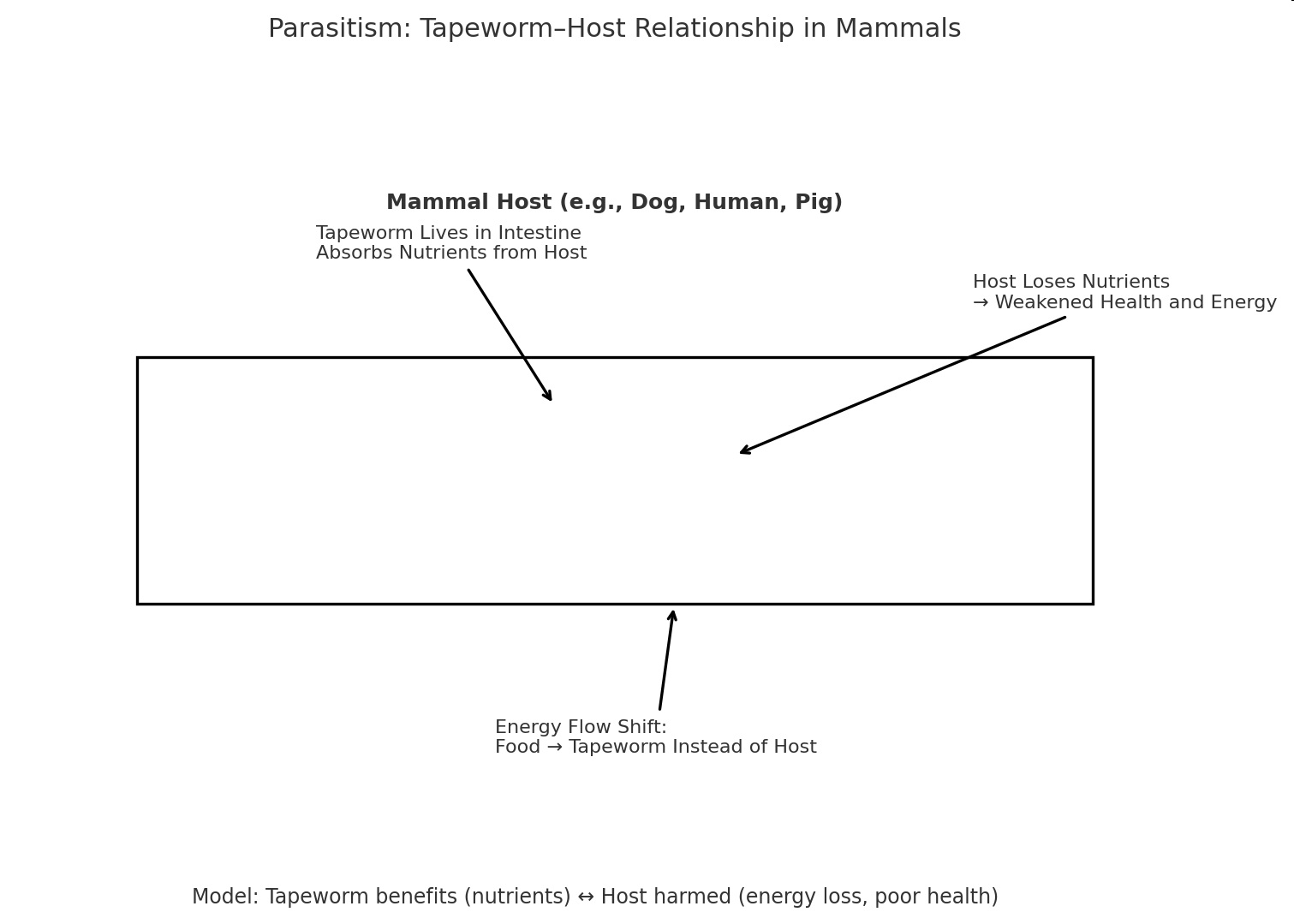
Tapeworms are classic examples of internal parasites. They live in the intestines of mammals, absorbing nutrients from the food their hosts eat. Because tapeworms lack a digestive system, they absorb pre-digested nutrients directly through their skin. This gives them an easy energy source - but it deprives the host of vital nutrients needed for growth and health.
Most tapeworm infections begin when animals consume contaminated food or water containing tapeworm eggs or larvae. Once inside the body, the larvae attach to the intestinal walls using hooks or suckers. They can grow to astonishing lengths - some exceeding 10 meters - and produce thousands of eggs each day.
For the host, effects can range from mild discomfort to severe malnutrition and fatigue. In livestock like cows or pigs, heavy infections can lead to reduced weight gain and lower milk or meat production. In wildlife, such as foxes or wolves, parasitic infections can weaken individuals and reduce reproductive success, affecting predator–prey balance.
Parasites influence entire ecosystems by altering energy flow. Energy that would normally move from producers to herbivores to predators can instead be diverted to parasitic species. This “hidden” energy path can represent a significant portion of total ecosystem energy transfer.
Interestingly, parasites also help regulate populations. By reducing host fitness, they can prevent overpopulation of certain species, indirectly maintaining balance within food webs. While often seen as harmful, parasites are a natural and necessary part of ecological systems — demonstrating that even negative interactions play important roles in nature’s stability.
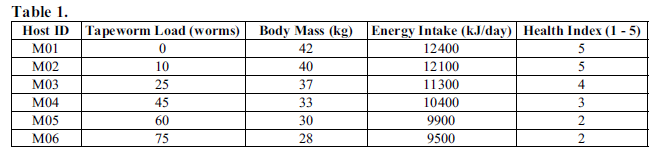

Graph of Information - Figure 1.
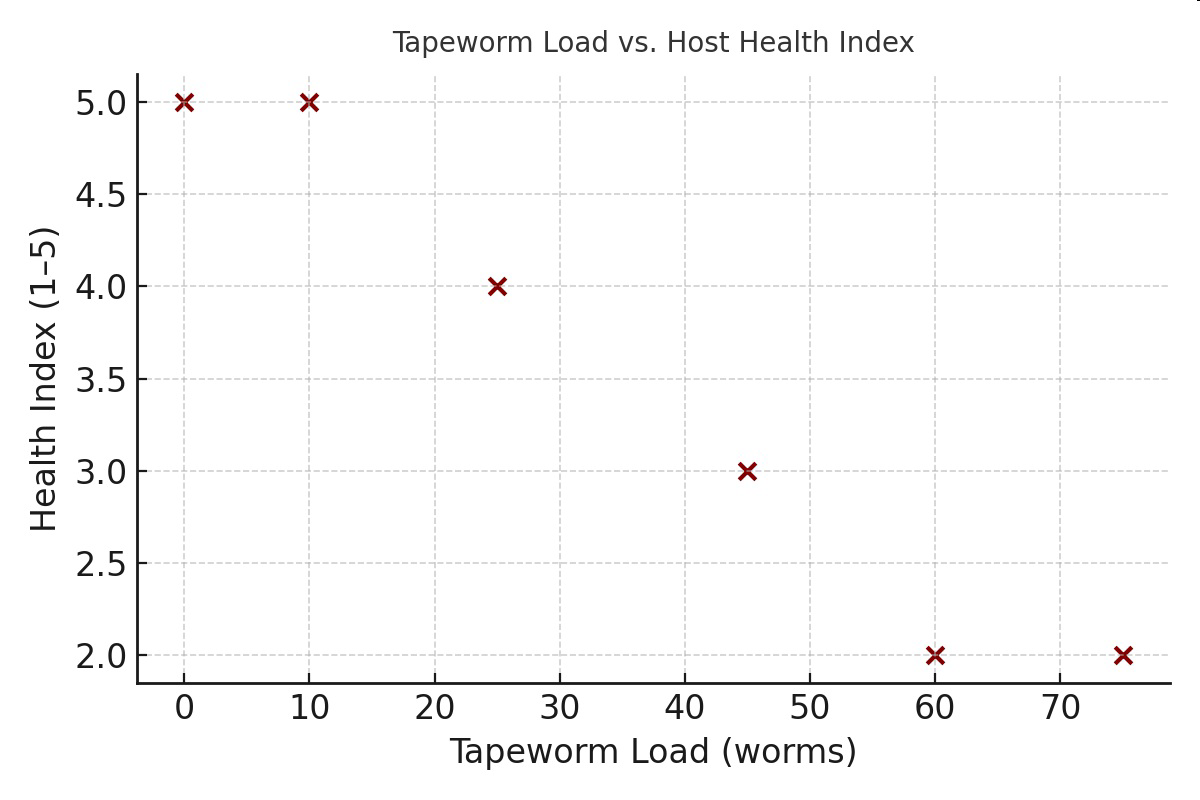
Graph of Information - Figure 2.
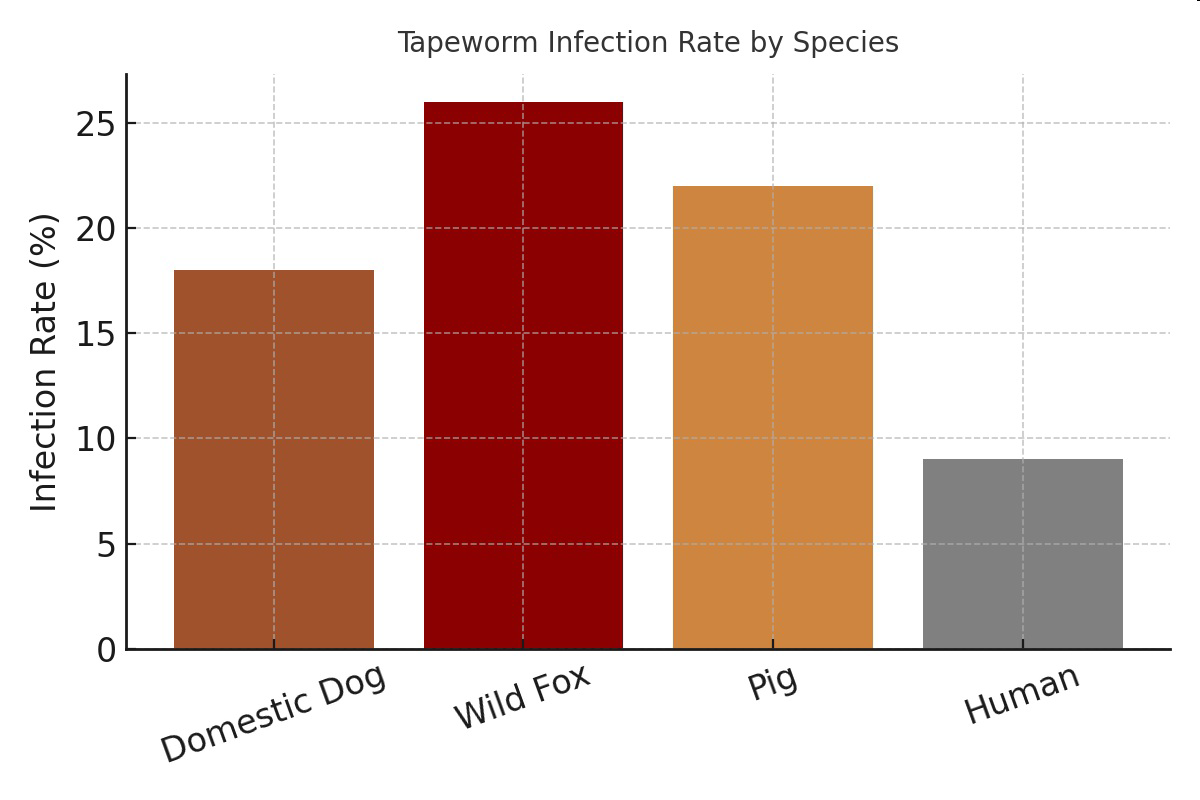
Figure 3.