Pollinator Conservation
Urban green roofs transform city buildings into living ecosystems. By planting native wildflowers, shrubs, and grasses on rooftops, designers create habitats for bees, butterflies, and other insects in otherwise barren urban environments. Green roofs can reduce air temperature, capture stormwater, and support small pollinator communities even in densely populated cities. They are especially valuable in “pollinator deserts” - places with few natural flowers or green spaces.
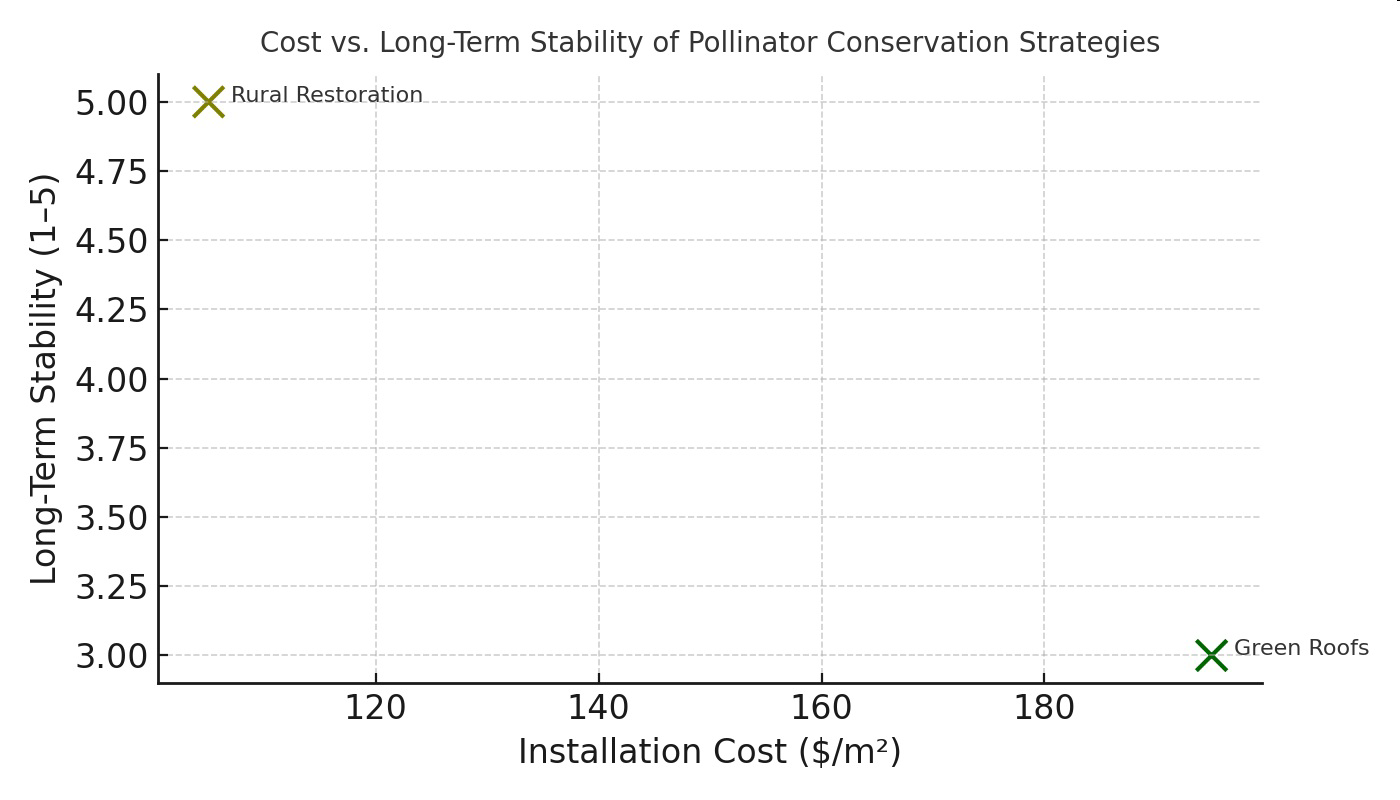
However, green roofs have limitations. Their soil layers are shallow, which restricts the number and type of plants that can grow. Maintenance costs are high, and pollinators must travel long distances between roofs to find resources. Still, research shows that well-planned networks of green roofs can significantly increase urban biodiversity and public awareness of conservation.
Rural habitat restoration, on the other hand, focuses on replanting large areas of native vegetation near farms or on open land. These areas - sometimes called pollinator corridors or field margins - provide nesting sites and diverse food sources. When wildflower strips or hedgerows are added near farmland, both pollinator diversity and crop yields improve. Restored habitats support not only bees but also birds and beneficial insects that control pests.
The main challenge of rural restoration is land use: converting farmland or grazing areas into wildflower meadows can reduce short-term economic gain. It also requires long-term maintenance to prevent weeds or invasive plants from taking over.
Comparing these two strategies helps highlight that scale, location, and human participation all matter when designing for biodiversity. Urban green roofs connect people to nature and benefit cities directly, while rural restoration supports larger, more stable ecosystems. Together, they form complementary pieces of a global effort to protect pollinators.


Graph of Information - Figure 1.
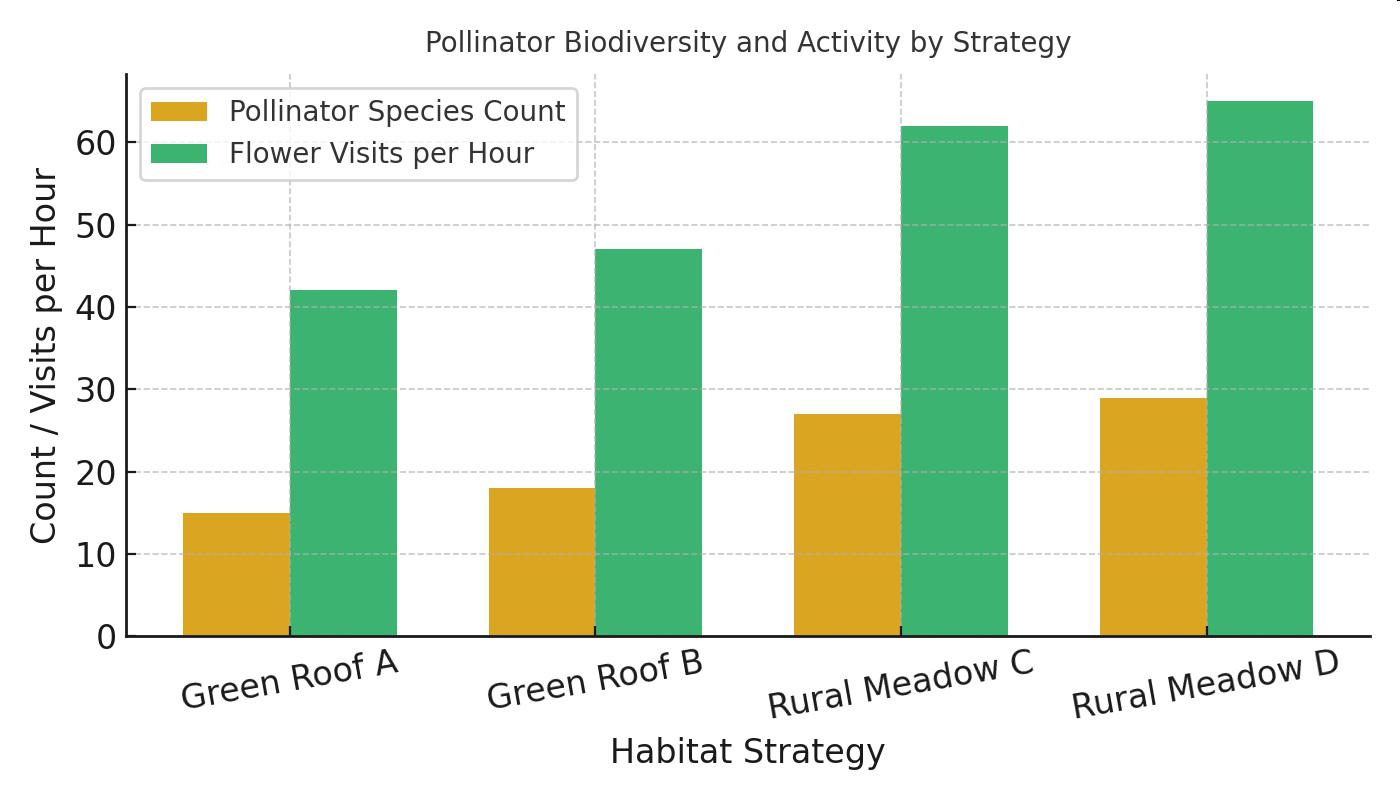
Graph of Information - Figure 2.