Wolves and Elk in Yellowstone - Predator–Prey Regulation
Predator–prey relationships are among the most well-studied patterns in ecology. When one population increases, the other typically responds in a predictable way - predators depend on prey for food, and prey populations are shaped by predation pressure. In Yellowstone National Park, scientists have been able to observe this process in action since the reintroduction of wolves.
Before the 1900s, gray wolves were widespread across the western United States. However, due to hunting and habitat loss, they were nearly eliminated from Yellowstone by the 1920s. Without wolves, the elk population grew unchecked, feeding heavily on willows, aspens, and cottonwoods near rivers. Over time, this overgrazing reduced plant cover, caused soil erosion, and even affected stream habitats for fish and birds.
In 1995, wildlife biologists reintroduced 14 wolves to Yellowstone. Within just a few years, the wolves began hunting elk, reducing their numbers and changing their behavior. Elk spent less time in open valleys and more time in forests, where they were safer but had less access to tender young plants. As grazing pressure decreased, vegetation began to recover. Aspen and willow stands grew taller, and riverbanks stabilized.
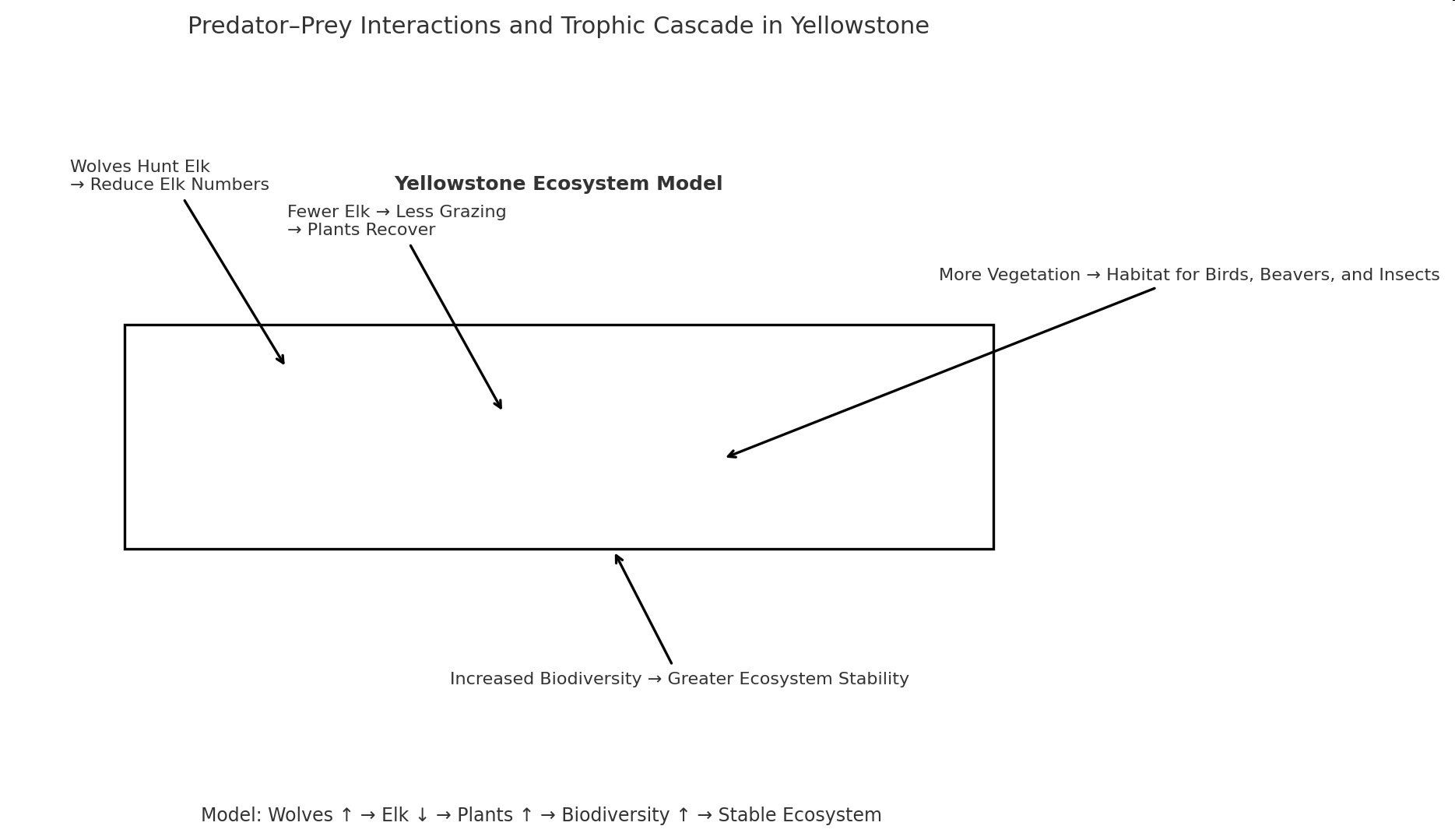
This recovery triggered a trophic cascade - a chain reaction of effects through the food web. More plants supported beavers, whose dams created ponds for fish and amphibians. Songbirds returned to nesting sites that had once been overgrazed. Even scavengers like ravens and bears benefited from leftover wolf kills.
The Yellowstone example illustrates a clear ecological pattern: predators regulate prey populations and influence ecosystem structure. When predator numbers are low, prey populations grow rapidly until resources become scarce. When predators return, prey numbers decrease, and the ecosystem often becomes more balanced and diverse.
These patterns occur across many ecosystems - lions and zebras on the savanna, orcas and seals in polar seas, owls and rodents in grasslands - showing that predator–prey relationships are key to maintaining biodiversity.
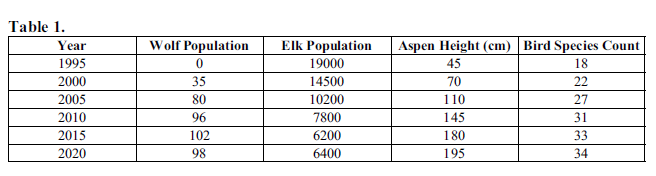
Graph of Information - Figure 1.
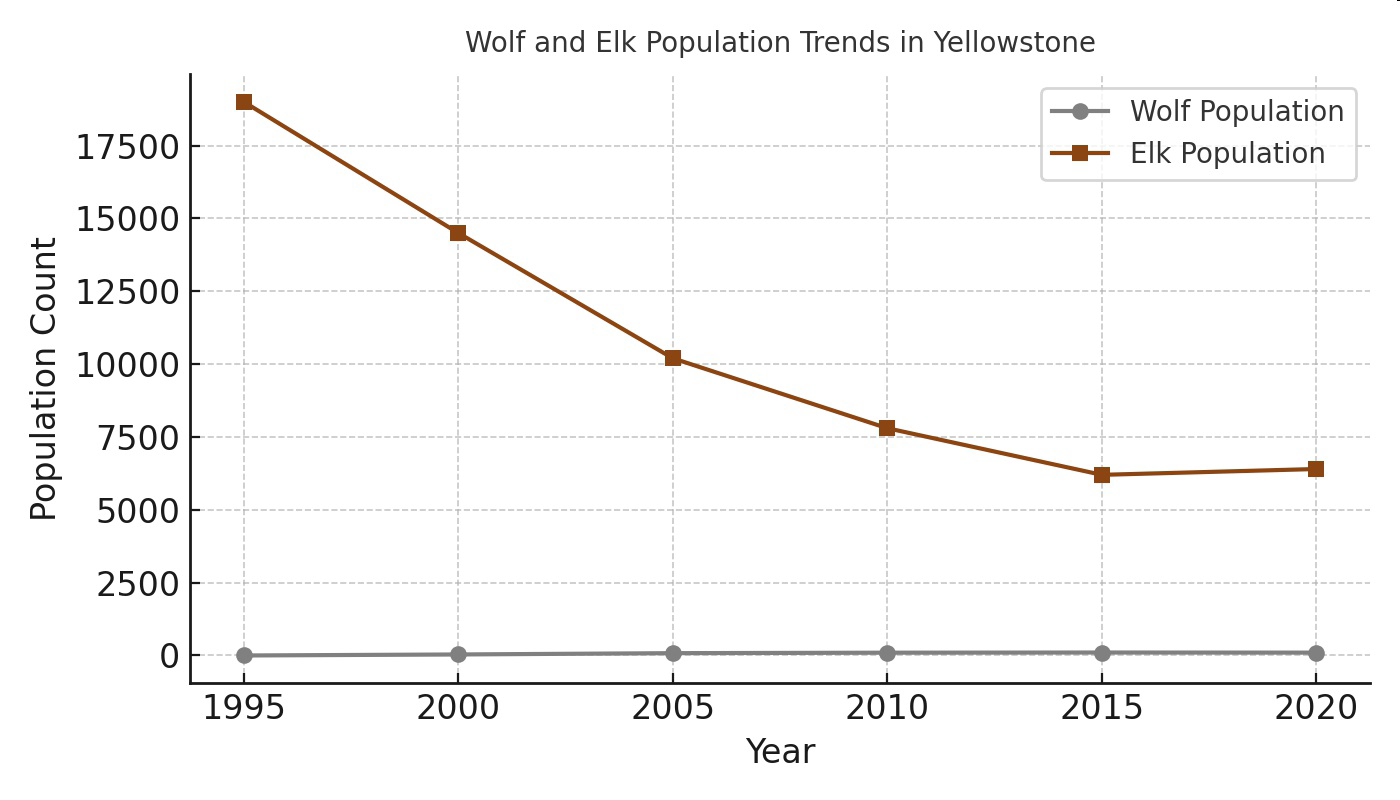
Graph of Information - Figure 2.
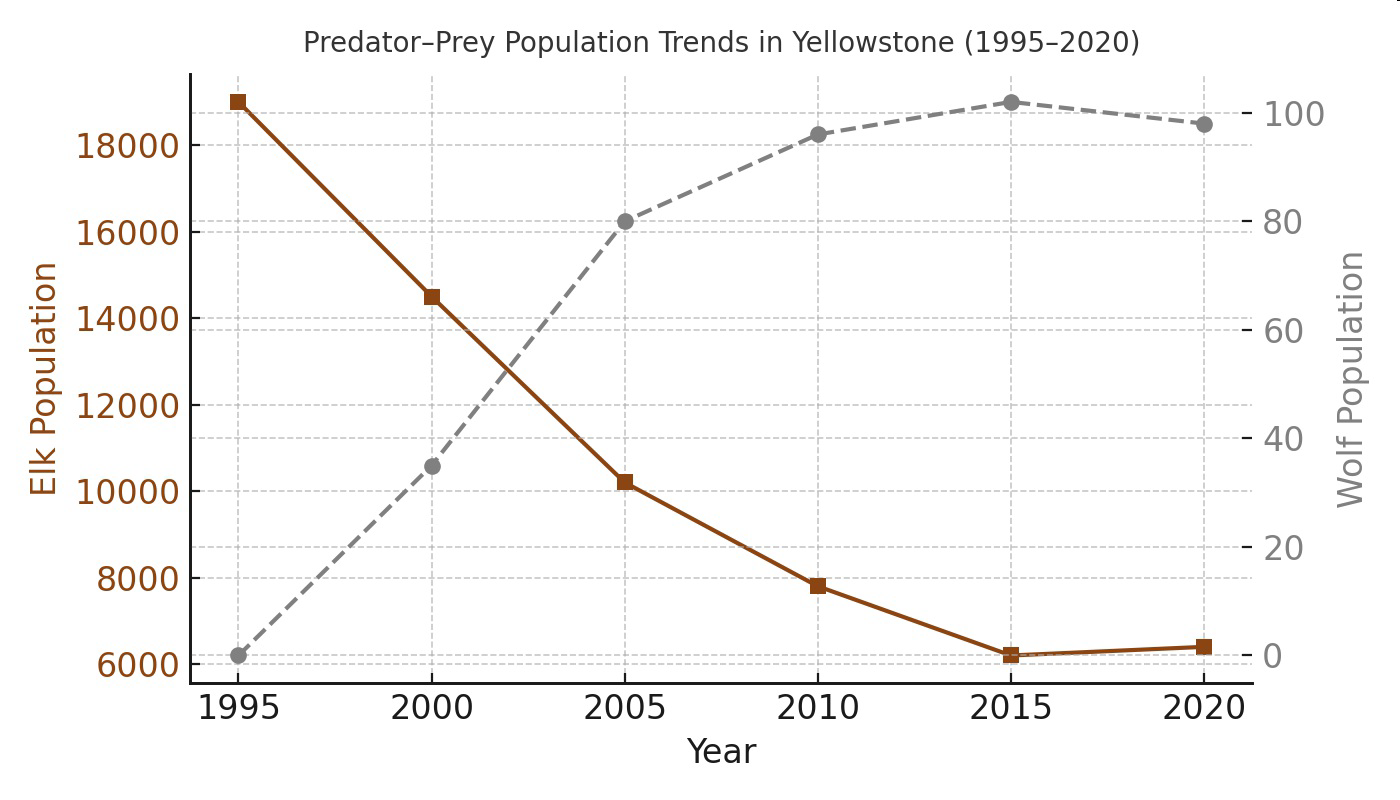
Graph of Information - Figure 3.
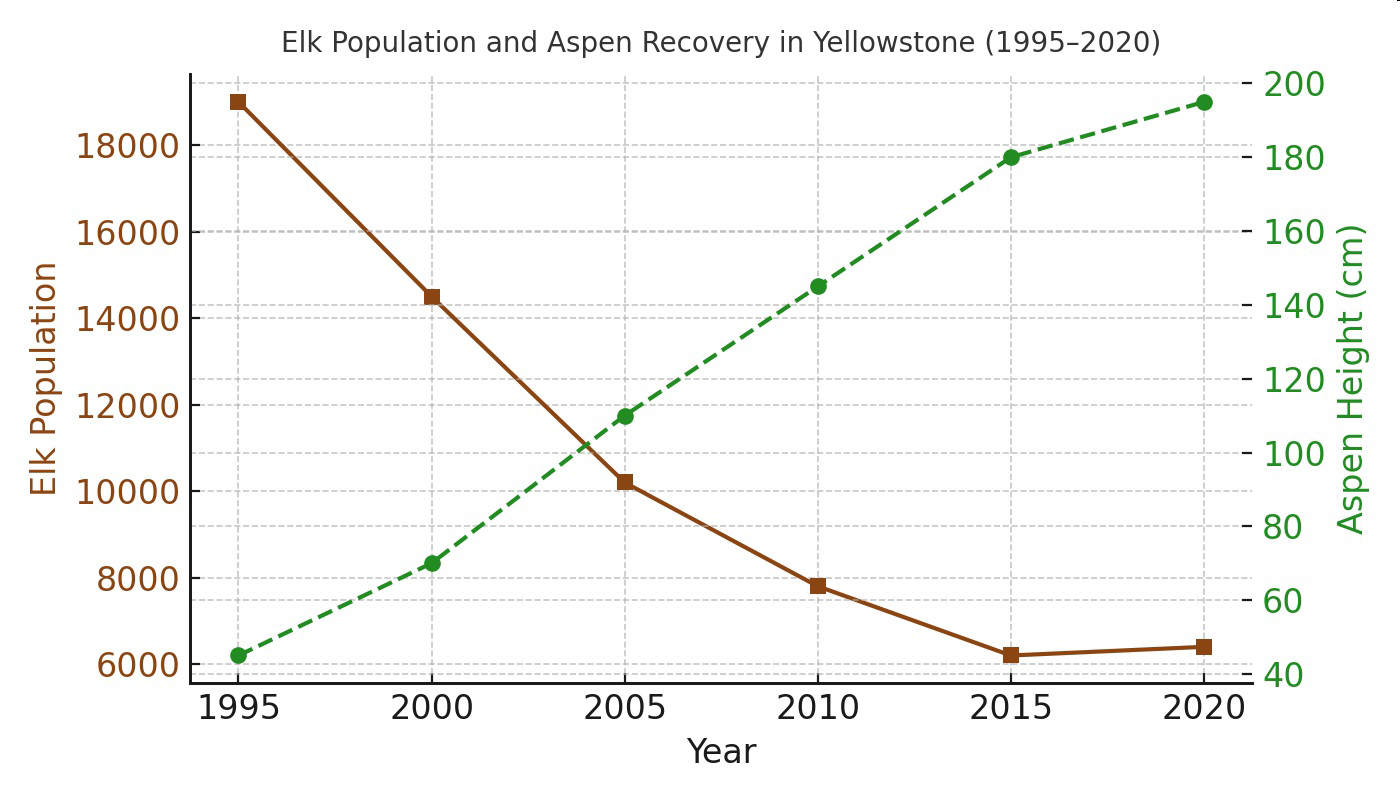
Figure 4.