Acacia Trees and Ants - Mutualism in the Savannah
In ecosystems, organisms interact in many ways - some compete, others prey, and some cooperate. One of the most fascinating cooperative interactions in nature is mutualism, where both species benefit. The relationship between acacia trees and acacia ants in the African savannah is a classic example.
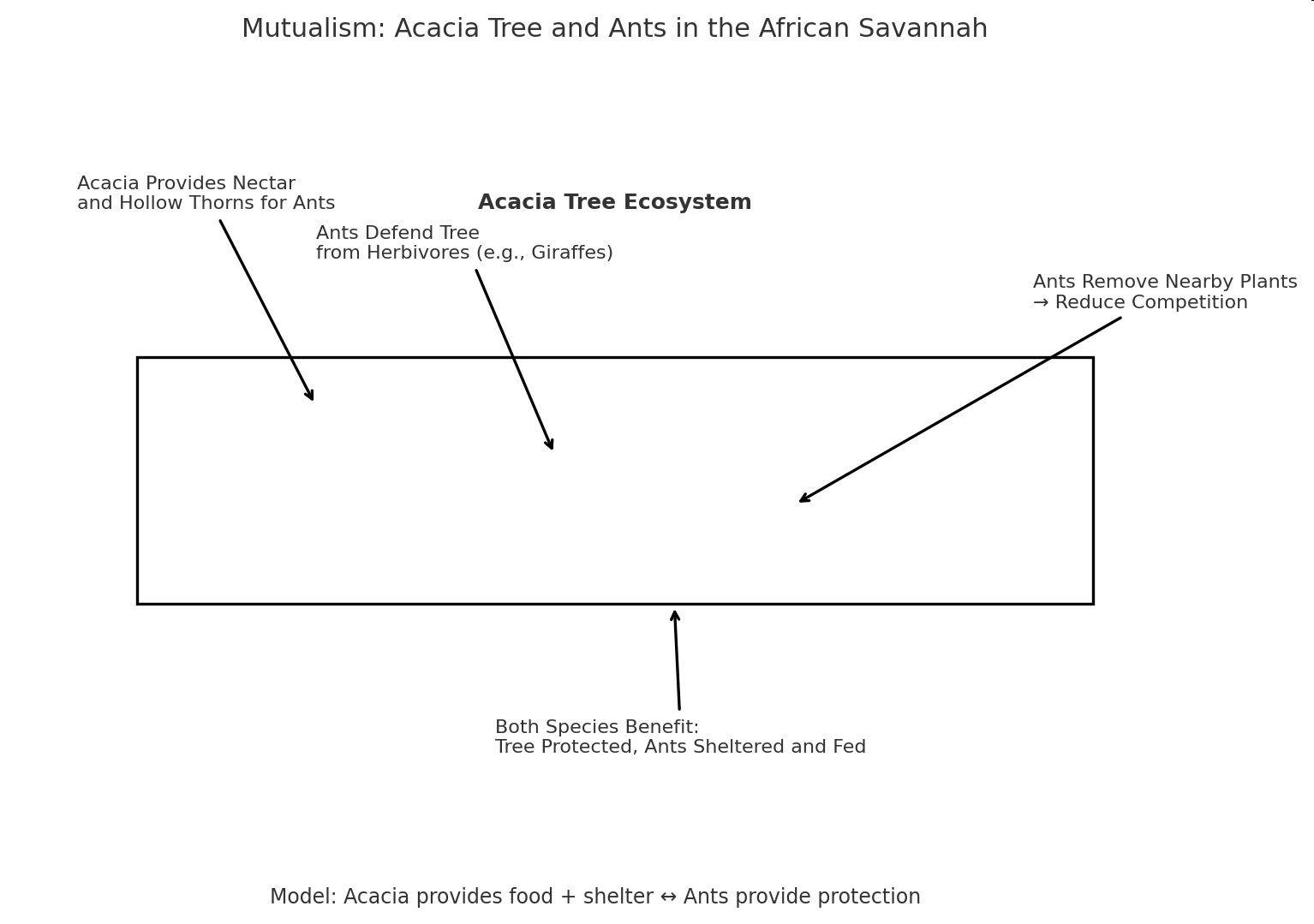
Acacia trees produce large, hollow thorns that serve as living shelters for ants. They also secrete a sugary liquid called nectar from special glands on their leaves. The ants feed on this nectar and raise their colonies inside the hollow thorns. In exchange, they act as bodyguards for the tree.
When animals like giraffes or elephants try to eat the acacia’s leaves, the ants swarm out aggressively, biting and stinging the intruder’s face and tongue. Even small herbivores, like gazelles, avoid trees guarded by ants. By protecting their home, the ants reduce the amount of damage the acacia experiences from grazing.
But the relationship goes deeper. The ants also attack neighboring plants that compete with the acacia for sunlight and nutrients. By clearing away these competitors, the ants increase the acacia’s access to resources. At the same time, the acacia benefits the ants by giving them both food (nectar) and shelter - resources the ants couldn’t easily find elsewhere.
However, this mutualism can shift under changing conditions. If large herbivores disappear from an area, the tree no longer needs its ant defenders as much. Some studies have shown that, over time, acacia trees stop investing as heavily in nectar production or hollow thorns when herbivores are absent. In turn, ant colonies decline, and other less-protective ant species take over.
This demonstrates a key ecological principle: patterns of interaction depend on environmental conditions. When both species gain benefits, the relationship stays mutualistic. If the balance shifts, the interaction may weaken or even turn competitive.
Mutualism like this is not limited to acacias and ants - similar relationships occur between clownfish and sea anemones, pollinating bees and flowers, and humans and gut bacteria. Such interactions show that cooperation can be just as important as competition in shaping ecosystems.
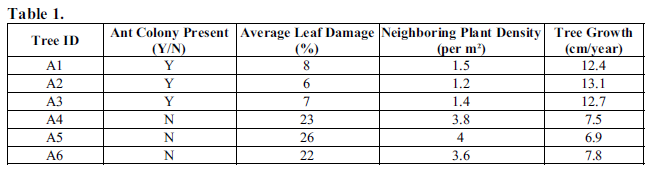
Graph of Information - Figure 1.
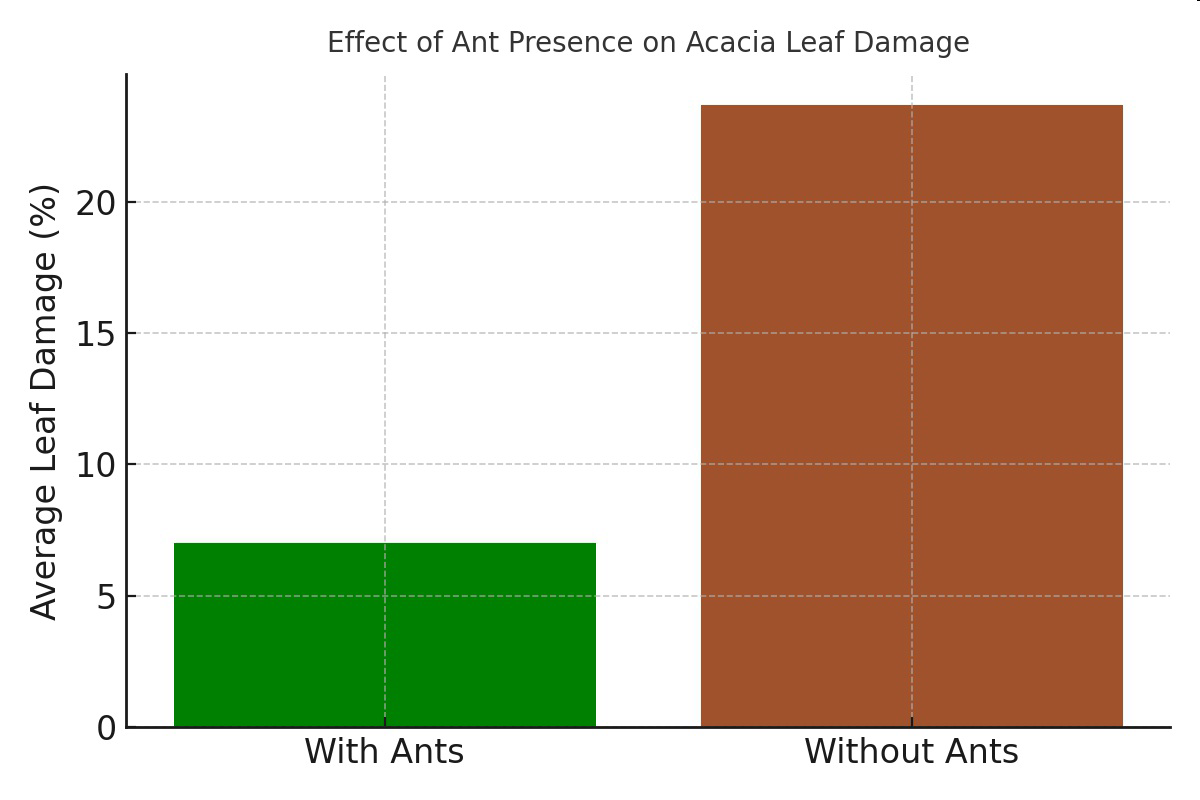
Figure 2.