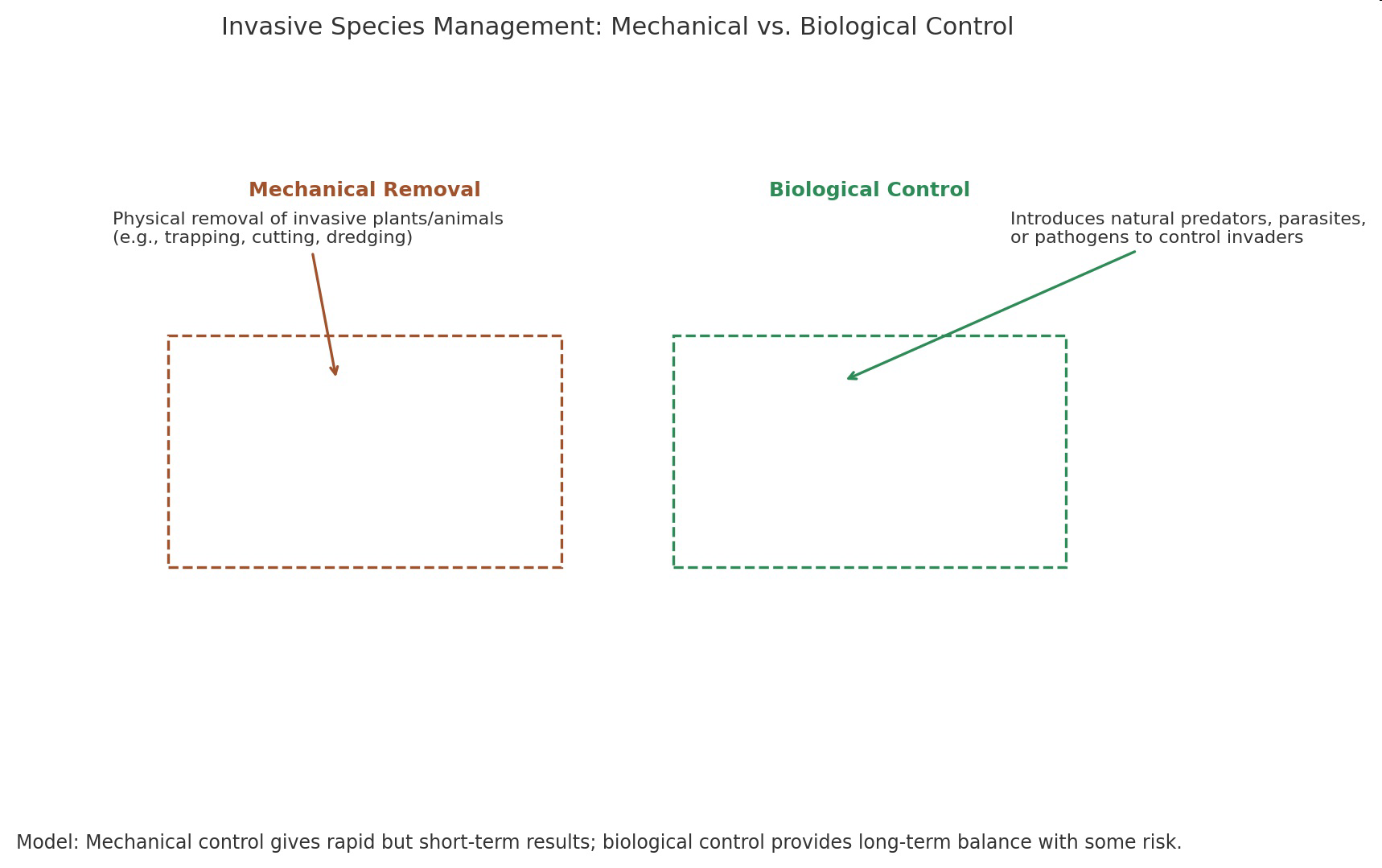
Invasive Species Control
Mechanical removal involves directly removing invasive species from an ecosystem. This can include pulling plants by hand, trapping or netting animals, draining infested water, or using barriers to block new invasions.
Mechanical methods are precise and immediate, making them useful when an invasive population is small or newly established. For example, park rangers in Florida manually remove Burmese pythons from the Everglades, and teams in the Great Lakes scrape away zebra mussels from docks and water pipes. These efforts can protect native habitats but are often labor-intensive and costly. If even a few individuals survive, populations can rebound quickly.
Biological control, on the other hand, uses living organisms to manage invasives. Scientists might introduce a natural predator or parasite that evolved with the invasive species in its native range. For instance, the introduction of a parasitoid wasp helped reduce populations of the emerald ash borer beetle in North America, and specific fungi have been used to control invasive kudzu vines. This approach can be self-sustaining, reducing costs over time. However, it carries ecological risks - if the introduced species spreads beyond its target or begins affecting native species, it can create a new ecological imbalance.
Comparing these strategies helps reveal the complexity of ecosystem management. Mechanical removal provides quick, controlled results but must be repeated regularly. Biological control may offer long-term balance but can introduce uncertainty. In some modern programs, managers combine both - removing most of the population mechanically and then using biological control to maintain low levels.
Both methods represent different ways of engineering with ecology - applying scientific design to stabilize natural systems without causing additional harm.

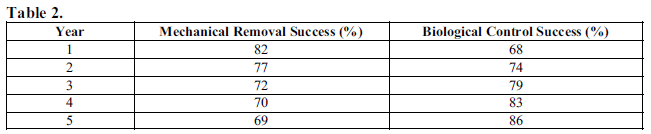
Graph of Information - Figure 1.
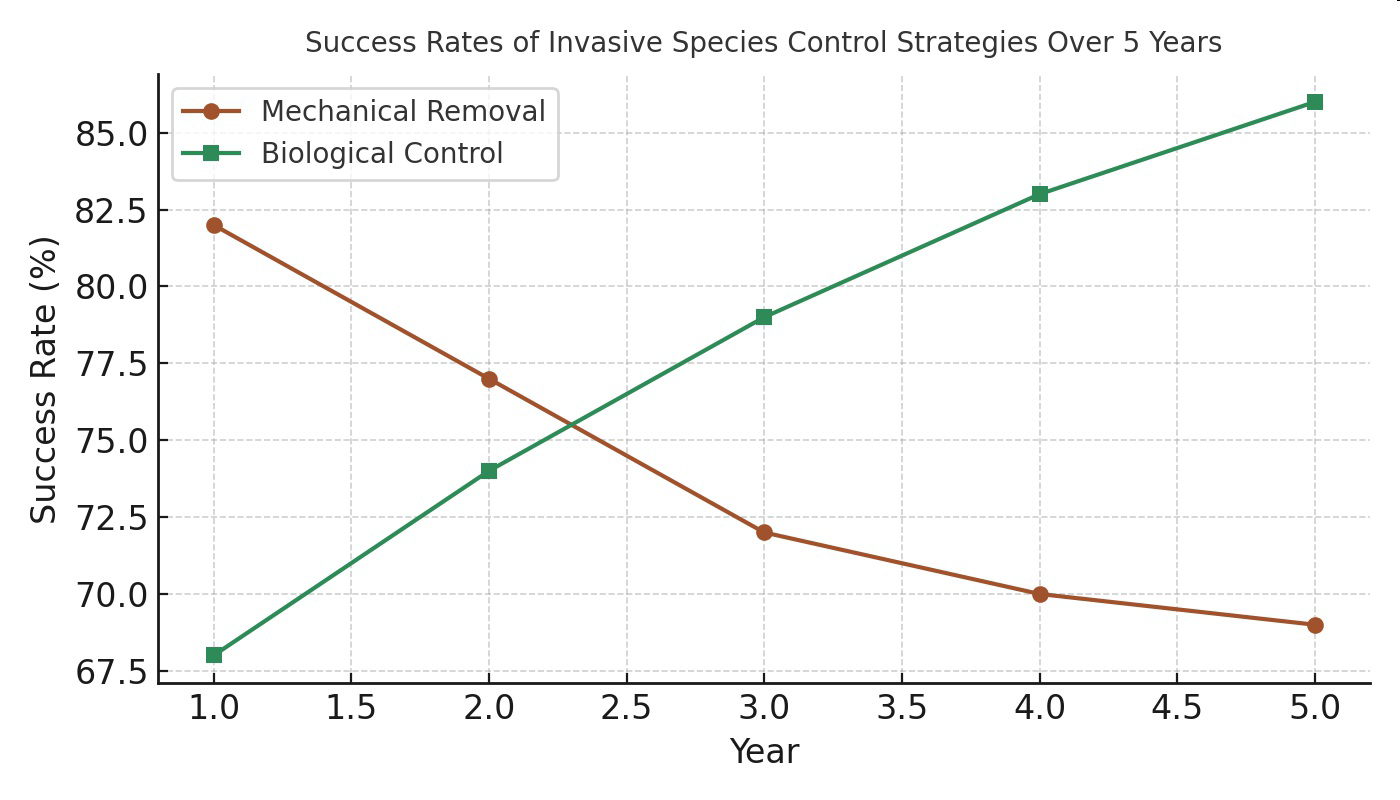
Graph of Information - Figure 2.
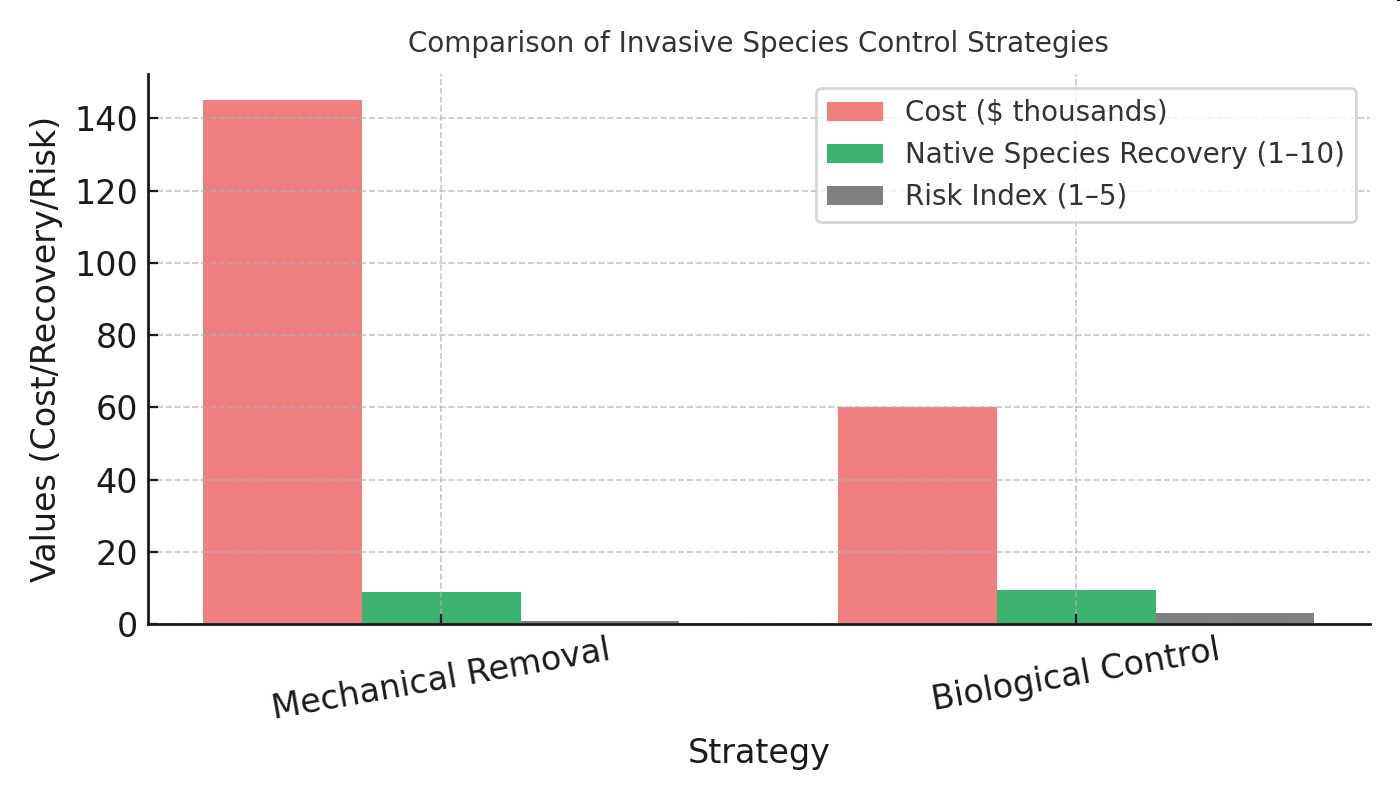
Figure 3.