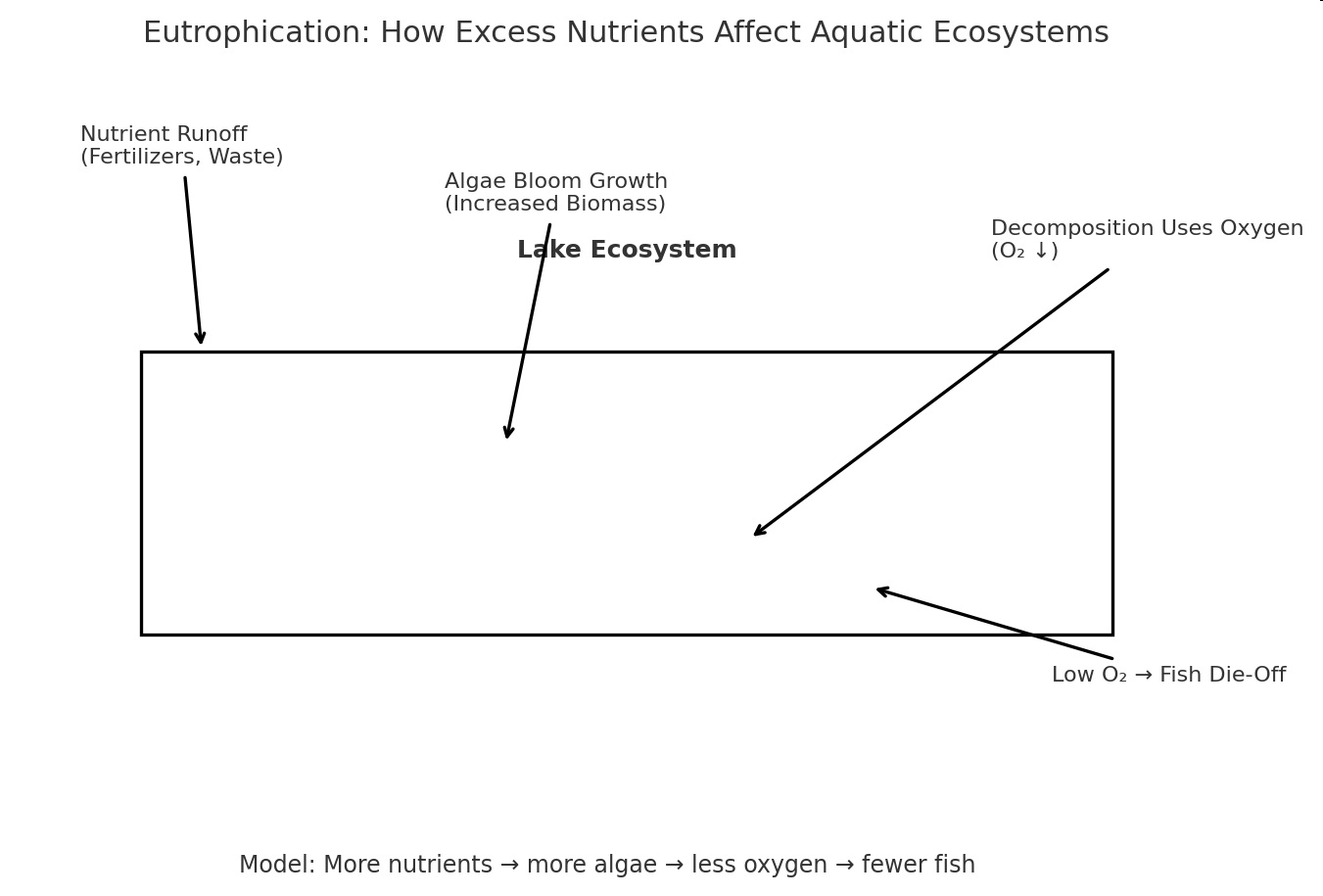
Algae Growth and Nutrient Levels
Every organism depends on the availability of key resources such as food, water, and oxygen. However, when those resources become too abundant, ecosystems can become unbalanced. In aquatic ecosystems, nutrients like nitrogen and phosphorus are normally present in small amounts. When fertilizers or waste enter lakes or rivers, they dramatically increase these nutrient levels.
Algae, microscopic plant-like organisms, respond by growing rapidly - forming what’s called an algal bloom. At first, this seems beneficial, since algae produce oxygen during photosynthesis. But when the bloom becomes too dense, sunlight can’t reach deeper water. When the algae die, bacteria break them down - using up dissolved oxygen in the process.
As oxygen levels drop (a condition called hypoxia), fish and other aquatic life begin to die off. Thus, what began as increased resource availability (extra nutrients) ends up reducing biodiversity and harming populations - a powerful lesson in ecosystem balance.
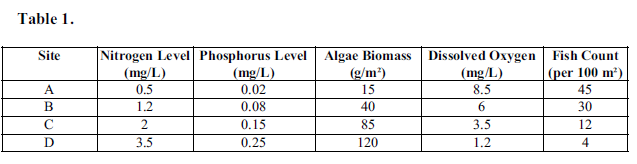
Graph of Information - Figure 1.
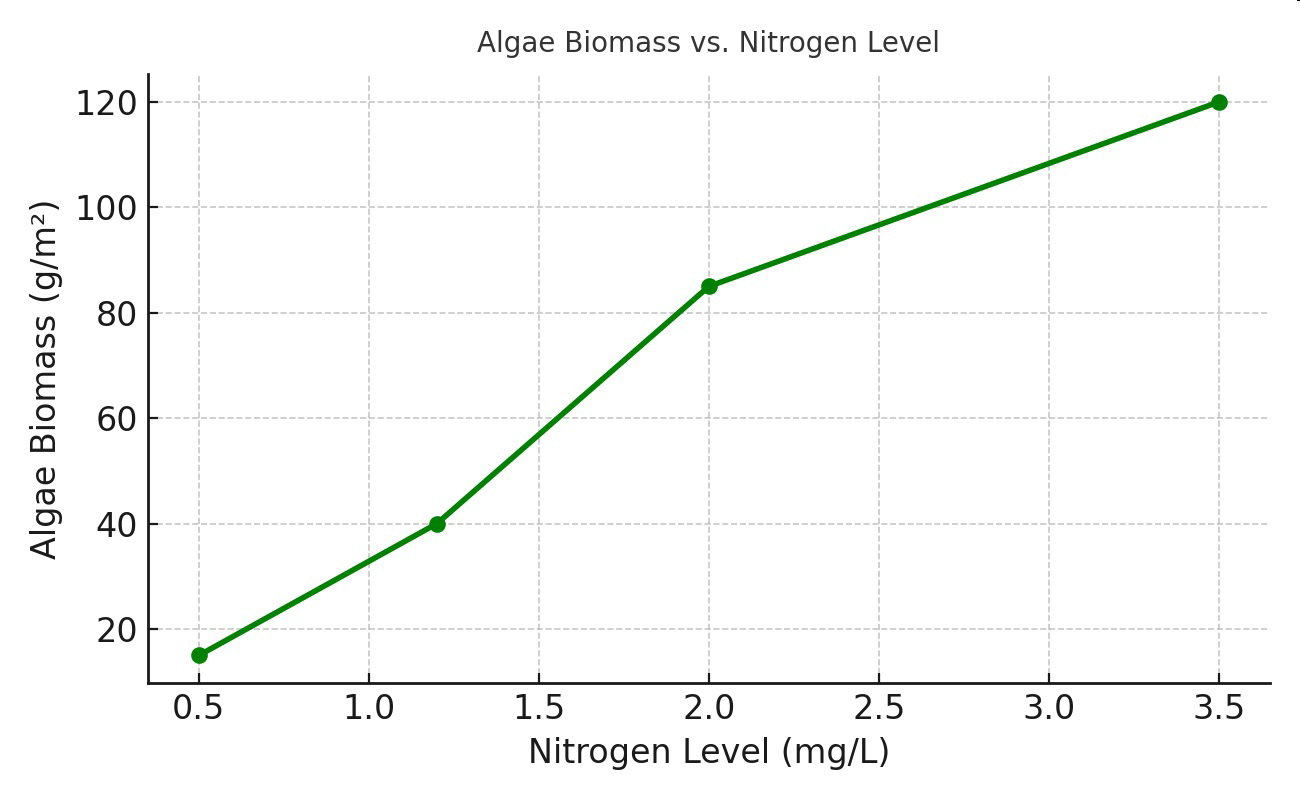
Figure 2.