Animal Reproduction - Starfish vs. Frogs
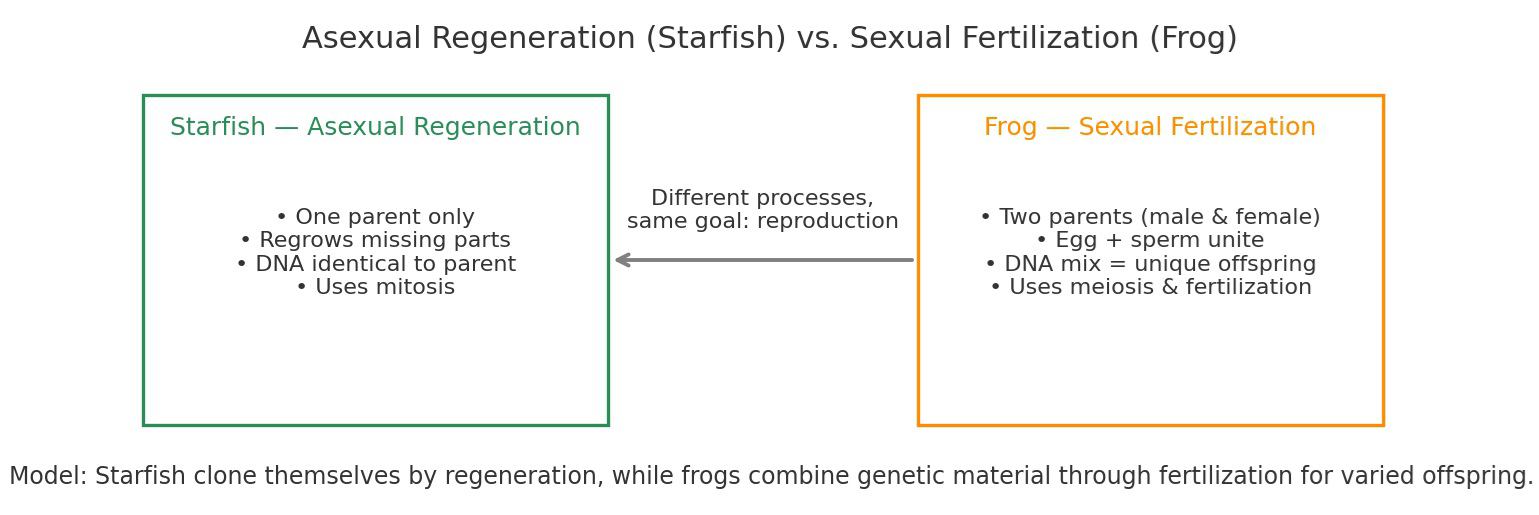
All living things must reproduce to continue their species, but animals have evolved different ways to do it. Some, like the starfish, can reproduce asexually, meaning they need only one parent. When part of a starfish’s central disc and an arm are detached, those cells begin dividing through mitosis. Over time, the missing parts grow back - forming a genetically identical clone of the original. This is called regeneration.
Asexual reproduction gives starfish an advantage: even if one is injured or loses limbs, it can still form new individuals without a mate. This is efficient and ensures survival in low-population environments, but all offspring share the same DNA - and thus, the same weaknesses. If the ocean changes (temperature, salinity, or diseases), identical individuals may all struggle to adapt.
Frogs, on the other hand, reproduce sexually. A male frog fertilizes the female’s eggs externally in water. Each egg receives half its DNA from the mother and half from the father. When combined, these sets of chromosomes create genetically unique offspring. This genetic variety increases the species’ ability to survive in changing conditions, resist disease, and adapt over time.
Though sexual reproduction requires more energy and time, it produces variation, while asexual reproduction provides consistency. Both strategies reflect how different animals balance energy use and environmental challenges to sustain their populations.
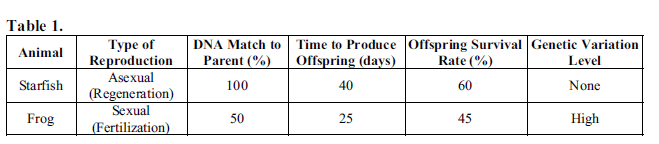
Graph of Information - Figure 1.
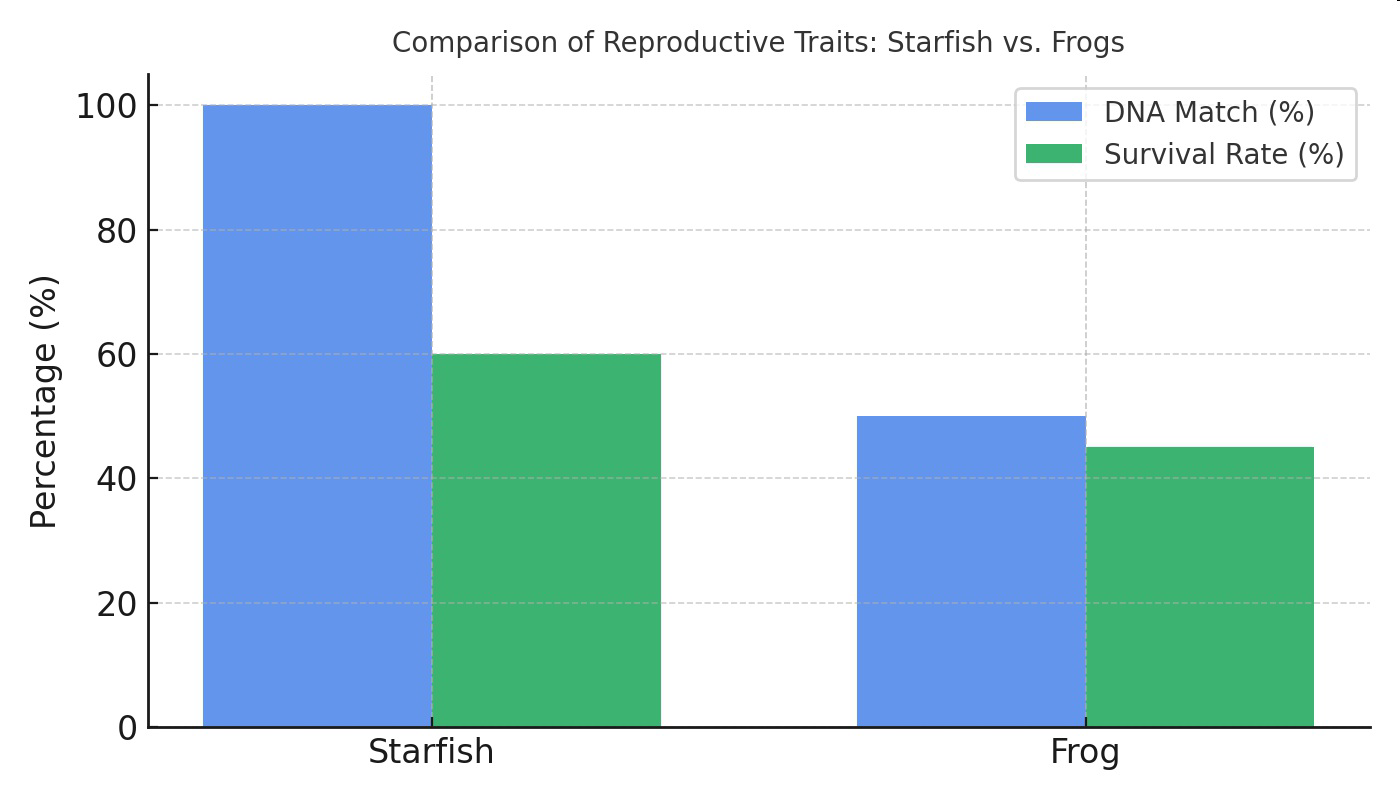
Figure 2.