Carbon Dioxide Uptake and Plant Mass Increase
Scientists have long known that plants take in carbon dioxide ($CO_2$) from the air through tiny openings on their leaves called stomata. During photosynthesis, plants use carbon dioxide and water, powered by sunlight, to make sugars. These sugars are then used to build plant tissue - leaves, stems, and roots - giving the plant more mass over time.
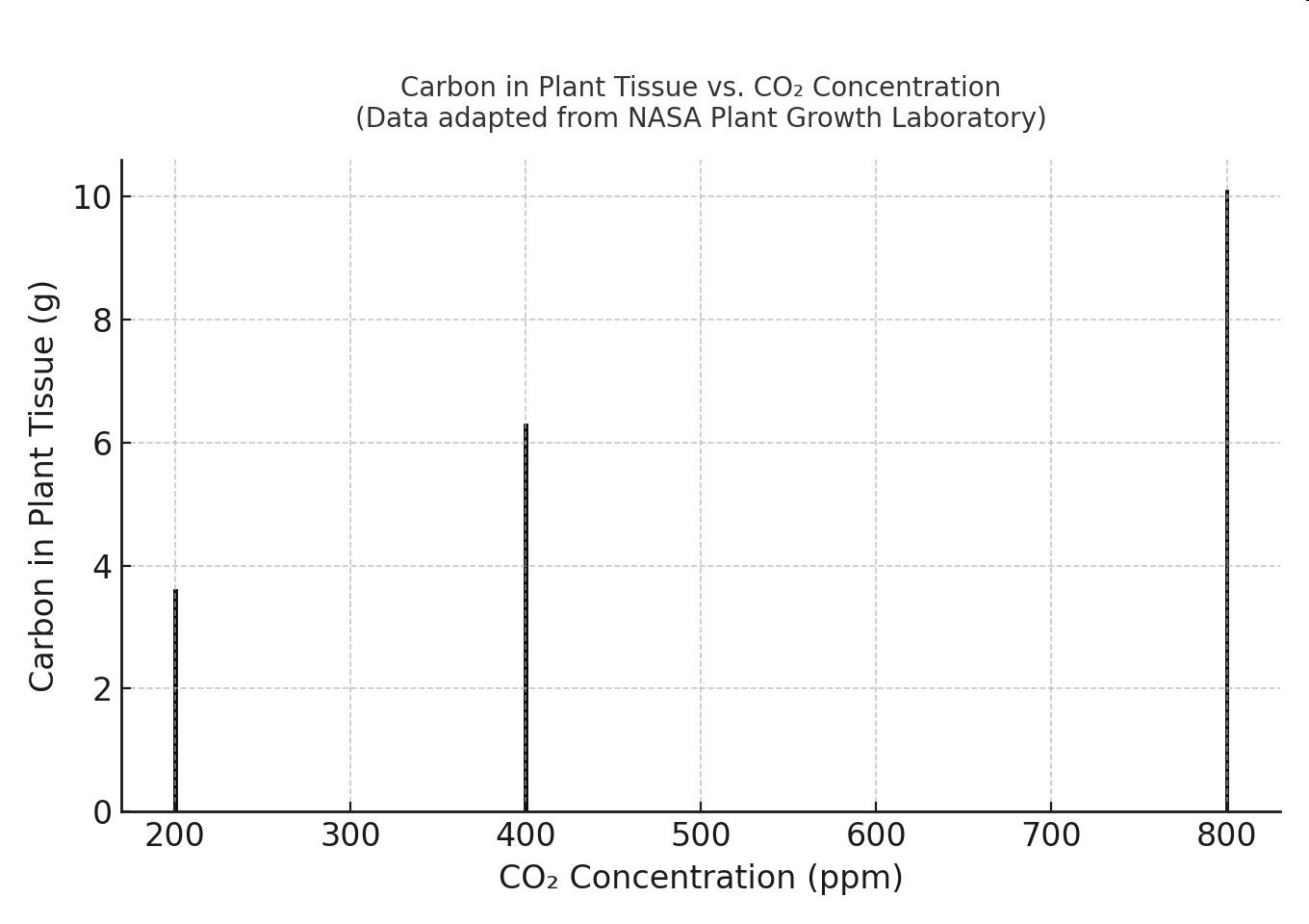
Researchers at the NASA Plant Growth Laboratory grew identical plants under different air conditions to measure how $CO_2$ concentration affects plant growth and carbon content.
Table 1.
$CO_2$ Concentration (ppm) | Average Plant Dry Mass (g) | Carbon in Plant Tissue (g) | Water Used (mL) |
|---|
200 | 8.2 | 3.6 | 250 |
400 | 13.5 | 6.3 | 280 |
800 | 21 | 10.1 | 310 |
Plants grown in air with more carbon dioxide gained more mass and contained more carbon in their tissues. This shows that $CO_2$ from the air provides much of the carbon used to build plant matter. While plants need nutrients from soil, those minerals make up only a small fraction of total mass - the bulk comes from air and water.
This experiment connects directly to photosynthesis and shows students how plant growth depends on gases in the air. It provides a clear, measurable link between $CO_2$ uptake and biomass formation, reinforcing that most of a plant’s material originates from the atmosphere.
Graph of Information - Figure 1.
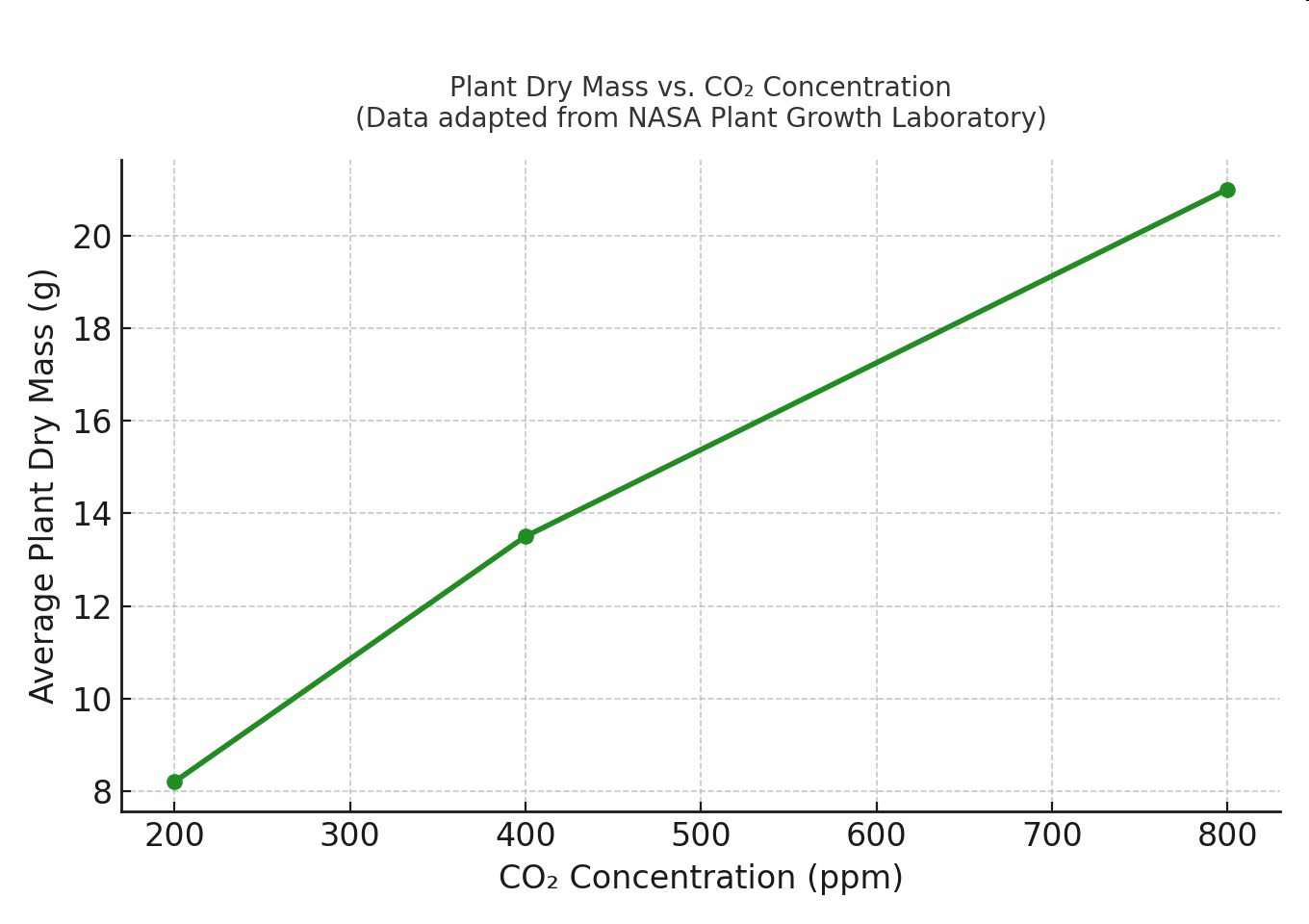
Graph of Information - Figure 2.