Comparing Growth in Light vs. Darkness
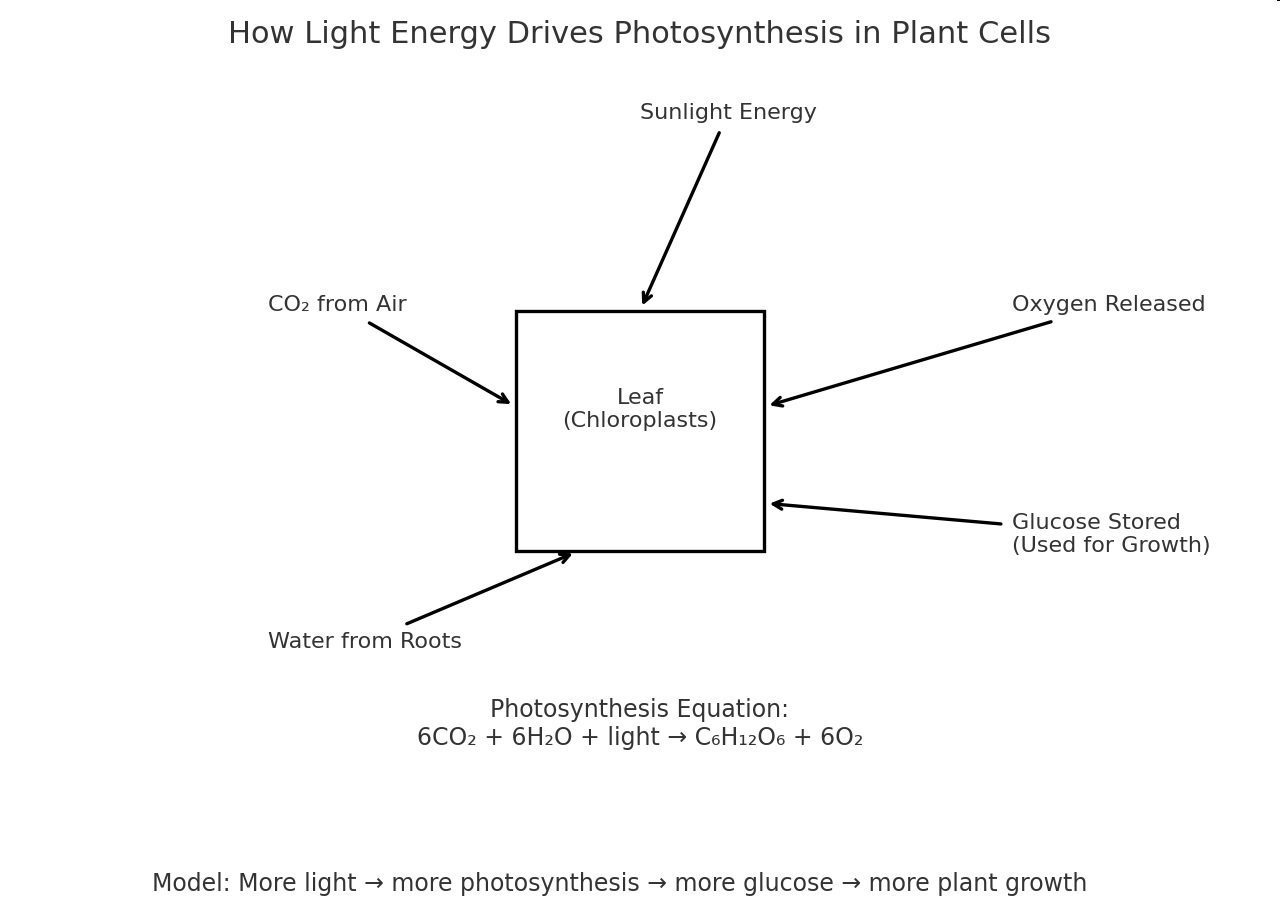
Plants capture light energy from the Sun and transform it into chemical energy during photosynthesis. This process converts carbon dioxide $CO_2$ and water $H_2O$ into glucose $C_6H_{12}O_6$ — a sugar that plants use to build tissues and store energy.
In bright light, chloroplasts absorb sunlight efficiently, fueling rapid photosynthesis. The plant produces abundant glucose, which contributes to biomass growth - the physical increase in stems, leaves, and roots.
In total darkness, however, photosynthesis cannot occur because there is no light energy to drive the chemical reaction. The plant still performs cellular respiration, using stored sugars for energy, but it cannot replace the energy it consumes. Over time, the plant loses mass and eventually wilts or dies.
This relationship between light availability and growth rate shows how energy enters ecosystems: sunlight is captured by producers and converted into chemical energy, which supports all other life forms. Without sunlight, the flow of energy stops - and the cycling of matter in living systems is disrupted.
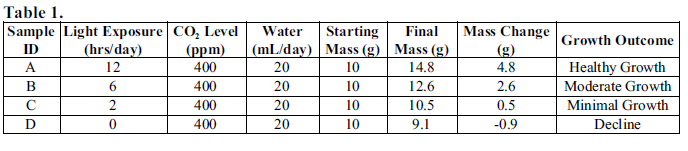
Graph of Information - Figure 1.
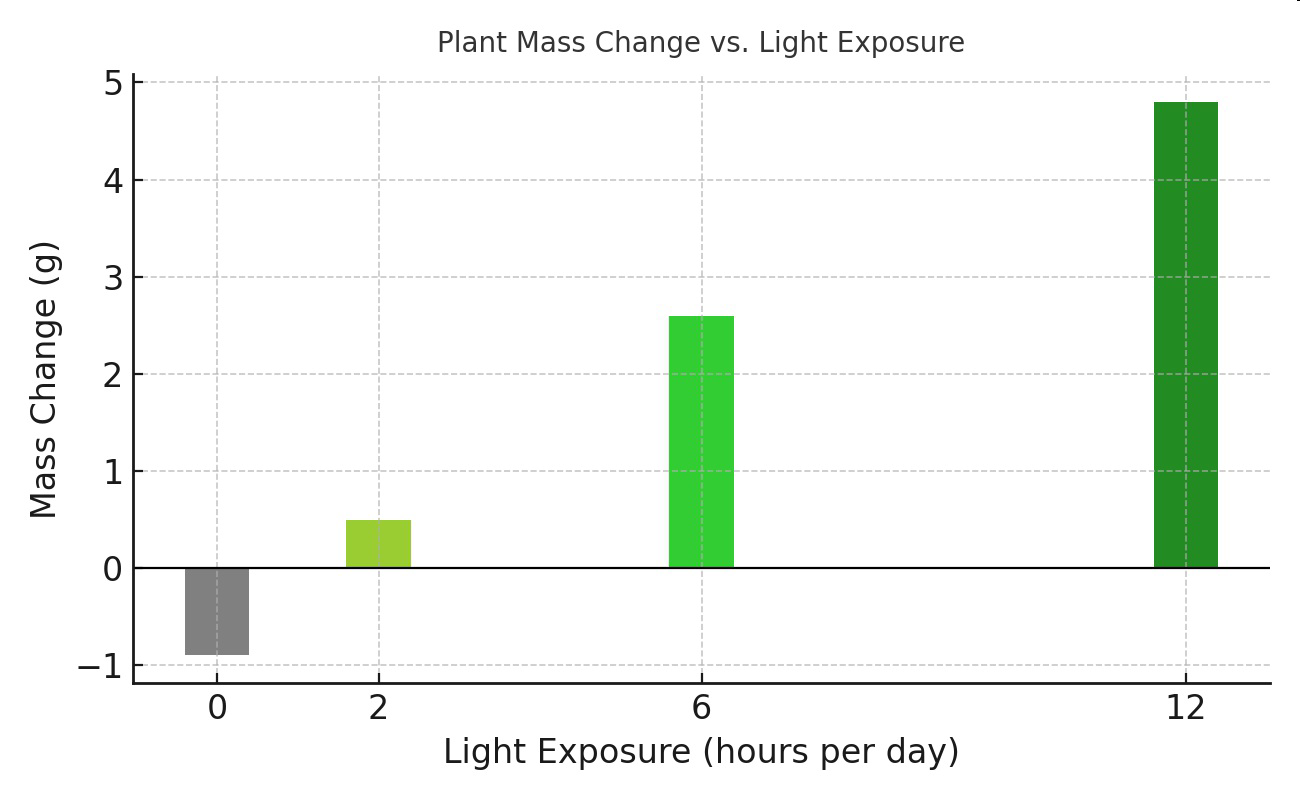
Figure 2.