Drought and Plant Survival in Grasslands
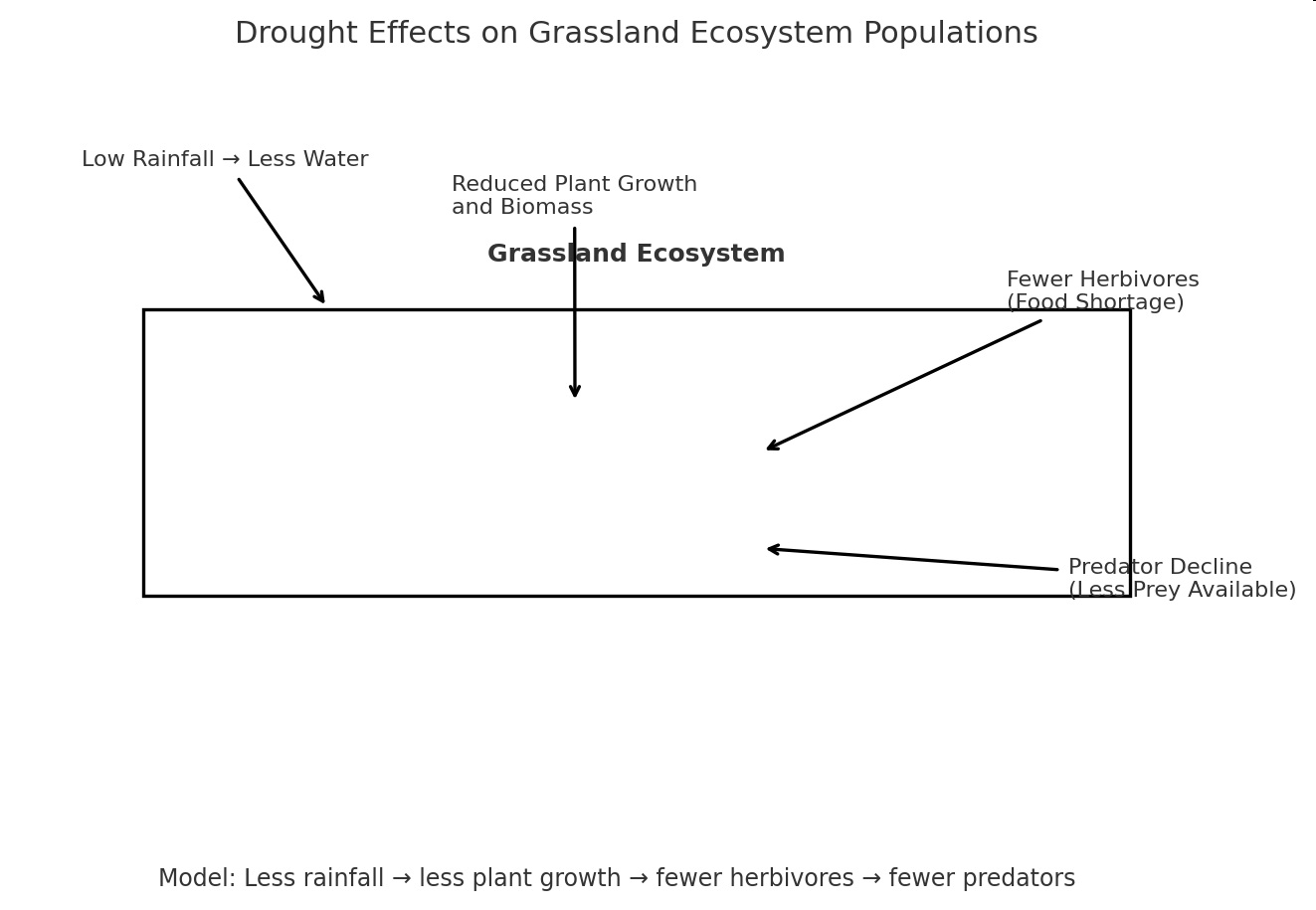
All ecosystems rely on the availability of key resources such as water, sunlight, and nutrients. In grasslands, water is often the most important limiting factor. When rainfall is plentiful, grasses grow quickly, providing abundant food and shelter for insects, grazing animals, and predators. But when rainfall decreases, the system changes dramatically.
During a drought, plants close their stomata to conserve water, slowing photosynthesis and growth. Shallow-rooted grasses die first, leaving behind dry soil that can erode easily. As plants disappear, herbivore populations decline because food becomes scarce. With fewer herbivores, predator populations also shrink.
These connected population changes demonstrate how resource availability affects every level of the food web. When rain returns, the ecosystem can recover - but long-term or repeated droughts may permanently shift the balance, favoring drought-tolerant species.
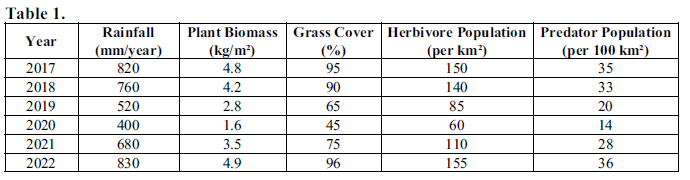
Graph of Information - Figure 1.
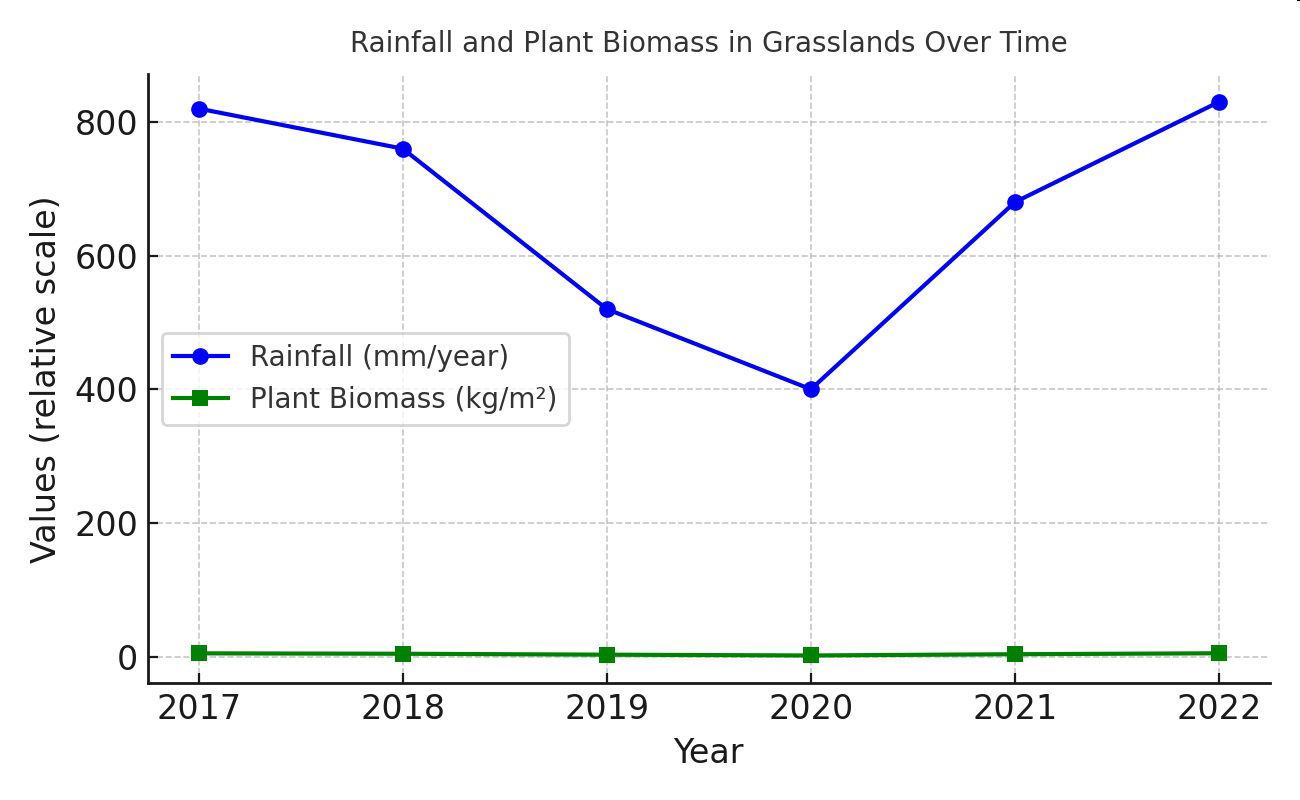
Figure 2.