Exercise and Carbon Dioxide Production
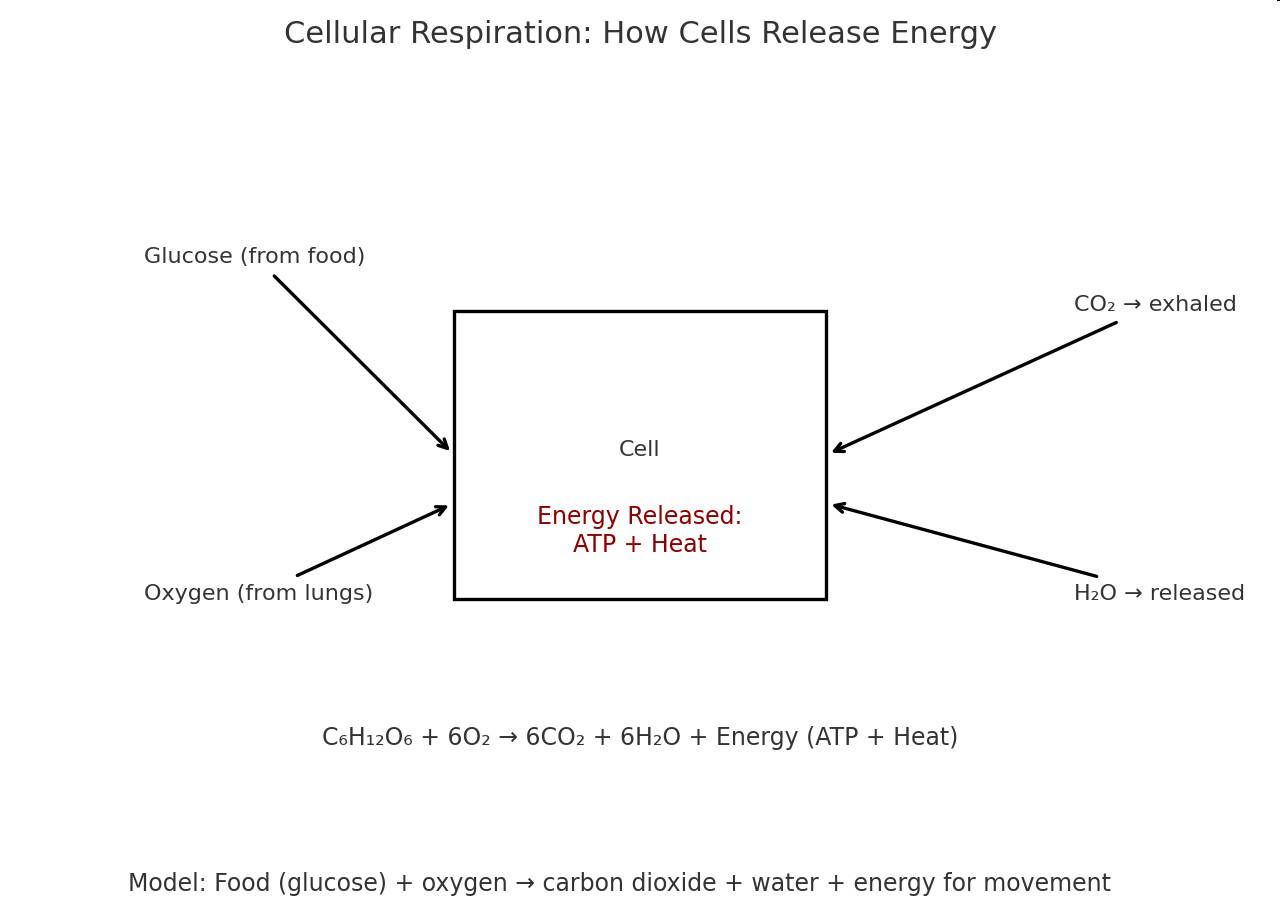
All living organisms require energy to perform essential functions such as movement, repair, and growth. That energy is stored in glucose - a sugar molecule produced by photosynthesis and consumed in food. Inside the cells, glucose is broken down in a process called cellular respiration, which releases usable energy in the form of ATP (adenosine triphosphate).
The overall chemical equation for cellular respiration is:
$C_6H_{12}O_6 + 6O_2 \rightarrow 6CO_2 + 6H_2O + \text{Energy(ATP + Heat)}$
This means glucose (a food molecule) reacts with oxygen to produce carbon dioxide, water, and energy. The energy released is used for cell functions - like contracting muscles during exercise.
During physical activity, muscle cells need more energy, so the rate of cellular respiration increases. To support this, the respiratory system brings in more oxygen, and the circulatory system delivers it faster to the cells. The extra $CO_2$ produced must be exhaled, which is why your breathing and heart rate rise.
This process shows how matter is rearranged through chemical reactions, and how energy flows from food molecules to power movement - an essential example of energy transformation in living systems.
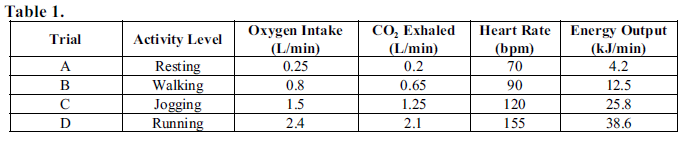
Graph of Information - Figure 1.
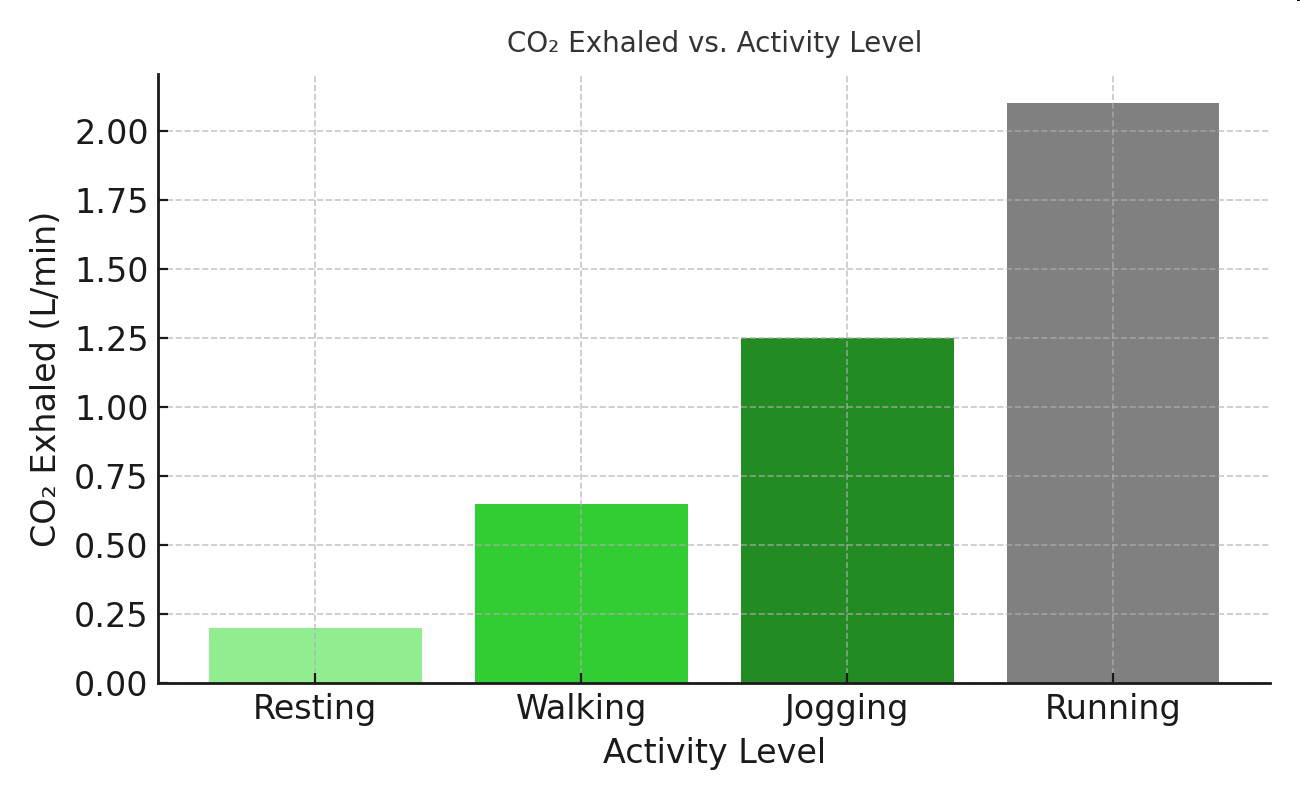
Figure 2.