Algal Blooms from Agricultural Runoff
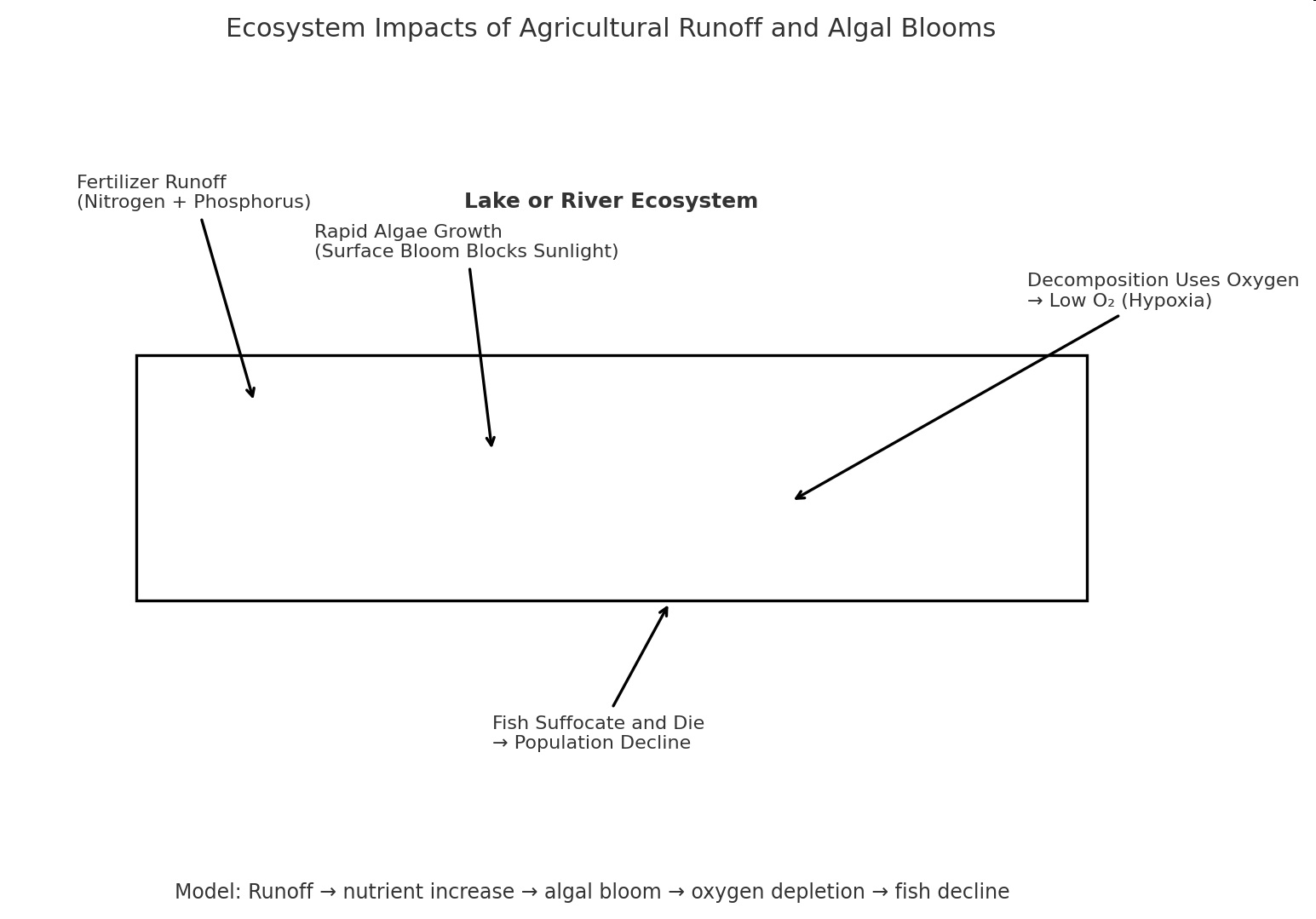
Every ecosystem depends on a delicate balance of nutrients. Nitrogen and phosphorus are essential elements that plants and algae need to grow, but too much of these nutrients can cause serious problems. When farmers apply fertilizer to crops, rain can wash excess nutrients into nearby streams and rivers. This nutrient-rich water flows downstream, eventually reaching lakes or coastal areas, where it acts as fertilizer for aquatic plants and algae.
Under normal conditions, algae play an important role in ecosystems by producing oxygen and forming the base of aquatic food webs. However, when nutrient levels rise dramatically, algae can multiply at extraordinary rates, forming harmful algal blooms (HABs). These blooms block sunlight from reaching underwater plants and use up oxygen when they die and decompose. This process, known as eutrophication, leads to hypoxia - areas with dangerously low oxygen levels that fish and other animals cannot survive in.
In places like Lake Erie and the Gulf of Mexico, large algal blooms have created seasonal “dead zones” where little aquatic life remains. As algae die and sink, bacteria consume oxygen during decomposition, further depleting oxygen levels and releasing carbon dioxide. Fish, shellfish, and aquatic insects suffocate or flee, disrupting the food chain and reducing biodiversity.
These changes affect both physical components (nutrient levels, oxygen, light availability) and biological components (population sizes, competition, and food web stability). Some algae also release toxins that can poison fish, birds, and mammals, including humans who consume contaminated water or seafood.
Reducing nutrient pollution requires human management - improving agricultural practices, using fewer fertilizers, and restoring wetlands that naturally absorb excess nutrients. These strategies help maintain the balance between producers and consumers in aquatic ecosystems. The study of algal blooms provides clear evidence that changes to abiotic factors like nutrient levels can cause cascading effects across biological populations, illustrating the interconnected nature of ecosystems.
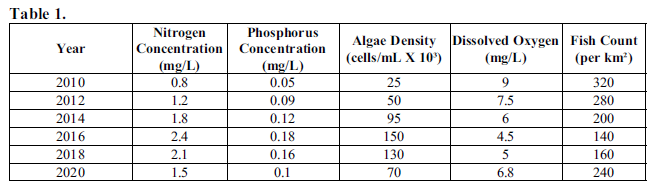
Graph of Information - Figure 1.
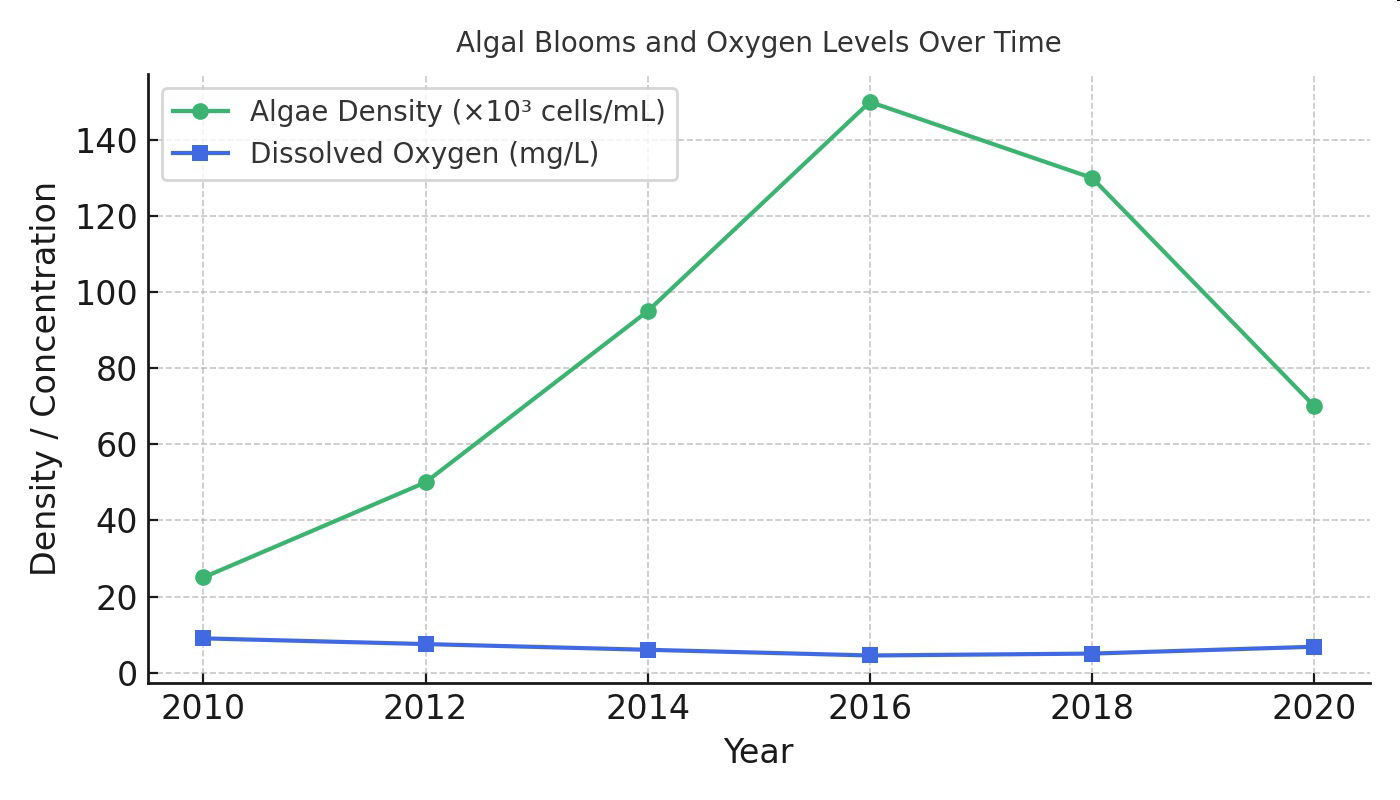
Figure 2.