Mutations 2026
star
star
star
star
star
Last updated 7 months ago
15 Nsɛmmisa
1
1
1
1
1
1
1
1
1
1
1
1
1
| Draggable item | arrow_right_alt | Corresponding Item |
|---|---|---|
What bases will you find in RNA | arrow_right_alt | A, T , C , G |
How many stands are in DNA | arrow_right_alt | A, U , C , G |
How many stands are in RNA | arrow_right_alt | 2 |
What bases will you find in DNA | arrow_right_alt | 1 |
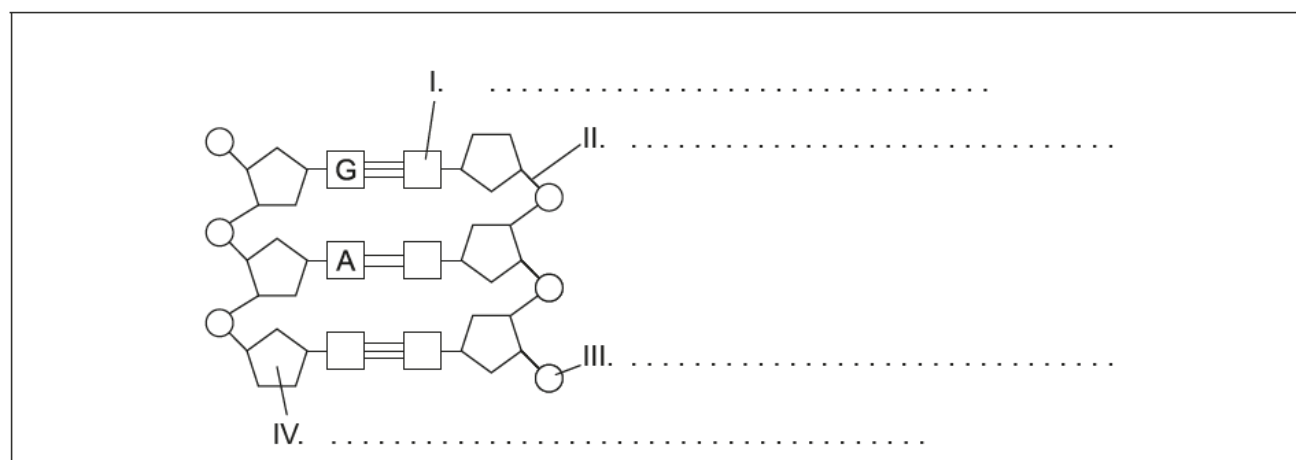
Which base would match with G in DNA
Which base would match with A in DNA
If I had a gene (a section of DNA) with the bases A T C G A C T G A, what would the matching RNA strand be?
You will be presented with three mutations
.
Your task is to work in pairs to:
1. Analyse what type of mutation occurred using the steps on slide 12.
2. Evaluate which one of the mutations you and your partner think is more catastrophic. (Extension)
Resources to help
a. Class slides
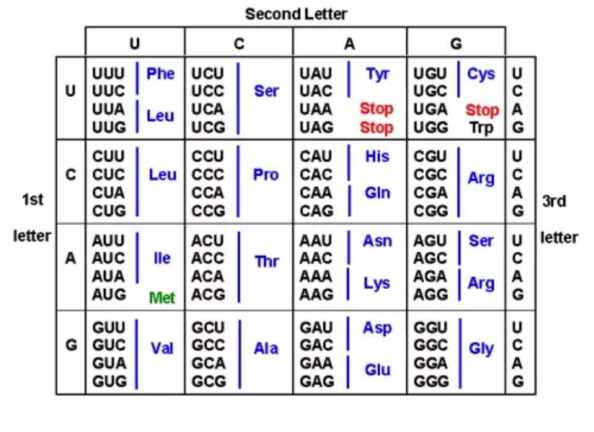
b. The genetic codon chart below. You could also use the codon wheel.
c. Summary on the types of mutations
MUTATION 1:
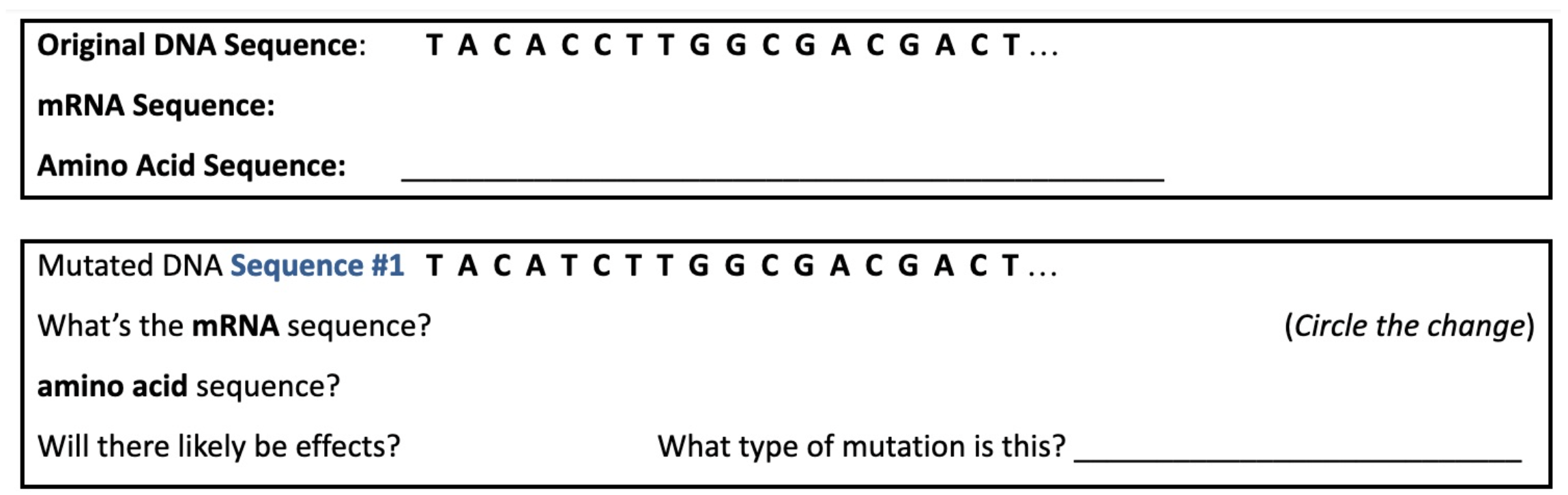
a. Write out the original RNA & amino acids
b. Write out the mutated RNA & amino acids
c. Write out what type of mutation has occurred
(EXT: Circle the change and state if there will be effects in the person or not)
MUTATION 2:

a. Write out the original RNA & amino acids
b. Write out the mutated RNA & amino acids
c. Write out what type of mutation has occurred
(EXT: Circle the change and state if there will be effects in the person or not)
MUTATION 3:

a. Write out the original RNA & amino acids
b. Write out the mutated RNA & amino acids
c. Write out what type of mutation has occurred
(EXT: Circle the change and state if there will be effects in the person or not)
Which mutation 1, 2 or 3 do you think is the most catastrophic?
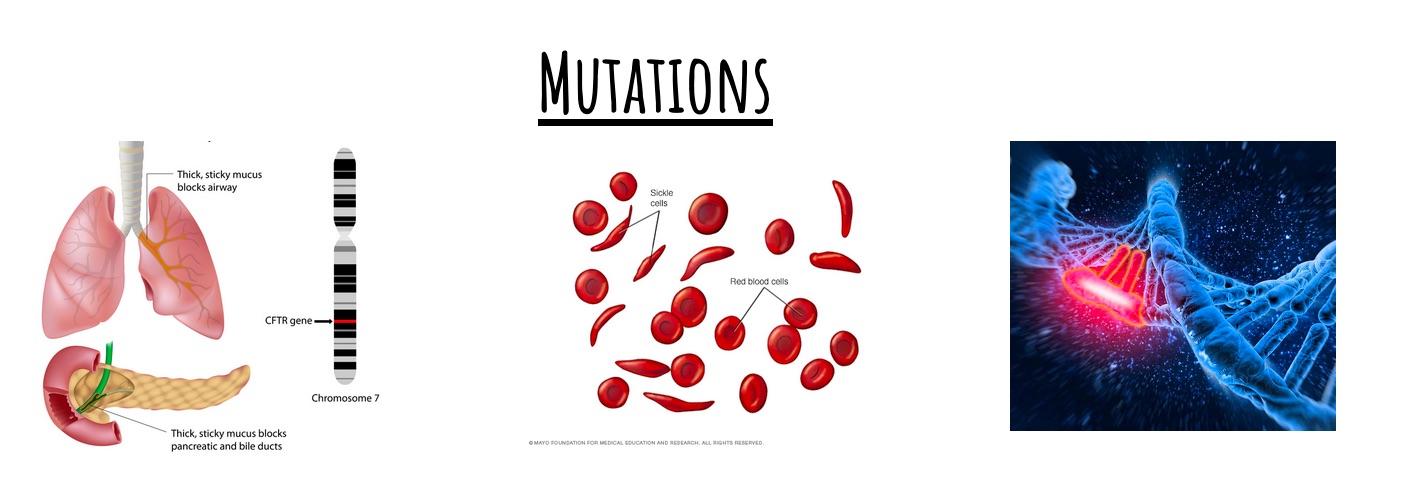
Sickle Cell Anemia
Sickle cell anemia is the result of a type of mutation in the gene that codes for part of the hemoglobin molecule. Hemoglobin carries oxygen in your red bloods cells. The mutation causes these red blood cells to become stiff & sickle-shaped when they release their oxygen. The sickled cells tend to get stuck in blood vessels, causing pain and increased risk of stroke, blindness, damage to the heart & lungs, and other conditions.
--- Analyze the DNA strands below to determine what amino acid is changed AND what type of mutation occurred 📷
Normal hemoglobin DNA C A C G T A G A C T G A G G A C T C …
Transcribe the normal hemoglobin mRNA.
Translate the mRNA to the normal sequence of amino acids.
Transcribe the following DNA for the hemoglobin in sickle cell anemia patients in to the corresponding mutated mRNA:
Sickle cell hemoglobin DNA C A C G T A G A C T G A G G A C A C …
What changed? Identify which type of point mutation occurred (i.e. substitution, deletion, insertion) and where.
Translate the mutated mRNA into the mutated sequence of amino acids.
What changed? Is the amino acid sequence the same? If not, which amino acids were changed and what type of change has occurred (i.e. silent, missense, nonsense, frameshift)?
Using your knowledge of the video and sickle cell anemia, explain what effect this change will have on the hemoglobin protein.