3 BIO - EOC - Ecosystems: Interactions, Energy, Dynamics
star
star
star
star
star
Last updated 6 months ago
7 Nsɛmmisa
Biologists are monitoring the biotic and abiotic factors in a lake. This includes tracking the population sizes and overall health of aquatic organisms and measuring water temperature, pH, salinity, dissolved oxygen, nitrogen, and phosphorus levels. The biologists compare lake water samples to the values shown in Table 1 to determine overall water quality. Some abiotic factors directly affect one another. For example, high nitrate levels lower the pH level of lake water.
Table 1: Optimal Conditions for Aquatic Ecosystems
Factor | Optimal Values |
|---|---|
temperature | 10°C to 40°C |
pH | 7.5 to 8.5 |
salinity | <0.5 parts per thousand (ppt) |
dissolved oxygen level | 6.0 mg/L to 9.0 mg/L |
nitrates (nitrogen) | <3 mg/L |
phosphorus | 0.005 mg/L to 0.05 mg/L |
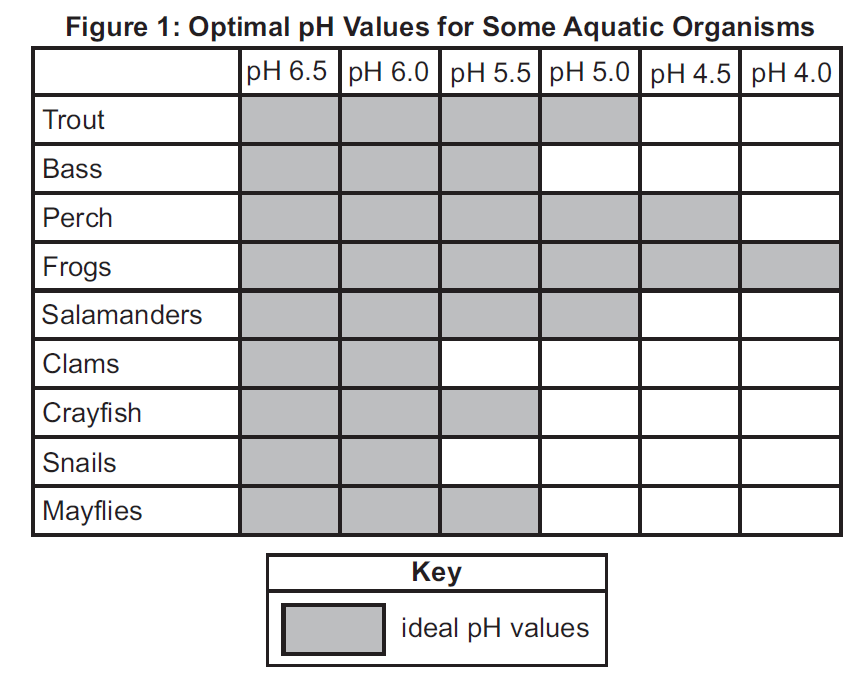
Most aquatic organisms require factors to be within the ranges of values shown in Table 1 to survive. However, some organisms can still survive when factors are outside the ranges of optimal conditions. Figure 1 shows some animals that can survive in lower pH levels in aquatic ecosystems.
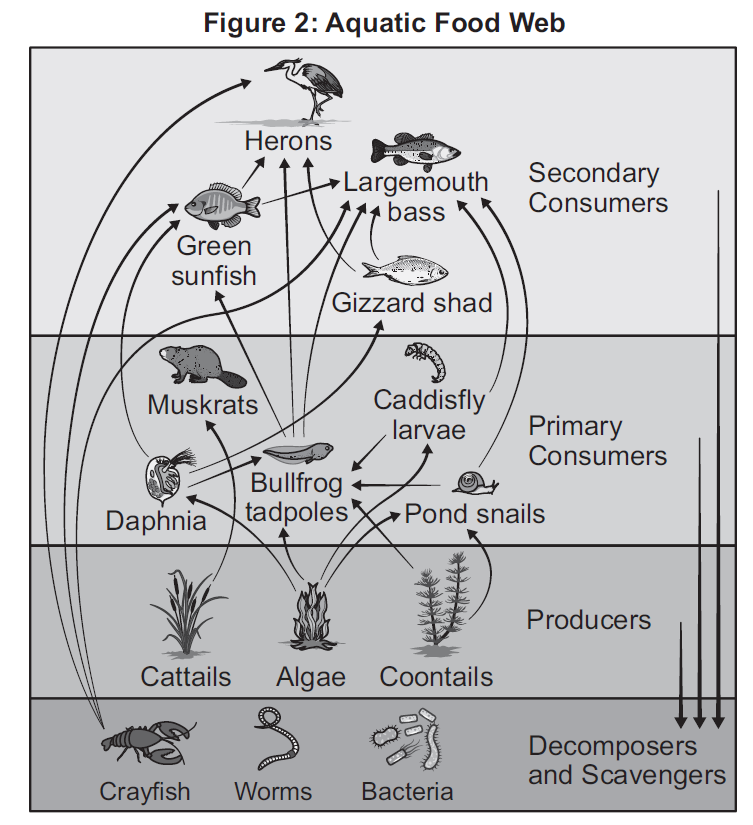
Energy transformations occur among organisms occupying different trophic levels in the lake, as shown in Figure 2.
 At times, photosynthetic algae can grow out of control at the lake’s surface, forming large algal blooms that disrupt water quality and the health of aquatic organisms. Algal blooms can occur when the temperature of lake water increases and excess nutrients like nitrogen and phosphorus enter the lake. Large algal blooms can reduce available sunlight for other producers and release toxins into the water. When algae die, the process of decomposition uses much of the dissolved oxygen in the lake, reducing oxygen availability for aquatic organisms.
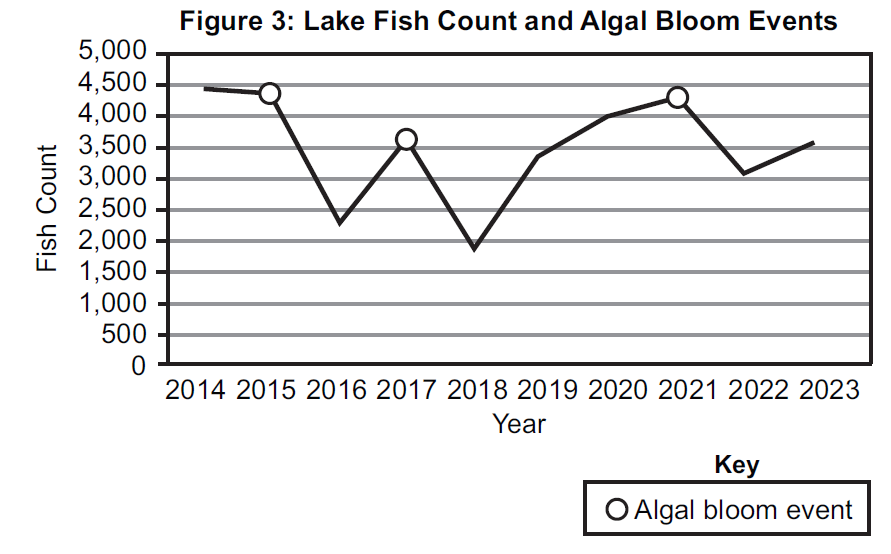
Biologists have noticed changes in total fish counts in various lake species over the last ten years. The biologists have determined that the lake is not being overfished and are instead focusing on the effects of algal blooms on lake organisms. Figure 3 shows the fish count for the lake over a ten-year period.
Refer to Figure 1 and Figure 2. Which statement describes the ideal water conditions for the snails in the lake?
Biologists discover that lake water tends to be acidic, with a pH range between 5.5 and 6.0. Which organisms in the lake are less likely to survive when the pH level in the water is below 6.0?
Algal blooms have a negative effect on most species of aquatic organisms in the lake. Based on Figure 2, which management strategy will most likely reduce algae populations in the lake?
A rapid increase in the number of photosynthetic algae in the lake occurs at the beginning of an algal bloom. Describe how levels of dissolved oxygen (O
Enter the answer in the box.
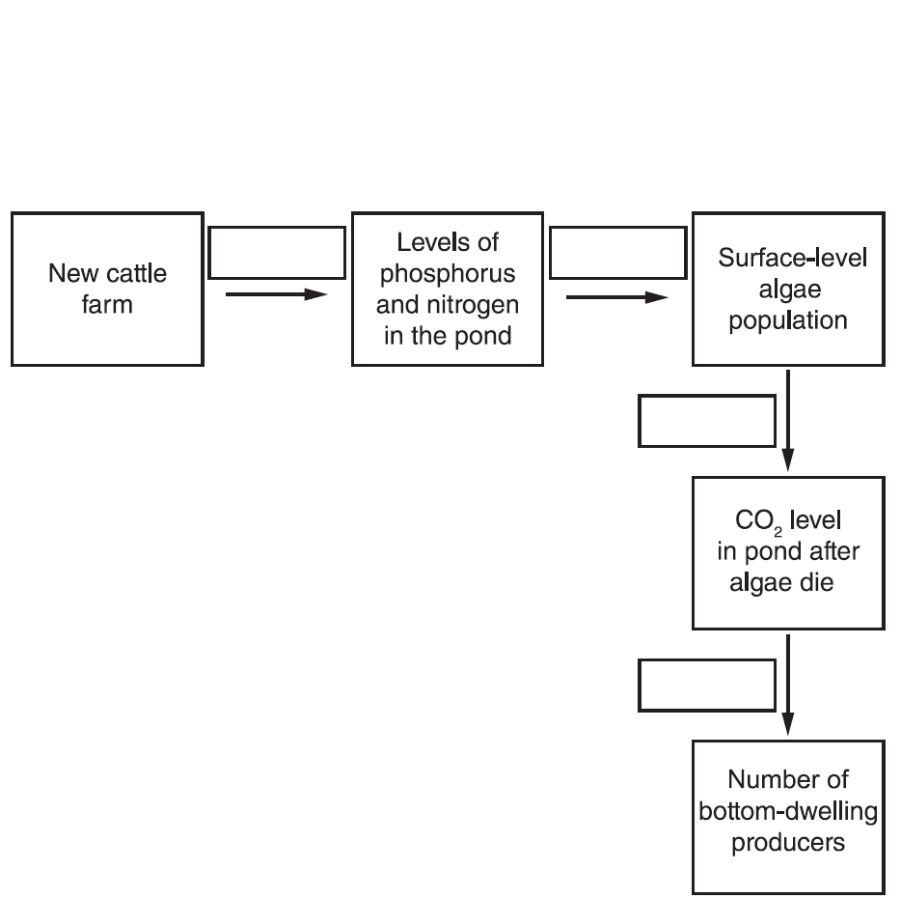
Runoff begins carrying fertilizer from a new cattle farm into a pond. A scientist wants to use the flow chart below to explain the effect of the fertilizer on bottom-dwelling organisms in the pond.
Drag the correct label into each blank box. Each label can be used more than once.
Increase
Decrease
Which claim concerning fish populations is supported by the data shown in Figure 3?
Scientists are concerned about the effects of repeated algal blooms in the lake on populations of fish. Based on the data from Figure 3, how will continued algal blooms most likely impact fish populations in the lake over time?