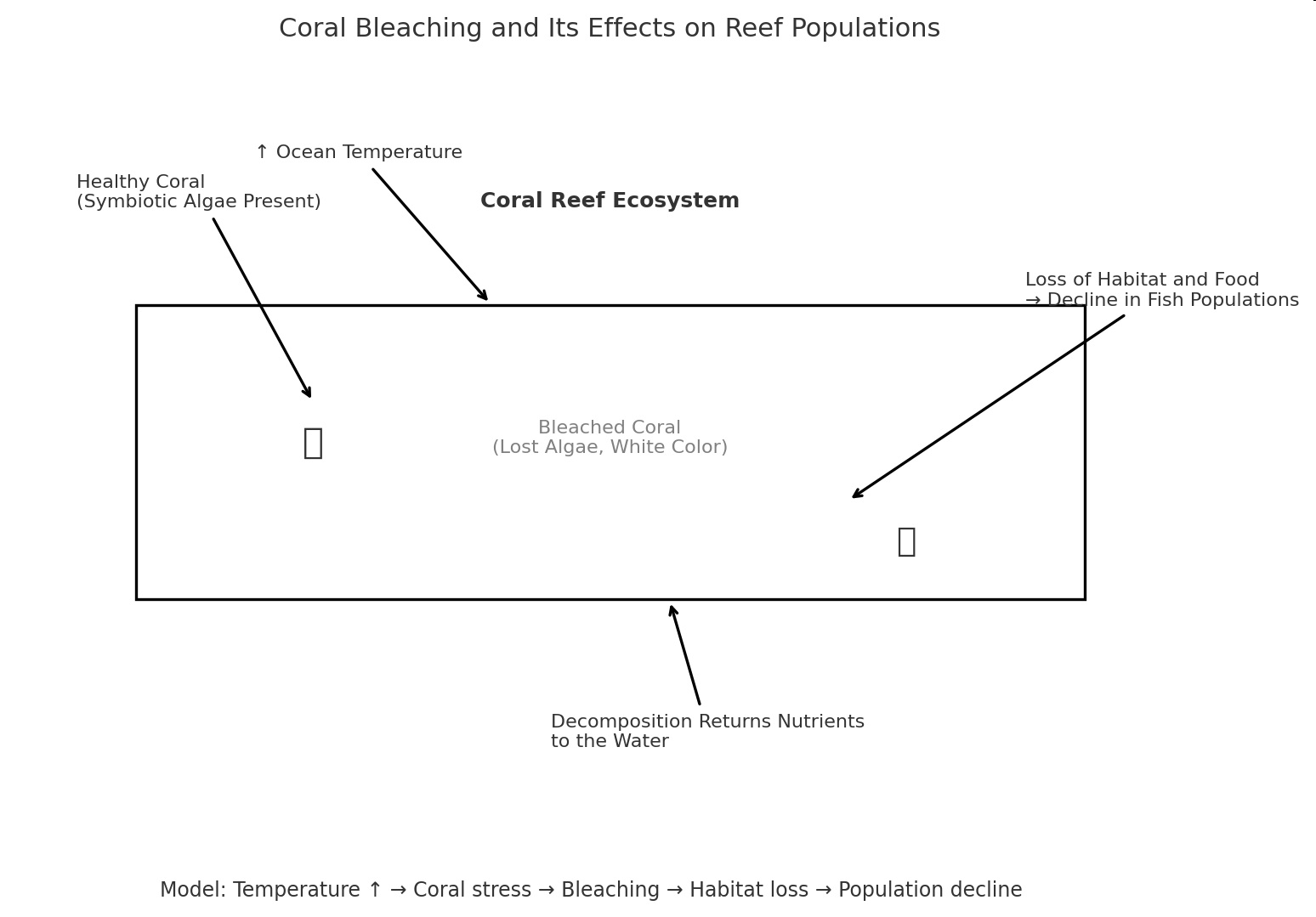
Coral Bleaching and Reef Fish Decline
Coral reefs are among the most diverse and productive ecosystems on the planet. Though they occupy less than 1% of the ocean floor, they provide habitat for nearly 25% of all marine species. Corals are tiny animals that live in colonies and build calcium carbonate skeletons, forming massive reef structures over centuries. Inside their tissues live microscopic algae called zooxanthellae, which perform photosynthesis. These algae provide the coral with most of its energy and give it its brilliant colors.
This partnership is delicate and depends on specific environmental conditions — especially temperature, sunlight, and water chemistry. When ocean temperatures rise, even by just
As bleached corals die, the reef’s physical structure begins to deteriorate. Many reef fish species depend on the coral framework for food, shelter, and breeding sites. When coral cover decreases, fish populations decline as well. For example, studies in the Great Barrier Reef and the Caribbean have shown that fish diversity can drop by
Bleaching not only affects fish but also disrupts the entire reef food web. Herbivorous fish that graze on algae lose food sources, while predators have fewer prey to eat. The result is a cascade of population changes that alters the balance of the entire ecosystem.
These impacts illustrate how changes to both physical components (temperature, water chemistry) and biological components (coral health, algae symbiosis) can dramatically affect populations. Over time, repeated bleaching events may lead to the collapse of reef ecosystems, reducing biodiversity and the ecosystem services reefs provide - such as coastal protection and fisheries that support millions of people.
Understanding coral bleaching helps scientists predict how climate change will reshape ocean ecosystems and highlights why maintaining stable environmental conditions is vital for sustaining biodiversity.
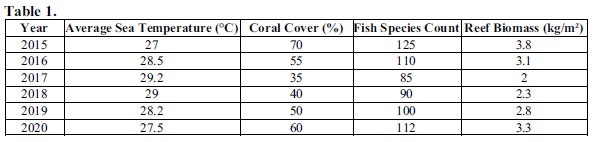
Graph of Information - Figure 1.
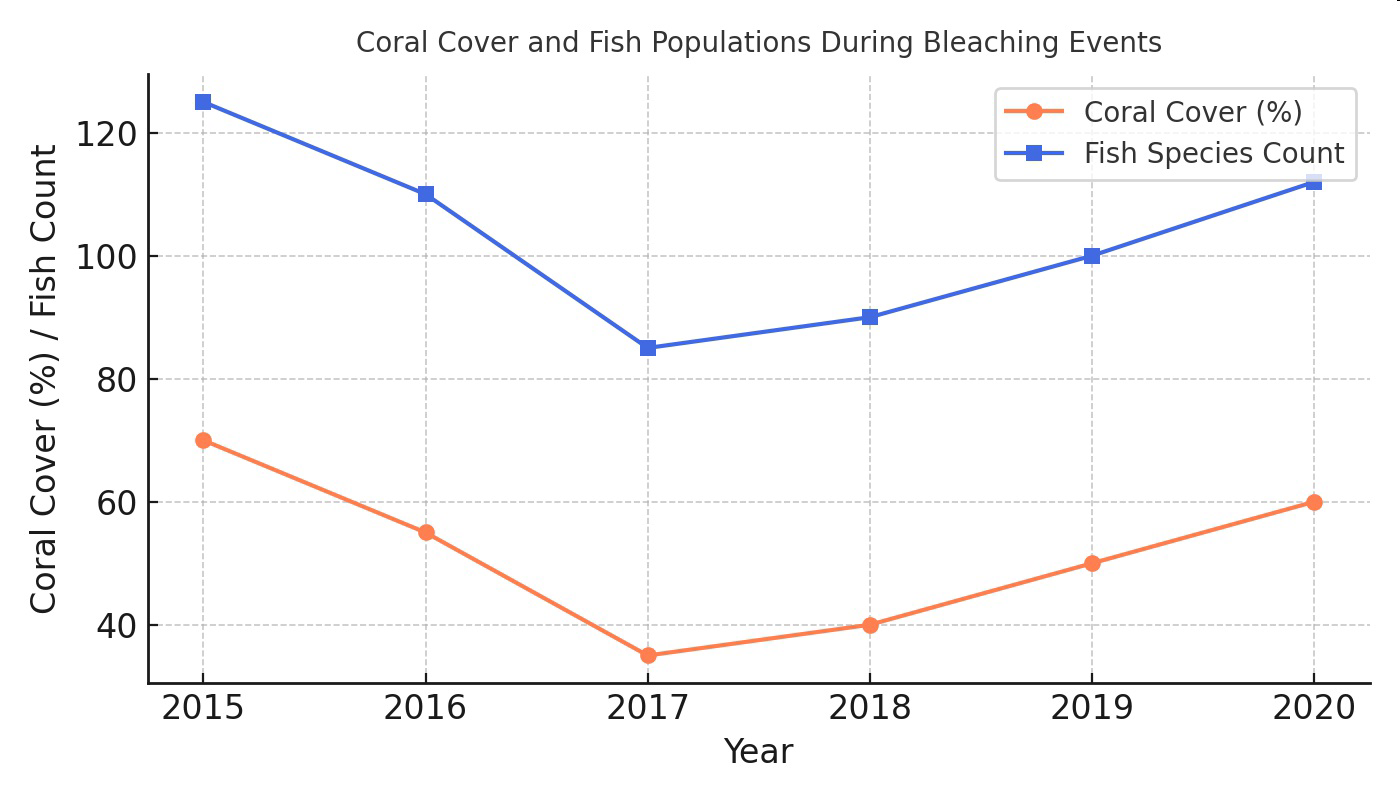
Figure 2.