Deforestation and Bird Population Decline
Forests are dynamic ecosystems that support an incredible diversity of life. They provide nesting sites, insect populations, fruits, and seeds - all essential resources for birds. When trees are cut down, these resources disappear. Birds that rely on dense canopies, hollow trunks, or specific plant species are especially vulnerable.
Deforestation is driven by human activities such as agriculture, cattle ranching, timber harvesting, and road construction. When large areas of forest are cleared, the microclimate changes: temperatures rise, humidity drops, and wind exposure increases. These shifts make it harder for many forest species to survive.
Birds respond differently to these changes depending on their ecological niches. Some generalist species, like crows and pigeons, adapt to open areas and even thrive in human-altered landscapes. However, specialist species - such as tropical understory birds or migratory songbirds that depend on particular tree species - experience dramatic declines.
Research in the Amazon and Southeast Asia shows that after deforestation, bird diversity can drop by 60–80%. Even selective logging, where only certain trees are removed, fragments the forest and isolates bird populations. Fragmentation reduces breeding success because birds must travel farther between feeding and nesting sites, exposing them to predators and limiting genetic diversity.
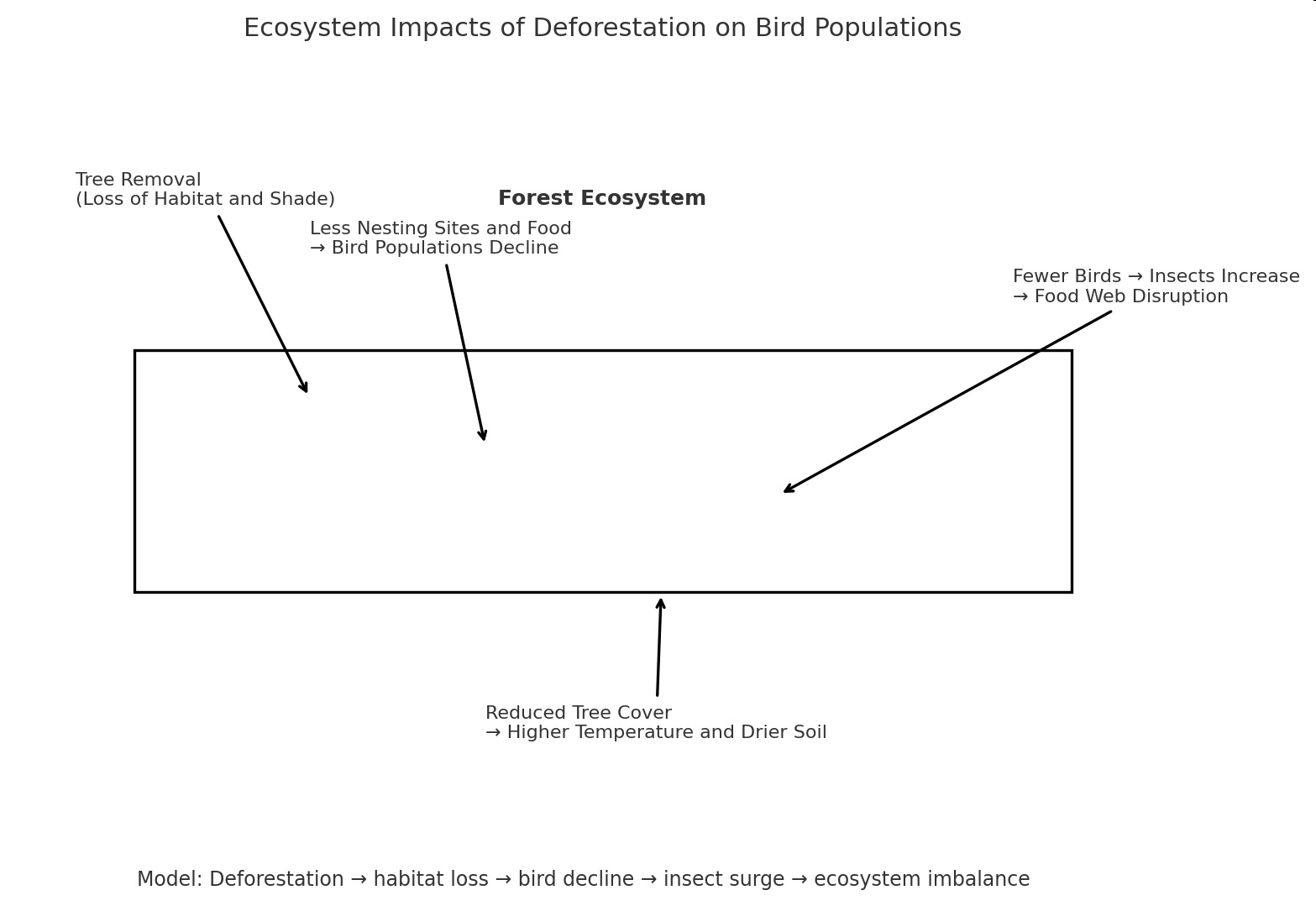
Deforestation also impacts food webs. Fewer trees mean fewer insects, fruits, and seeds. Insectivorous birds that control pests decline, while herbivorous insects can become overabundant, leading to further ecosystem imbalance. Moreover, birds play critical roles in seed dispersal and pollination - processes essential for forest regeneration. When bird populations decline, the forest’s ability to recover from disturbance weakens, creating a feedback loop of degradation.
Changes to both physical components (temperature, humidity, canopy cover) and biological components (plant and insect diversity) cause ripple effects across the ecosystem. Over time, the loss of birds not only signals a local problem but also threatens global biodiversity and climate stability, since forests store vast amounts of carbon.
Protecting bird populations through sustainable forestry, habitat restoration, and conservation corridors helps maintain the intricate balance that keeps forest ecosystems - and the planet - thriving.
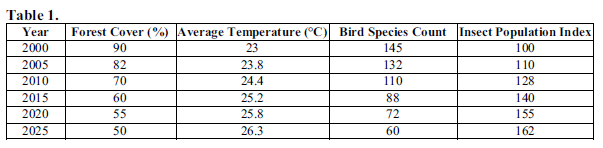
Graph of Information - Figure 1.
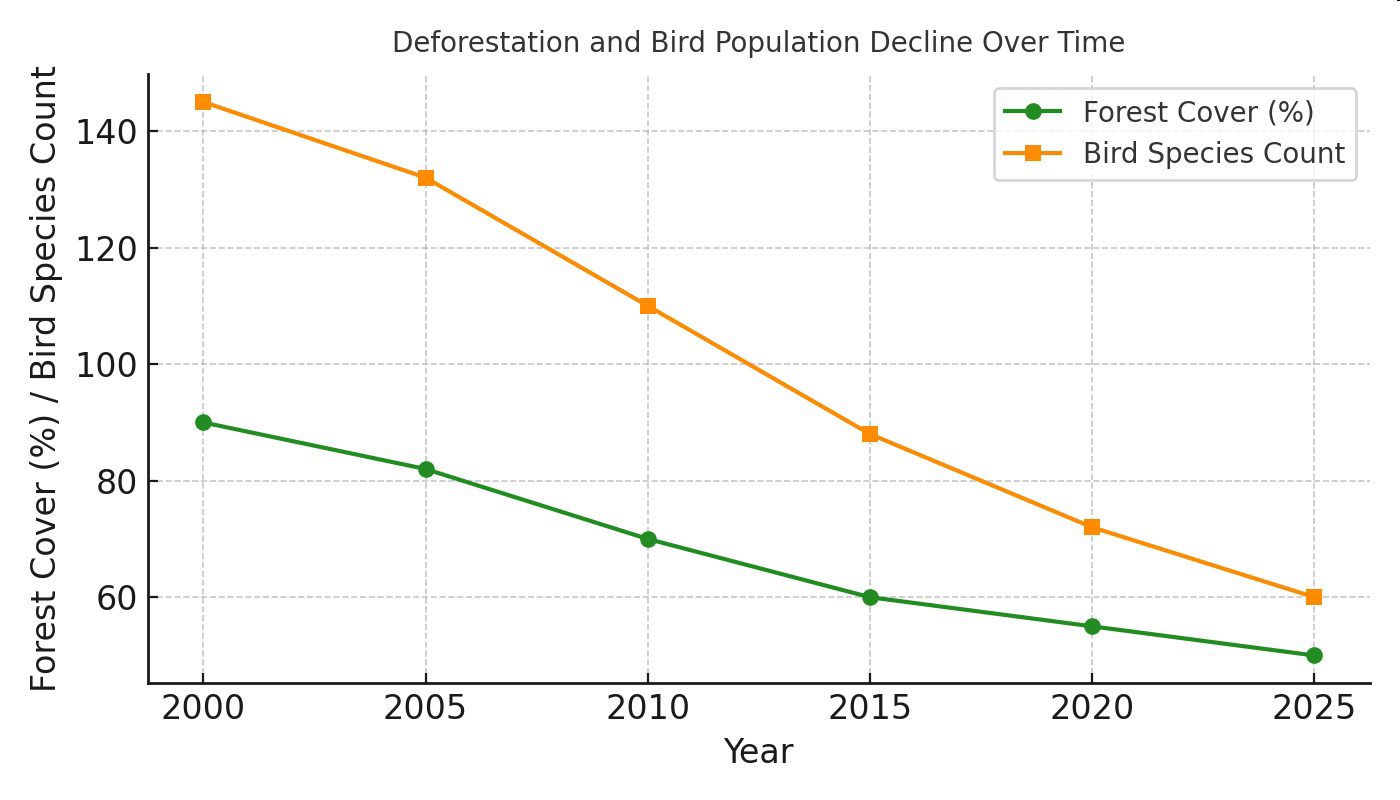
Figure 2.