Energy Flow in a Coral Reef
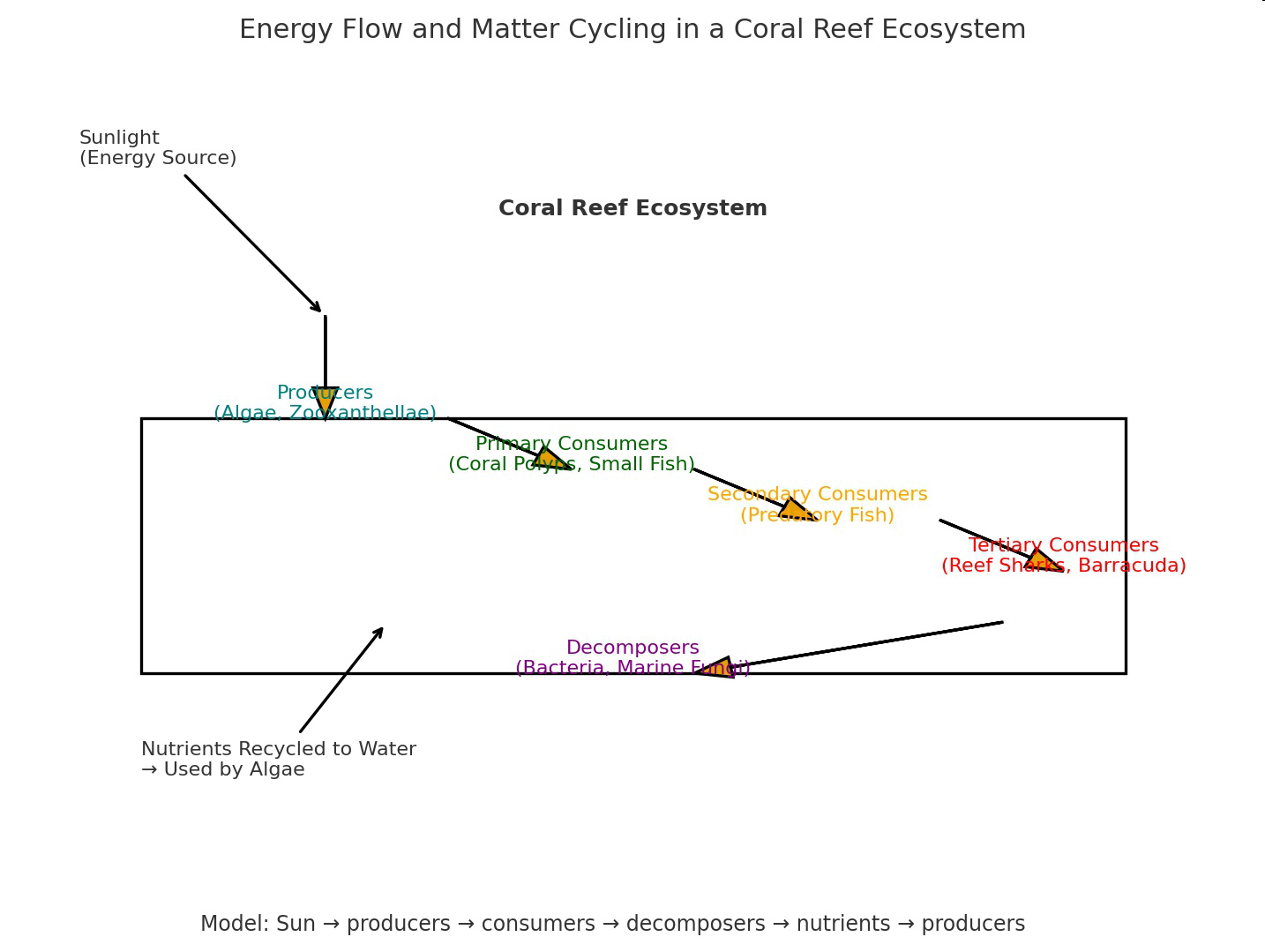
A coral reef ecosystem relies on a delicate balance of energy flow and matter cycling. At the base of the reef food web are photosynthetic algae, including both free-living plankton and the microscopic algae that live inside coral tissue. These producers capture sunlight and convert it into chemical energy.
Corals use the nutrients and sugars produced by the algae to build their hard calcium carbonate skeletons. Small reef fish and invertebrates feed on algae and coral mucus, transferring energy up the food chain to larger fish, sea turtles, and predators such as reef sharks.
When organisms excrete waste or die, decomposers like bacteria break down the organic material, releasing nutrients such as nitrogen and phosphorus back into the water. These nutrients are then reused by algae, closing the loop of matter cycling.
In this way, energy flows from sunlight to producers and through consumers, while matter - in the form of carbon, nitrogen, and minerals - cycles between the living and nonliving parts of the reef ecosystem.
Table 1.
Trophic Level | Example Organisms | Average Biomass (kg/m$^2$) | Energy Available (kcal/m$^2$/year) |
|---|
Producers | Algae, Zooxanthellae | 3 | 20000 |
Primary Consumers | Coral polyps, herbivorous fish | 0.5 | 3000 |
Secondary Consumers | Small predatory fish | 0.08 | 400 |
Tertiary Consumers | Reef sharks, barracuda | 0.02 | 50 |
Decomposers | Bacteria, marine fungi | | |
Graph of Information - Figure 1.
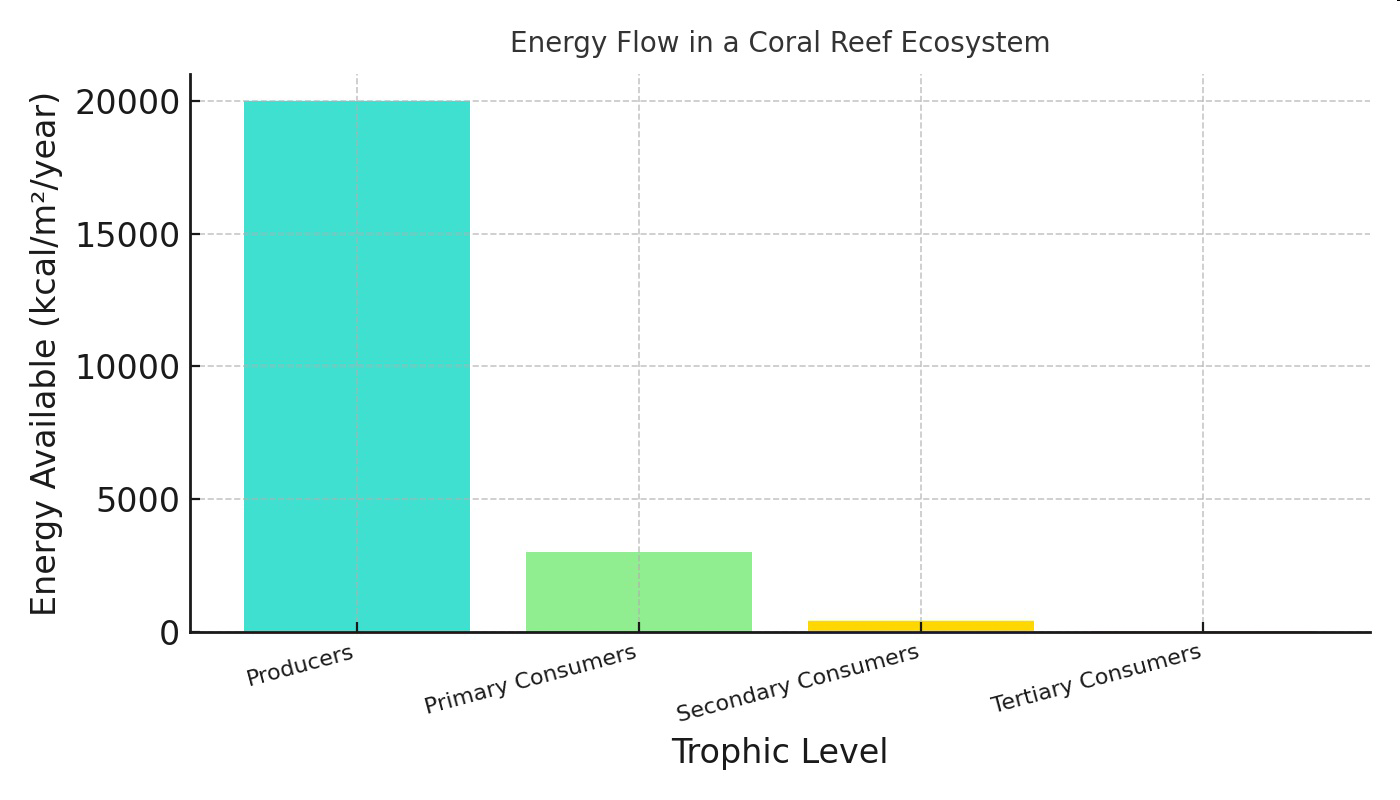
Figure 2.