Forest Energy Flow
All ecosystems rely on two essential processes: the flow of energy and the cycling of matter.
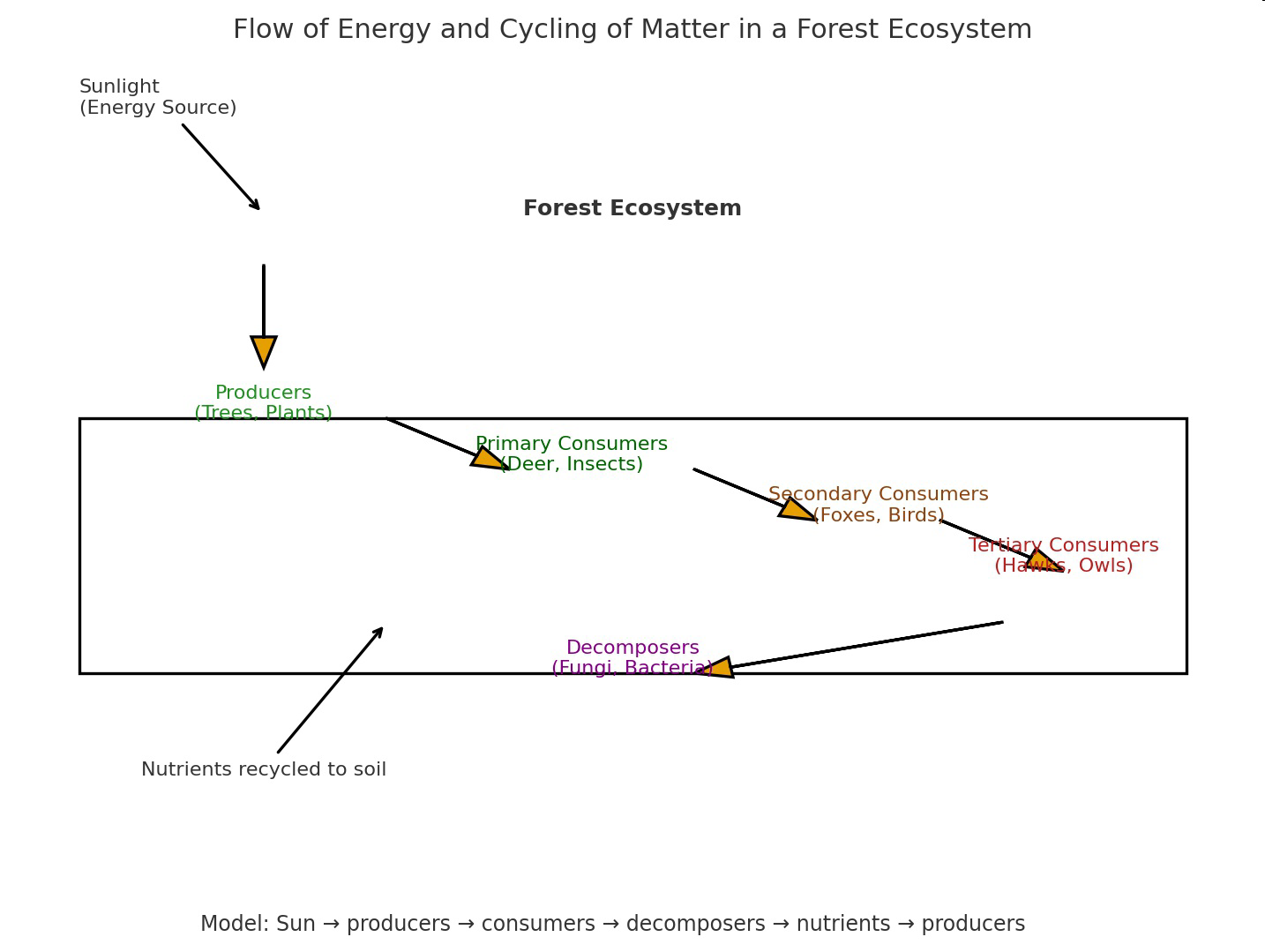
In a forest, energy from sunlight is captured by trees and other producers through photosynthesis. This process converts light energy into chemical energy stored in glucose. Herbivores, such as deer and insects, consume plants and use that stored energy for growth and movement. Predators, such as owls or foxes, then feed on herbivores - transferring energy up the food chain. However, not all energy is passed on. Most of it is lost as heat at each step, which is why higher trophic levels have fewer organisms.
When plants and animals die, decomposers such as fungi and bacteria break down their remains. This releases carbon dioxide, water, and nutrients like nitrogen back into the soil and atmosphere. These materials can then be reused by producers to grow new plants.
Through this constant exchange, matter is recycled, while energy flows in a single direction - from sunlight to producers to consumers and finally to decomposers. This balance keeps ecosystems functioning and supports all forms of life on Earth.
Table 1.
Trophic Level | Example Organisms | Average Biomass (kg/ha) | Average Energy Available (kcal/m$^2$/year) |
|---|
Producers | Trees, shrubs, grasses | 25000 | 20000 |
Primary Consumers | Insects, deer, rabbits | 2000 | 2000 |
Secondary Consumers | Foxes, birds, snakes | 200 | 200 |
Tertiary Consumers | Hawks, owls | 20 | 20 |
Decomposers | Fungi, bacteria | 2 | 2 |
Graph of Information - Figure 1.
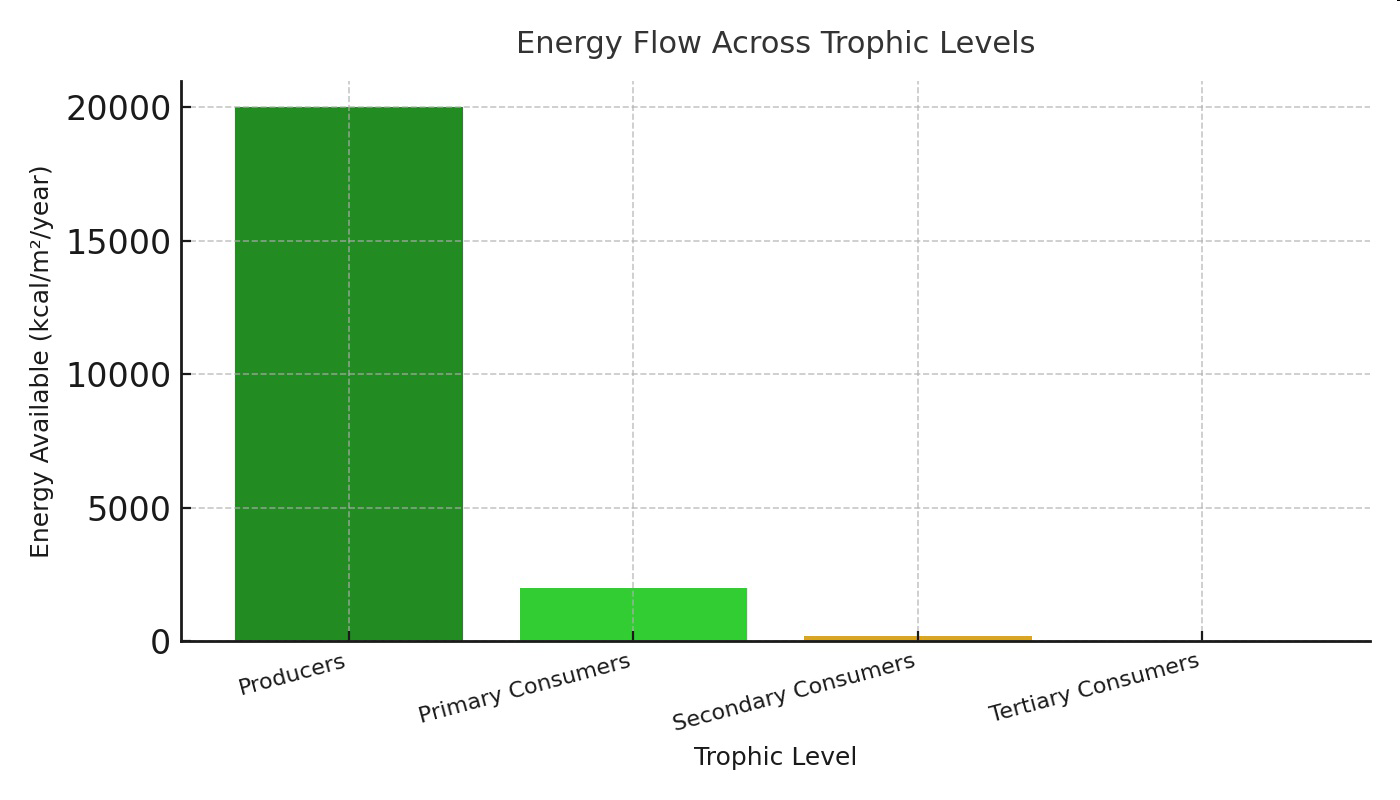
Figure 2.