Invasive Zebra Mussels in Freshwater Lakes
Ecosystems are complex networks of organisms that depend on each other and on their physical environment. When a new species enters an ecosystem where it does not naturally occur, it can upset this balance. Such species are called invasive species. One of the most well-known freshwater invaders is the zebra mussel. These small, striped shellfish are only a few centimeters long, but they reproduce extremely quickly - each female can produce up to one million eggs per year.
Zebra mussels attach themselves to almost any hard surface using strong, hair-like fibers called byssal threads. In North America, they were first discovered in Lake St. Clair in 1988 and quickly spread to all five Great Lakes and hundreds of inland waterways. They thrive in these new environments because they have no natural predators and can outcompete native mussels and plankton-feeding species.
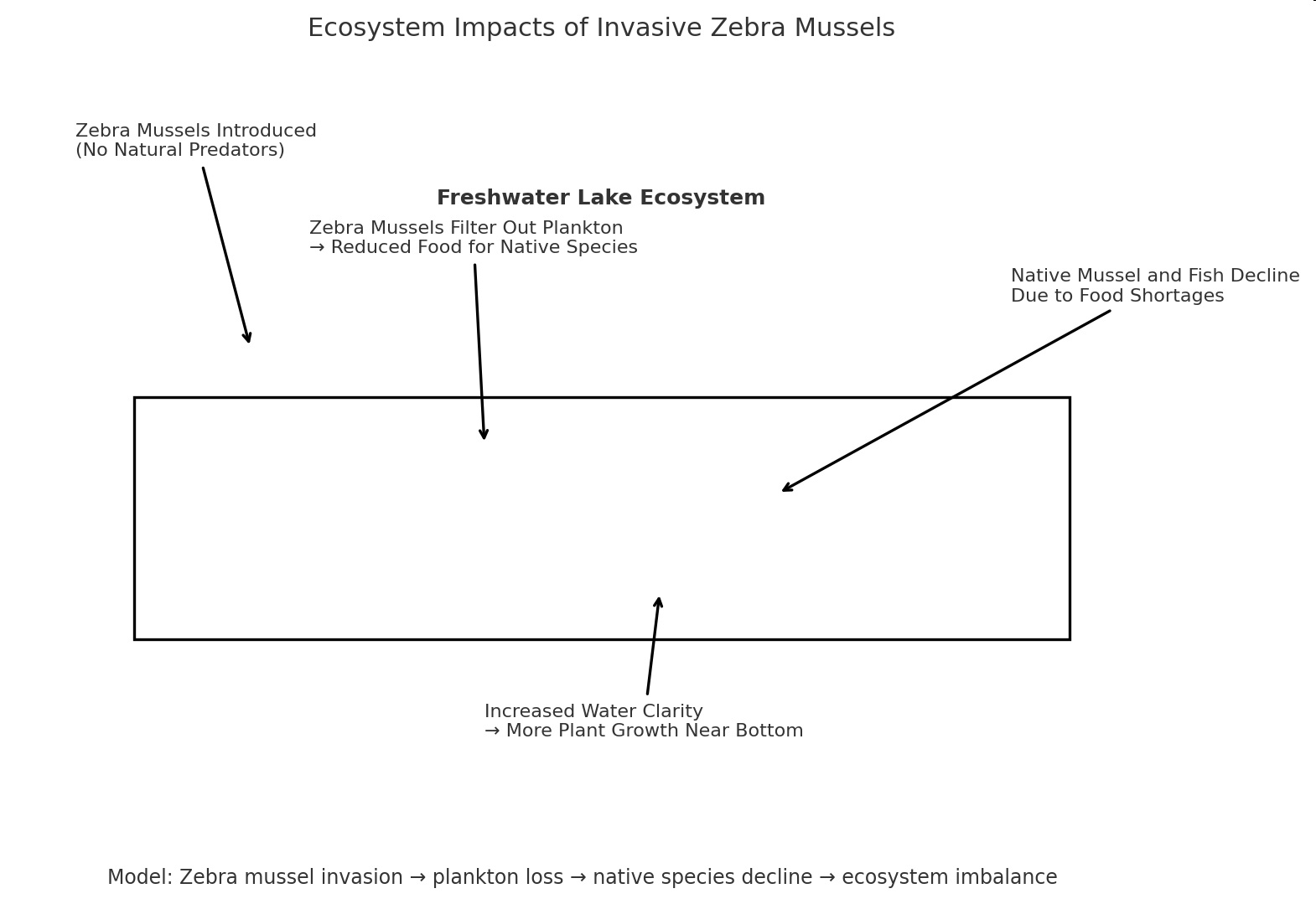
Zebra mussels are filter feeders, meaning they remove microscopic plankton and particles from the water to eat. While this makes the water appear clearer, it causes serious ecological problems. Many native fish and invertebrates depend on plankton as their primary food source. As zebra mussels consume more plankton, there is less food available for other organisms. This leads to declining populations of zooplankton, native mussels, and small fish - the base of the aquatic food web.
The consequences cascade upward. Fewer small fish mean fewer prey for larger fish such as bass, walleye, and trout. Moreover, zebra mussels change nutrient cycling by increasing water clarity, which allows sunlight to penetrate deeper. This can cause excessive plant growth near the lake bottom, leading to oxygen depletion when the plants die and decompose.
In this example, a change in a biological component - the introduction of an invasive species - alters both biotic (living) and abiotic (nonliving) conditions. Ecosystems that once supported diverse fish and invertebrate populations now experience reduced biodiversity and disrupted food webs.
Studying zebra mussels provides strong evidence that the introduction or removal of a single species can dramatically reshape entire ecosystems.
Human actions, whether intentional or accidental, can create ripple effects that impact population dynamics for decades.
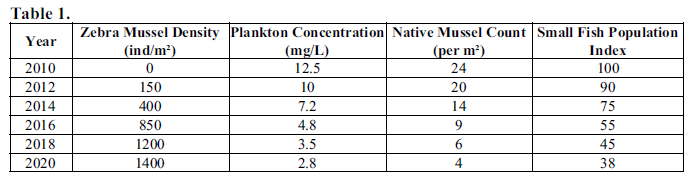
Graph of Information - Figure 1.
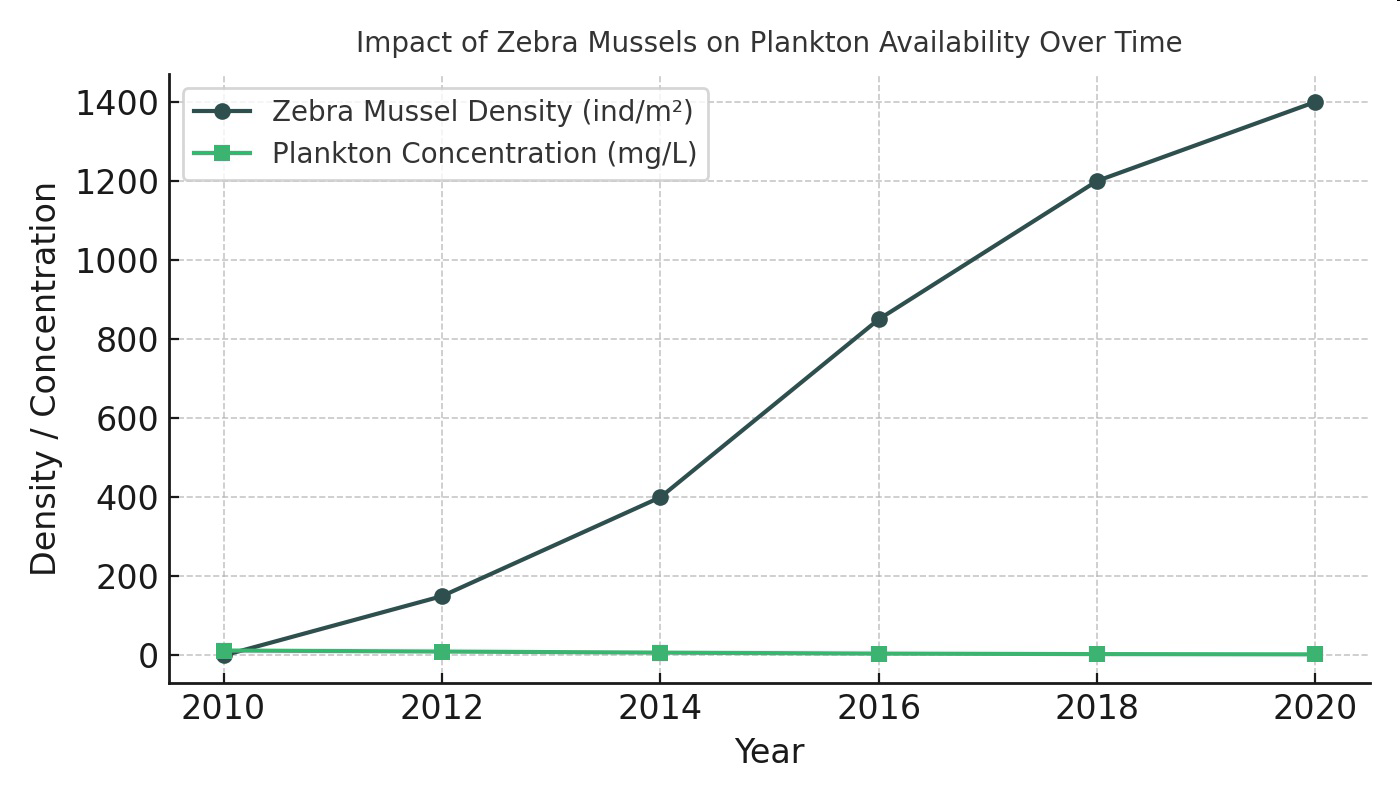
Figure 2.