Photosynthesis in Leaf Cells
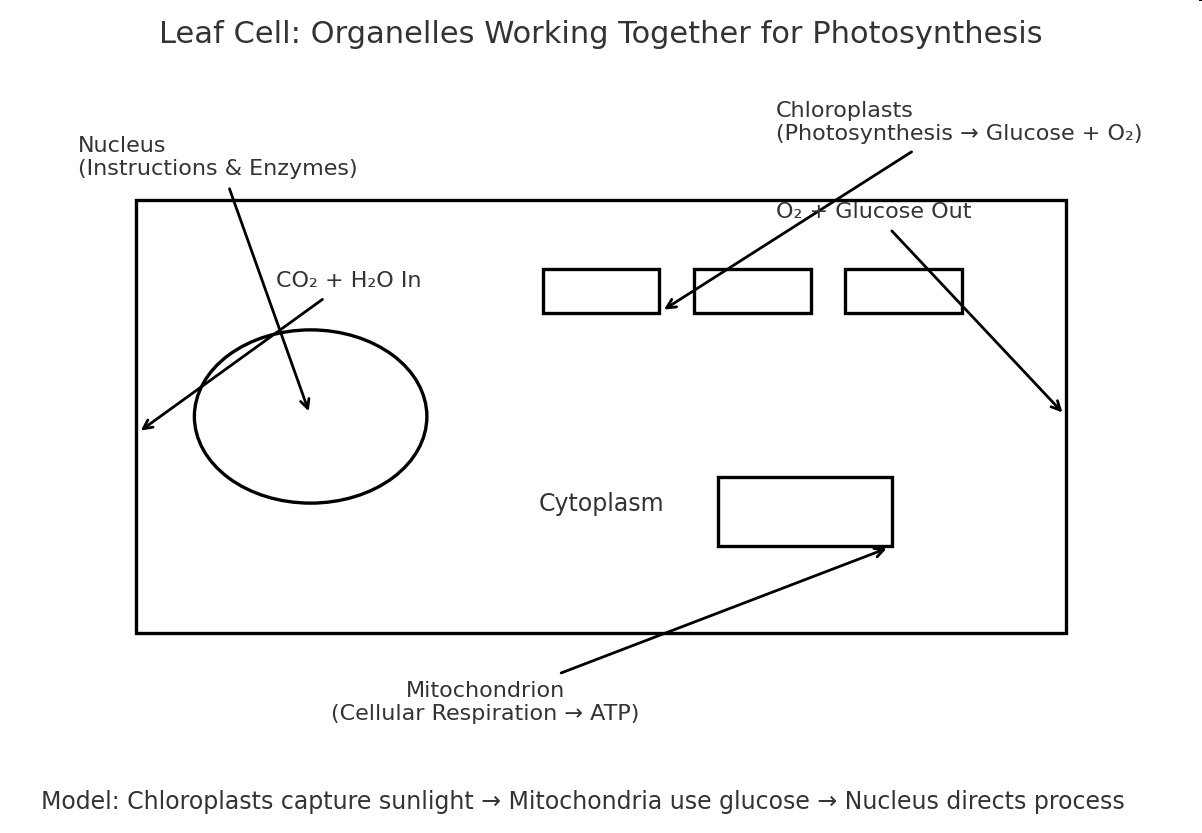
Inside each plant cell, several organelles work together to keep the cell and the whole plant functioning. The two most important for energy are the chloroplasts and the mitochondria.
Chloroplasts are the green structures in plant cells that contain chlorophyll, a pigment that absorbs sunlight. Using sunlight, carbon dioxide, and water, the chloroplasts carry out photosynthesis - making glucose (a type of sugar) and oxygen as products. These sugars are then used throughout the plant as fuel.
But the chloroplast’s job is only the first step. The mitochondria take over next, using glucose and oxygen to perform cellular respiration, releasing ATP - the molecule that provides energy for cell activities such as transport, growth, and repair. The nucleus controls these processes by storing DNA instructions for building the enzymes that both chloroplasts and mitochondria need to work properly. The cell membrane allows gases like carbon dioxide and oxygen to move in and out, maintaining balance.
Together, these parts demonstrate that a cell is a coordinated system, not a group of isolated parts. When one organelle stops working - for example, if chloroplasts are damaged by drought - the entire energy process slows down, and the plant suffers.
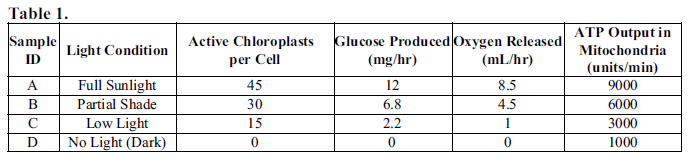
Graph of Information - Figure 1.
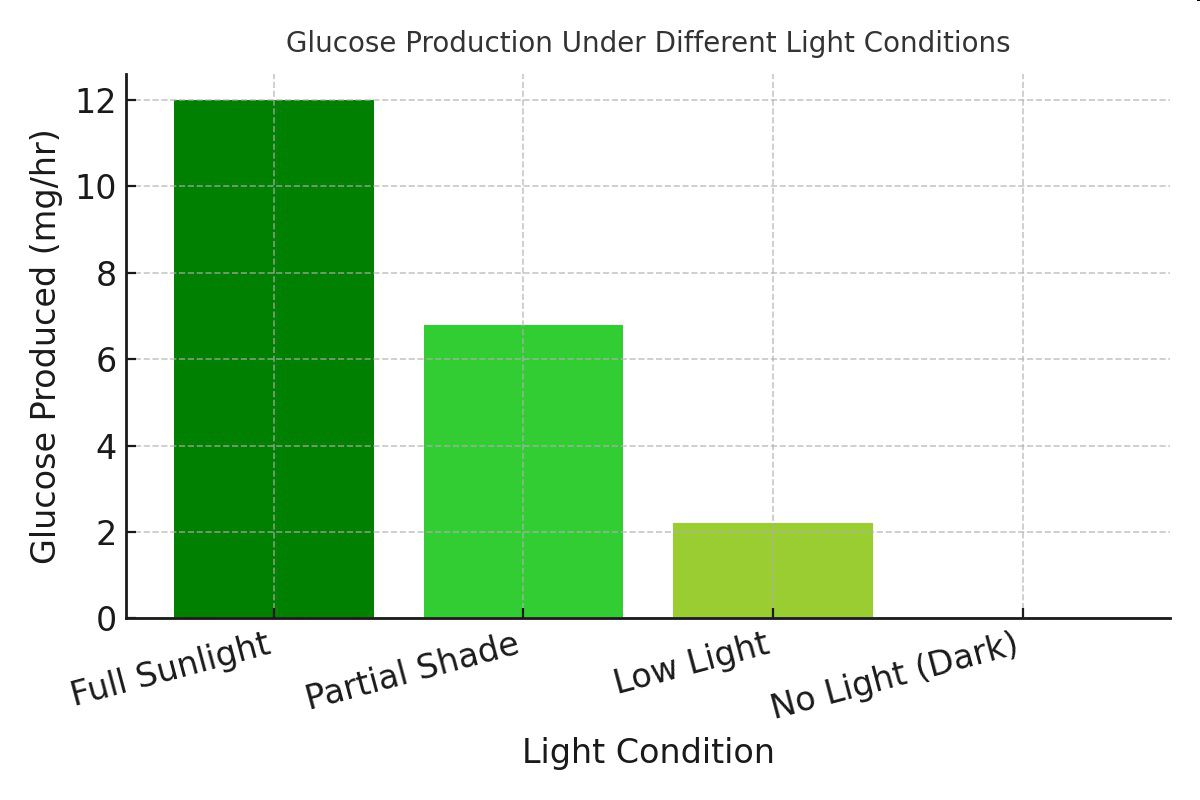
Figure 2.