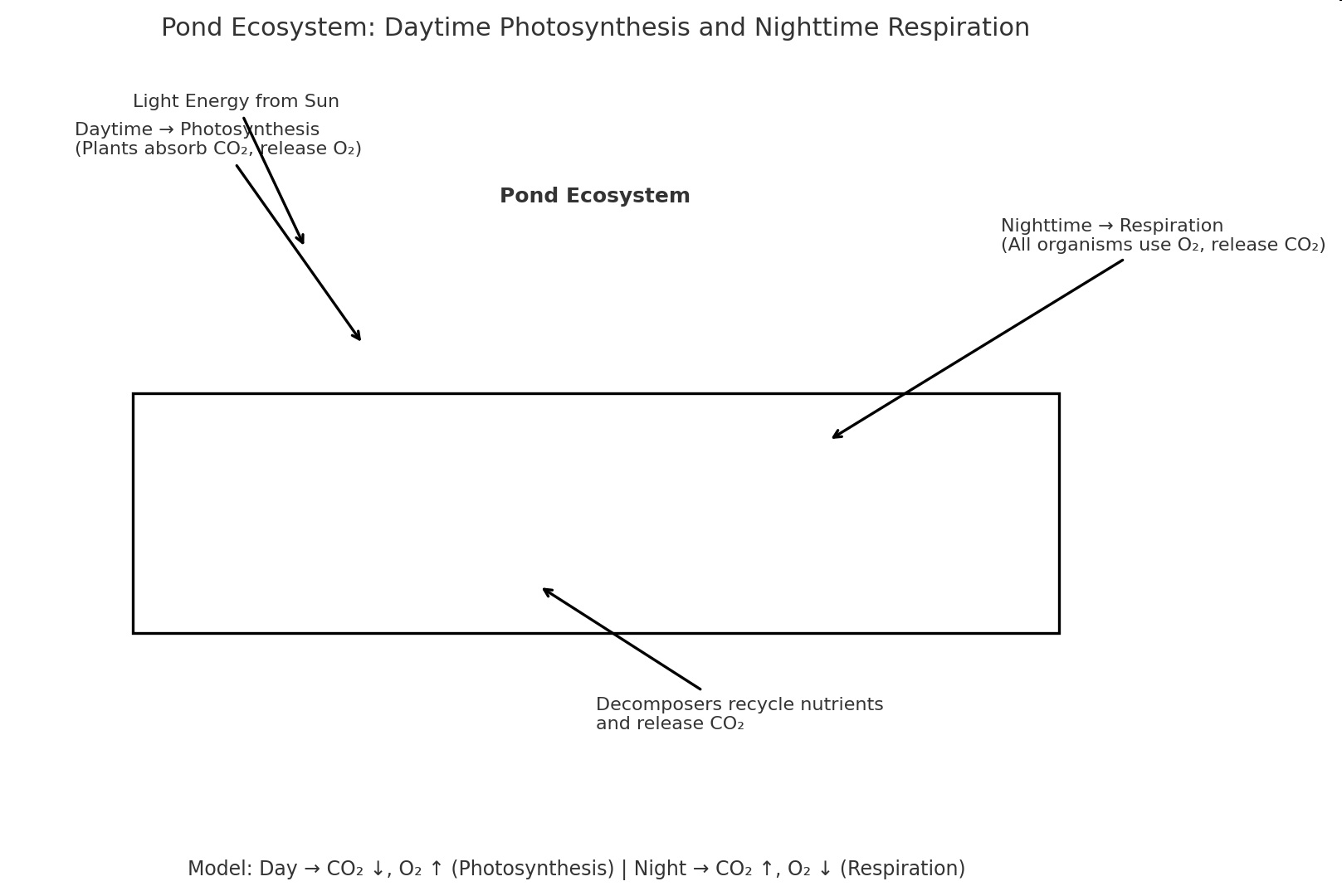
Pond Ecosystem
In aquatic ecosystems like ponds, the cycling of matter and flow of energy are tightly connected. During daylight hours, algae and aquatic plants use carbon dioxide ($CO_2$) and sunlight to perform photosynthesis, producing oxygen ($O_2$) and glucose. This oxygen dissolves into the water, providing what fish and other aquatic animals need to breathe.
At night, when there’s no sunlight, both plants and animals rely on cellular respiration — they take in oxygen and release carbon dioxide as they break down food molecules to obtain energy. This creates a daily rhythm: oxygen levels rise during the day and fall at night.
Meanwhile, matter is constantly recycled: carbon moves from the air to the water, into organisms, and back to the environment through respiration and decomposition. These processes illustrate the interconnectedness of producers, consumers, and decomposers — and how energy flows while matter cycles between living and nonliving parts of an ecosystem.
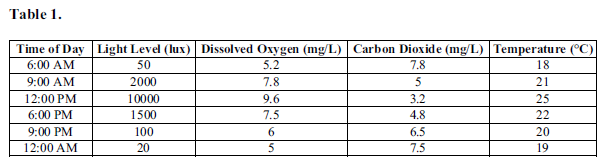
Graph of Information - Figure 1.
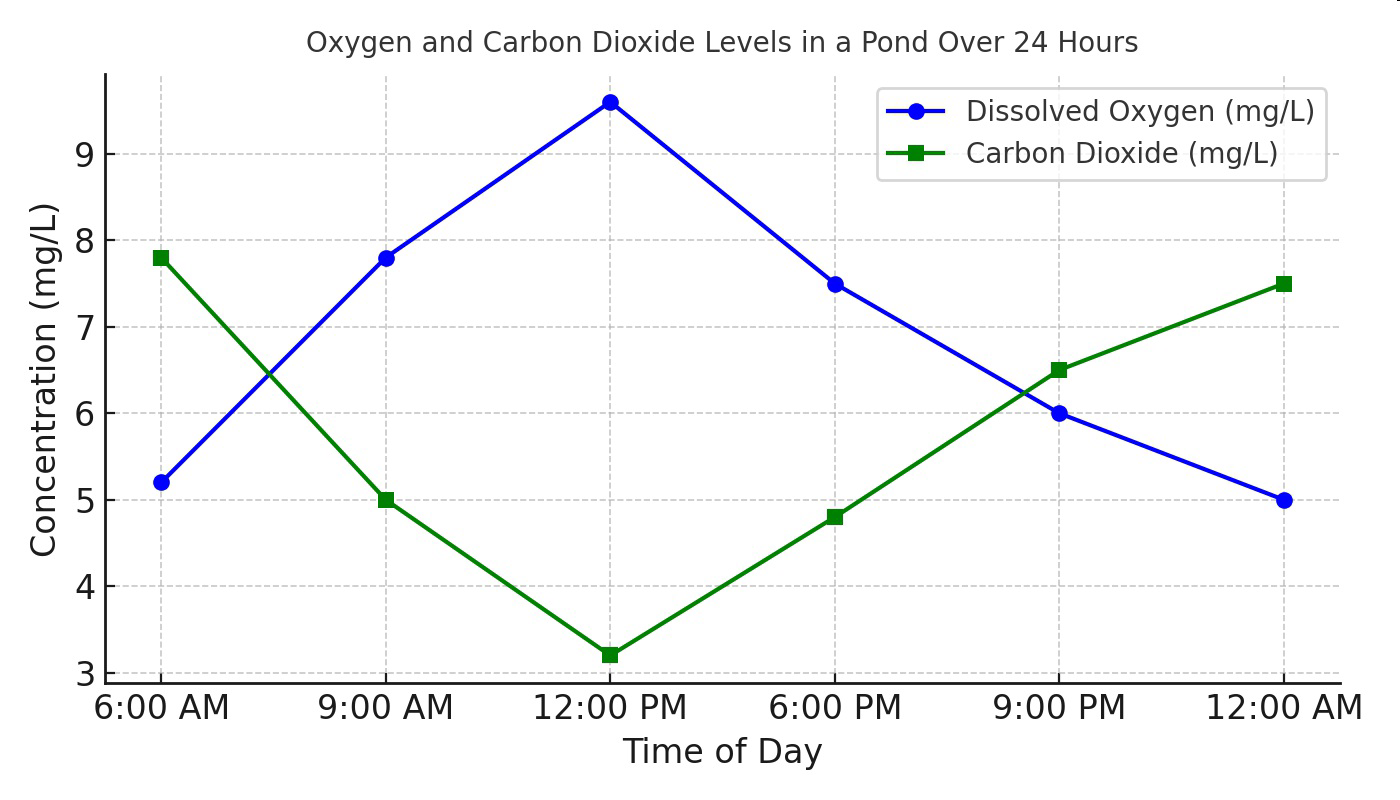
Figure 2.