Predator and Prey Fluctuations
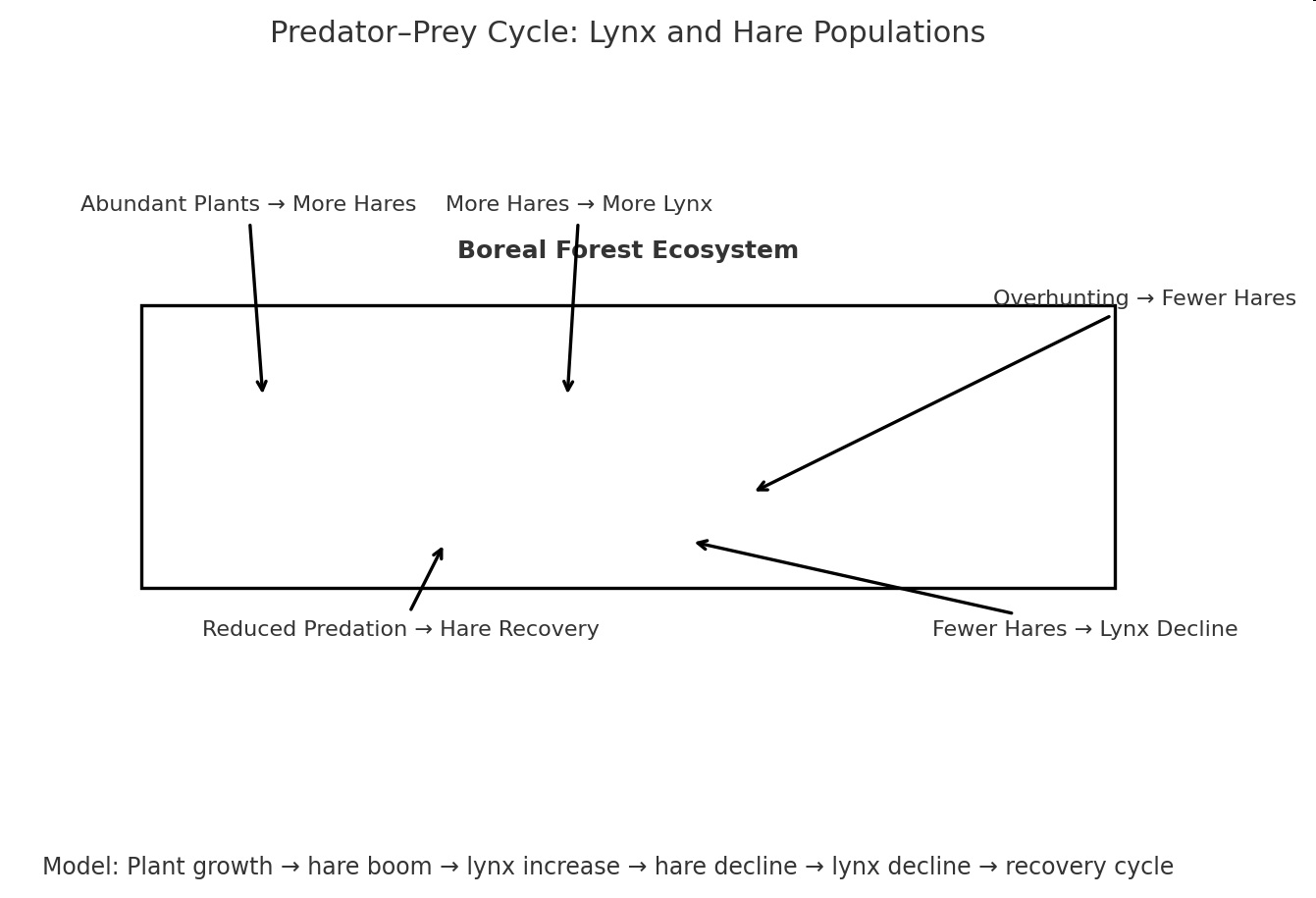
Populations of different species within an ecosystem are closely connected through their dependence on shared resources. The lynx–hare relationship is a famous example of this connection. Hares feed on vegetation like willow and birch twigs, while lynx prey primarily on hares.
When plant growth is strong, hares have plenty of food and their population grows. With more hares available, lynx populations also increase because they have more prey to eat. However, as the hare population grows too large, it consumes much of its food supply. As plants are overgrazed and fewer hares survive, the lynx begin to struggle as their main food source disappears. After the crash, it takes years for plants - and then hares - to recover, followed later by lynx.
These boom-and-bust population cycles demonstrate how resource availability limits populations and how changes in one species can ripple through an entire food web.
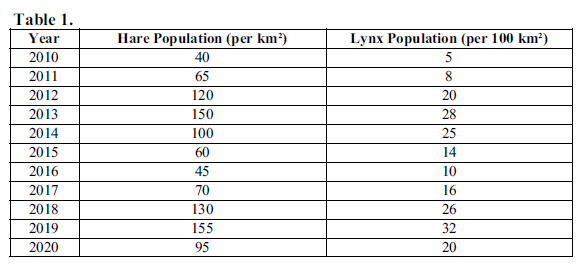
Graph of Information - Figure 1.
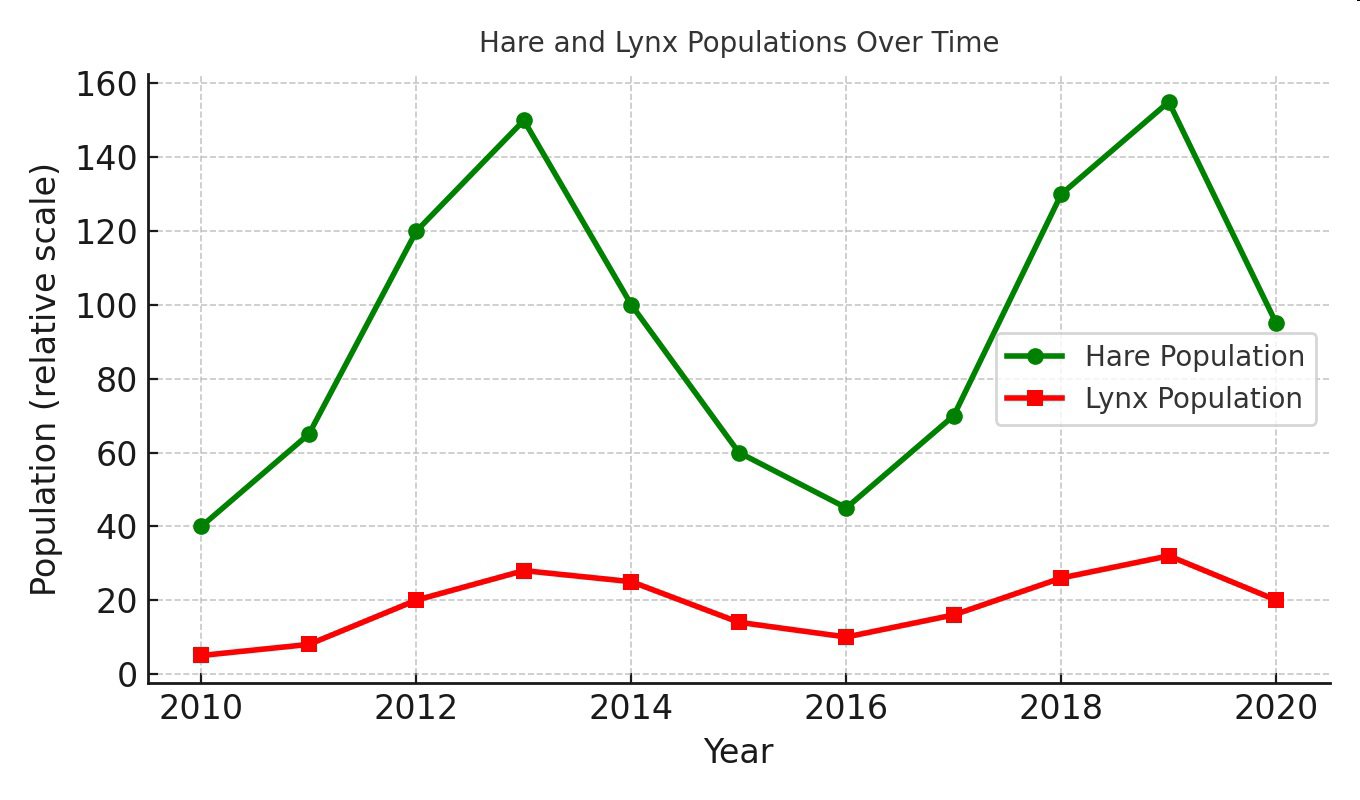
Figure 2.