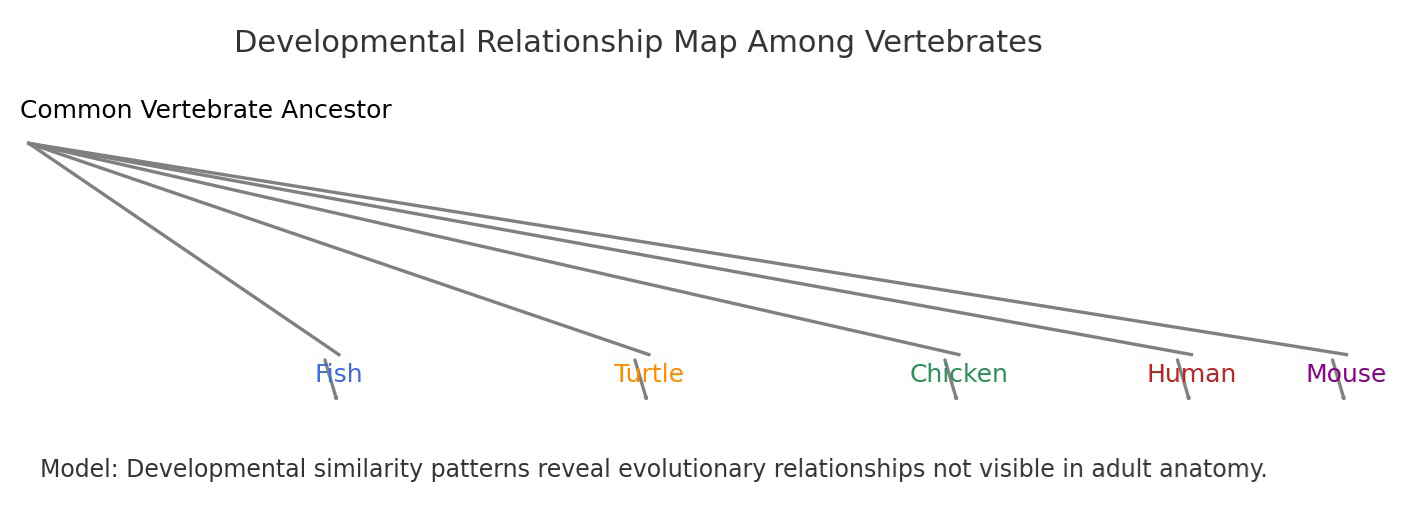
Analyzing Embryological Patterns
Comparing embryos across multiple species reveals patterns that help scientists understand how living things are related. For example, a fish embryo, a chicken embryo, and a human embryo all start with similar features: a notochord, pharyngeal arches, and a post-anal tail. These structures form because the genes controlling early development are highly conserved - meaning they have changed little over millions of years.
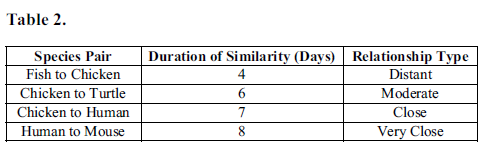
During early stages, vertebrate embryos look almost identical. As they grow, the differences increase: fish develop fins and gills, chickens form wings and feathers, and humans develop arms and internal ear bones. These changes follow predictable patterns that reflect evolutionary relationships - the more closely related two species are, the longer their embryos remain similar before diverging.
Scientists use embryological data not just to compare species, but also to identify traits that are hidden in adults. For example, humans no longer have gills, but the pharyngeal arches in human embryos become the jawbones, throat, and middle ear structures. By analyzing these developmental transformations, researchers can trace how new features evolved from existing ones.
This evidence is supported by molecular biology - many of the same genes, such as Hox genes, guide the early development of all vertebrates. That’s why developmental patterns across fish, birds, and mammals reveal more than physical similarity: they uncover shared instructions encoded in DNA. When students compare embryonic diagrams, they are following the same approach used by biologists - using visual data to infer relationships not obvious from adult anatomy.
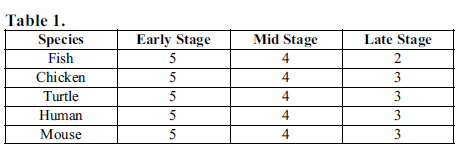
Graph of Information - Figure 1.
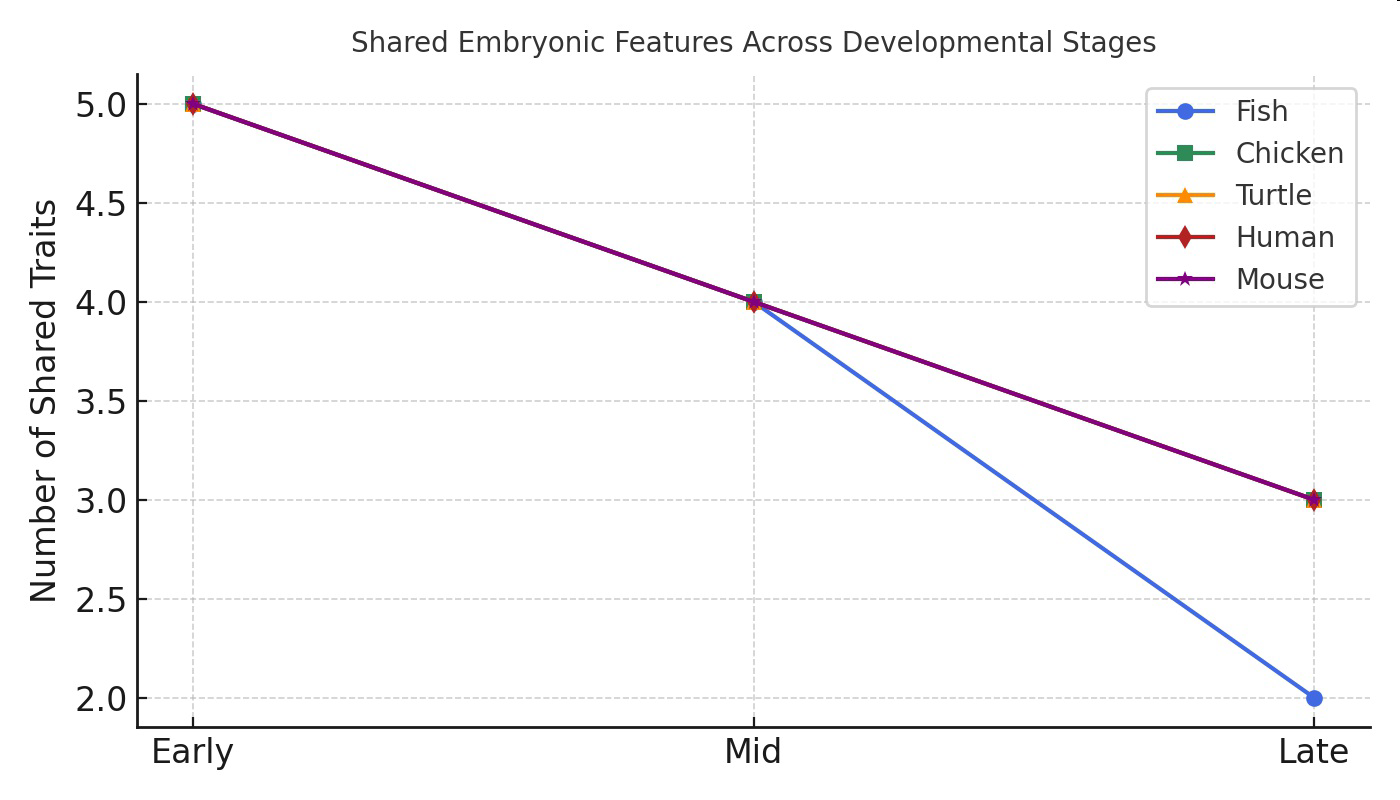
Graph of Information - Figure 2.
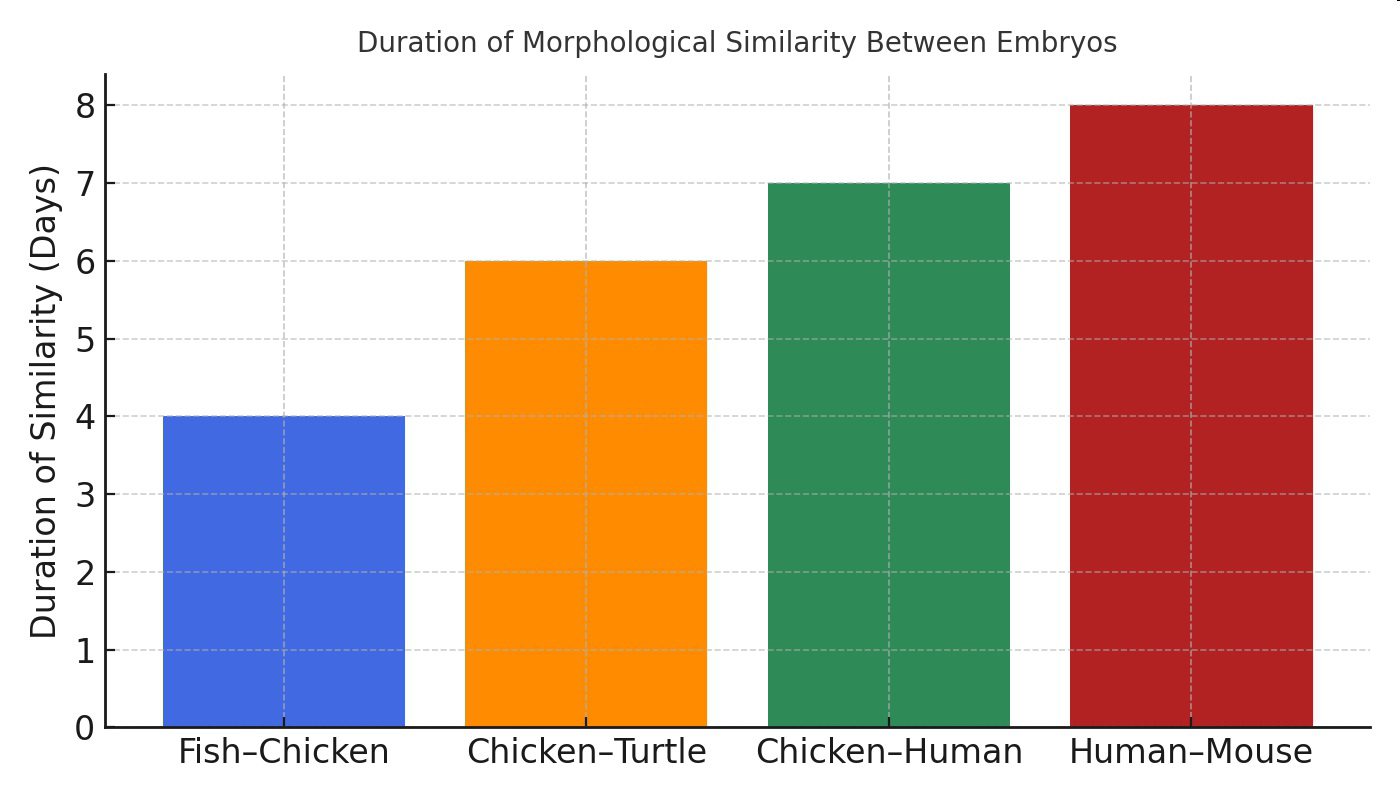
Figure 3.
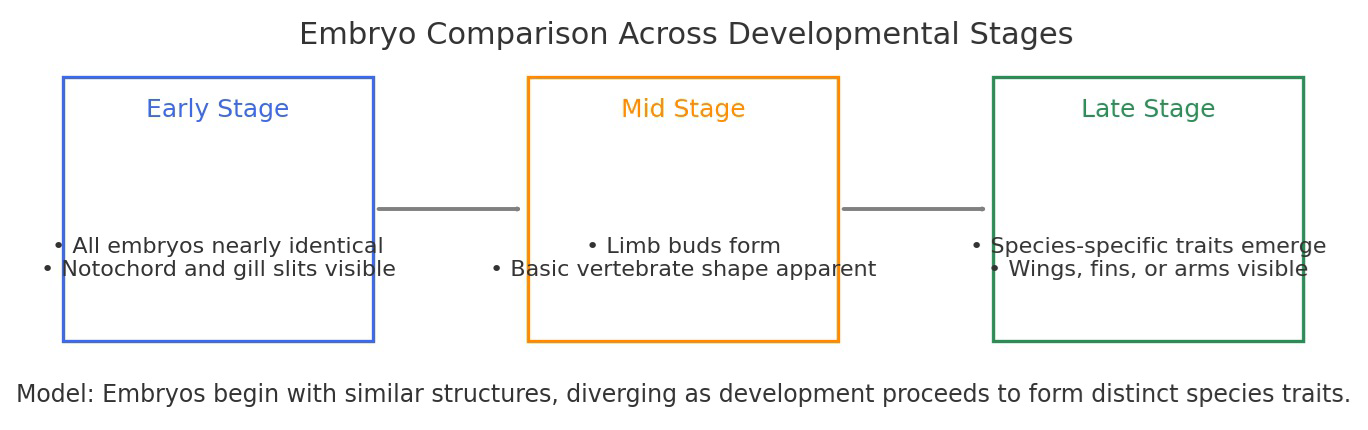
Figure 4.