Coat Color and Disease Resistance
After wolves were reintroduced to Yellowstone in the 1990s, scientists began tracking their health, survival, and genetic traits. One trait stood out immediately — coat color. While most wolves are gray, about 30% of the population is black. Genetic analysis revealed that this variation comes from a single gene known as CPD103, which influences pigment production in fur. But further study revealed a fascinating twist: this same gene also affects the immune system.
The black coat color in wolves results from a genetic mutation that originated long ago through interbreeding with domestic dogs. The variant that causes black fur also improves immune response to viral infections, particularly canine distemper virus (CDV), a disease that can sweep through wolf packs and devastate populations.
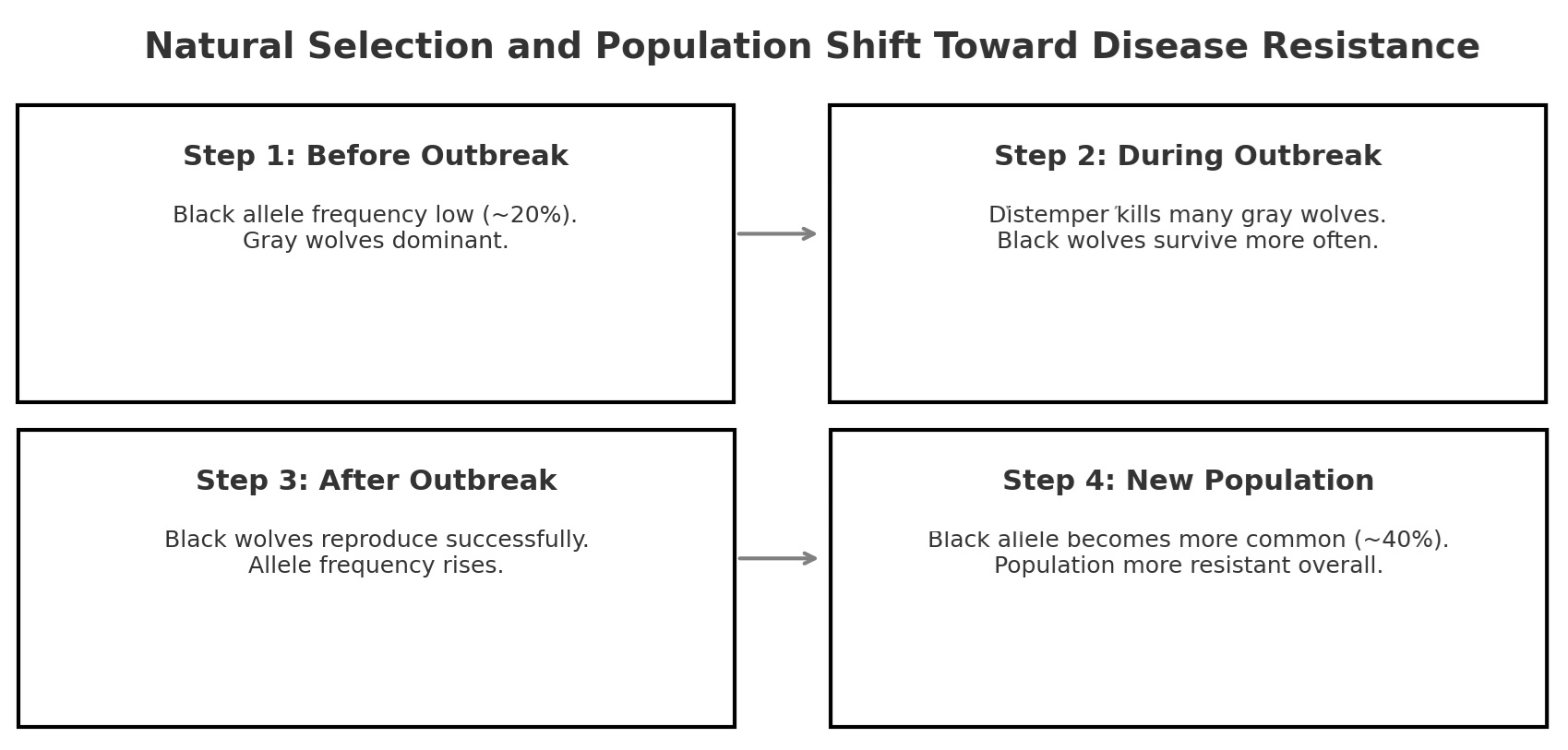
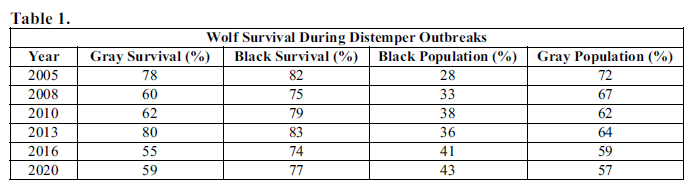
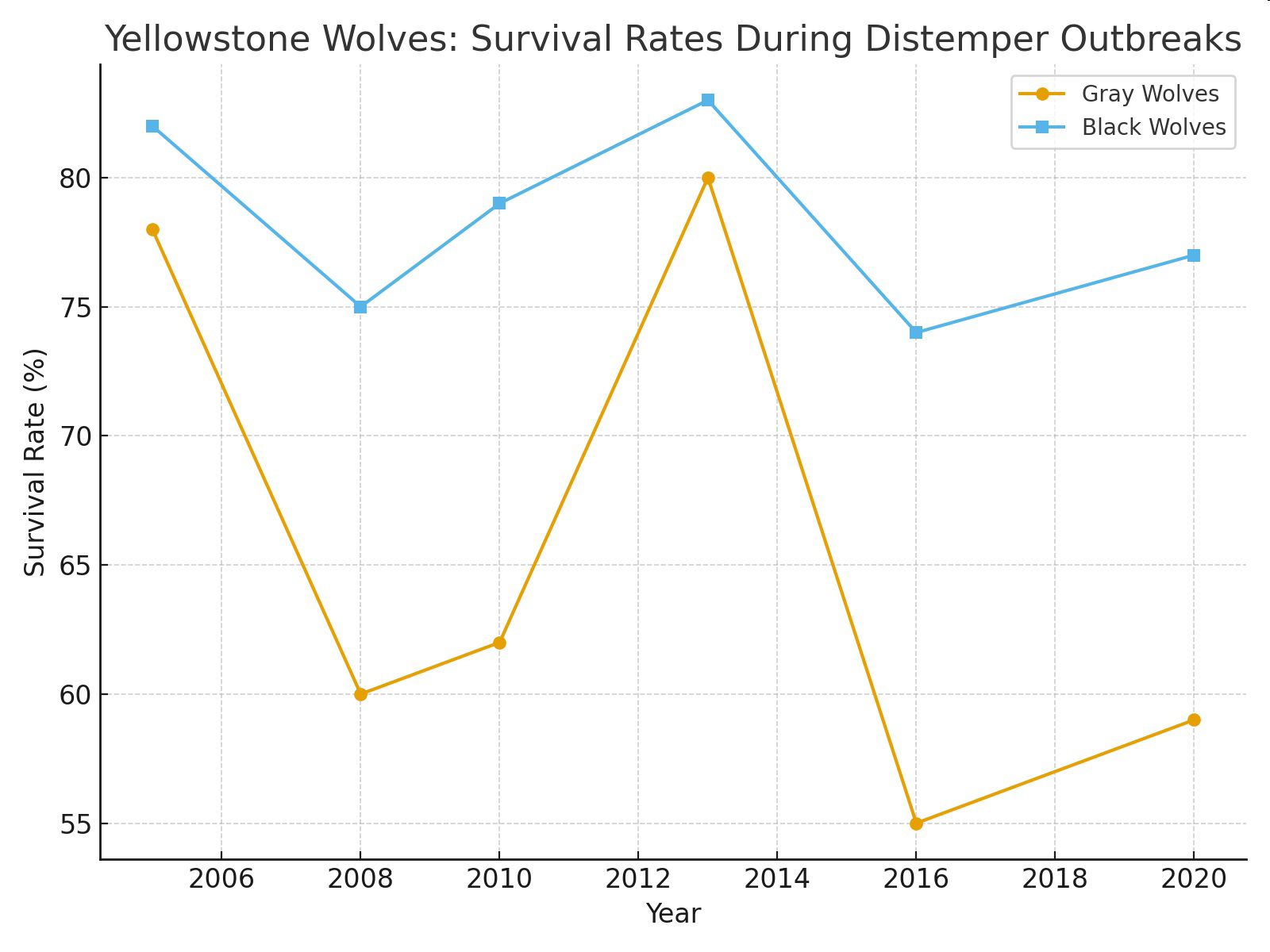
During distemper outbreaks, scientists observed that black wolves survived at higher rates than gray wolves. In one documented case, the proportion of black wolves increased significantly following an outbreak - a clear example of natural selection favoring individuals with advantageous traits.
This pattern changes depending on environmental conditions. In years when disease pressure is low, gray wolves survive and reproduce at similar rates to black wolves. But when disease becomes a major stressor, black wolves have a survival edge. Over time, this back-and-forth selection maintains both color morphs in the population — a process called balancing selection.
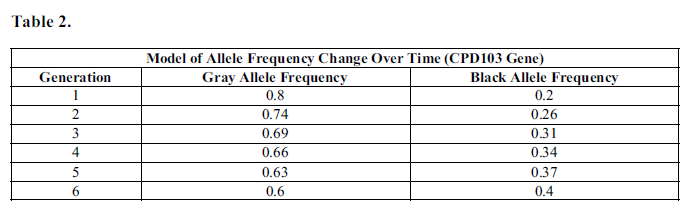
Mathematical models based on field data show how gene frequency shifts after each outbreak, then stabilizes as both forms persist. The Yellowstone wolves provide a real-world example of how genetic variation increases survival probability and how environmental pressures, such as disease, can shape populations within just a few generations.
Graph of Information - Figure 1.
Graph of Information - Figure 2.

Figure 3.
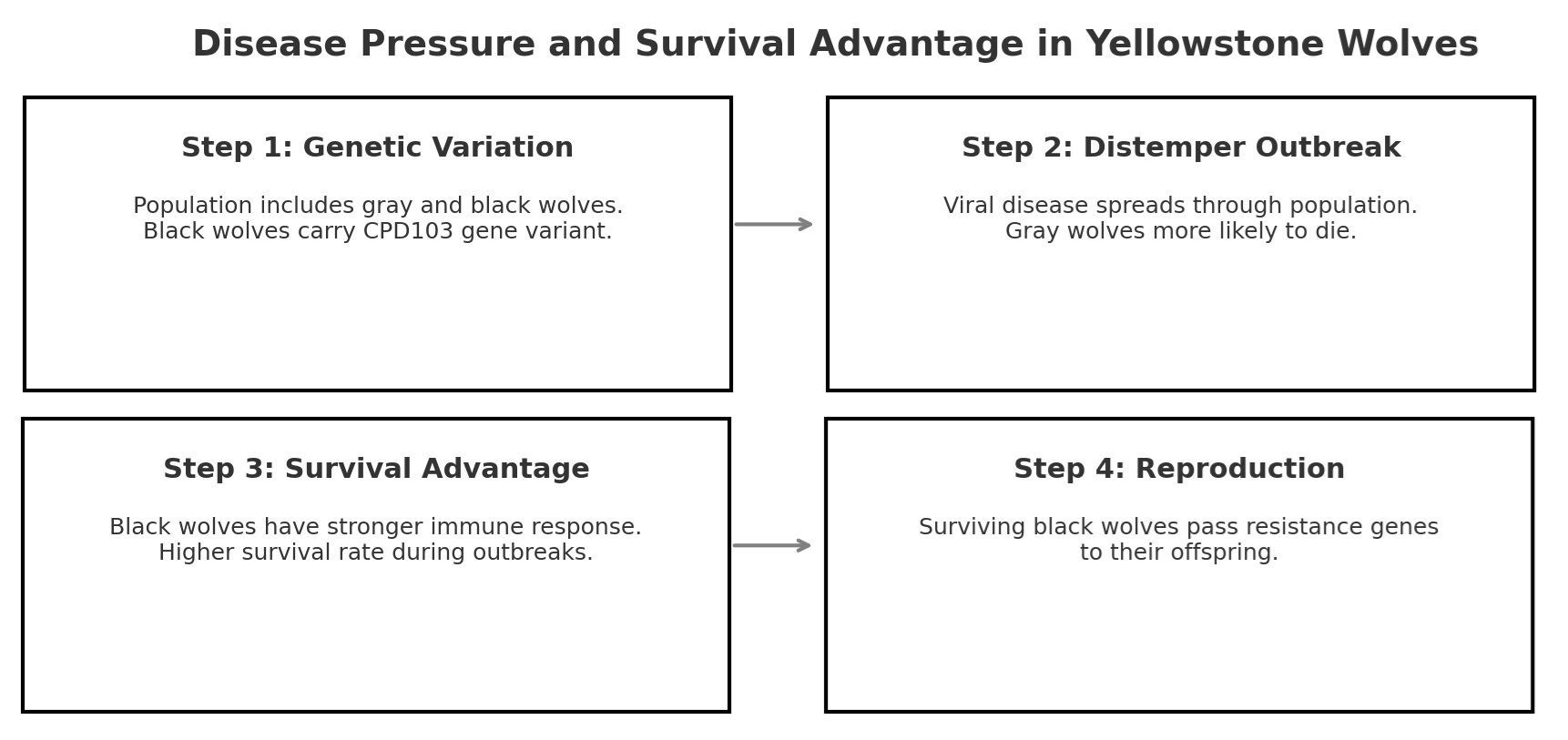
Figure 4.