Flowering Time in Plants and Climate Change
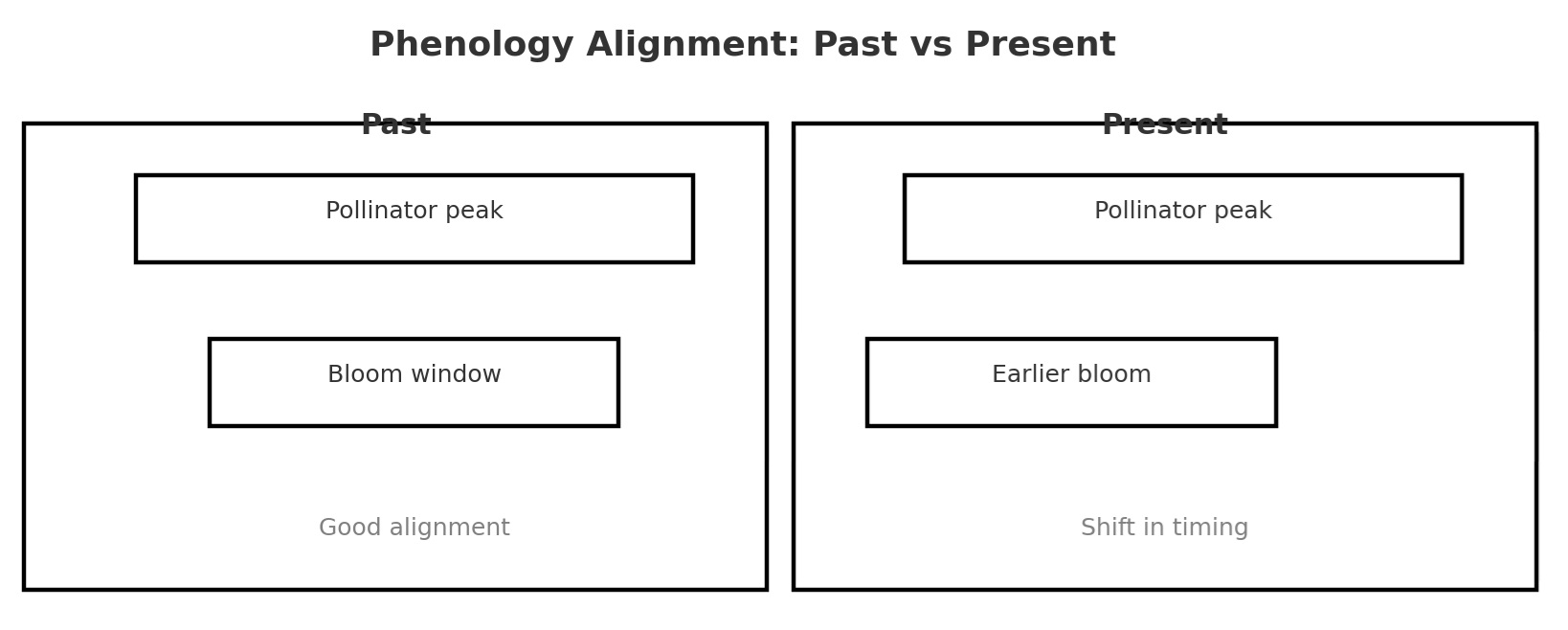
Plants rely on seasonal cues - temperature, day length, and soil moisture - to time growth and reproduction. When a plant flowers “on time,” its blossoms align with pollinators and favorable weather. But these cues are changing as global temperatures rise. In many places, average spring temperatures are warmer than they were a few decades ago, and the first warm days of spring (and last frosts) are occurring earlier. That alters the “sweet spot” for flowering.
Within any plant population, there is heritable variation in flowering time. Some plants carry gene variants that trigger flowering earlier (call these “early” genotypes), while others flower later. When springs become consistently warmer, early plants may open blossoms when pollinators are abundant and frost risk is lower. If those plants set more seeds, they contribute more offspring to the next generation. Over time, the frequency of early-flowering genotypes increases—a measurable example of natural selection.
Scientists track this shift with mathematical representations. One approach uses time series to compare mean flowering date (often expressed as day-of-year, DOY) against spring temperature anomalies. As anomalies rise, DOY values typically decline, indicating earlier flowering. Another approach models allele (gene) frequencies through generations: if early genotypes have slightly higher reproductive success each year, the early-flowering allele should increase predictably.
Of course, earlier isn’t always better. If plants flower too soon, they may miss pollinators or get hit by late frosts. Selection can vary by place and year. But across many long-term datasets, researchers have documented advancing flowering dates and increasing prevalence of early-flowering traits in warming environments. These trends demonstrate how environmental change can reshape populations on human time scales. With clear data tables, graphs, and labeled diagrams, students can see how numbers tell the story of evolution in action.
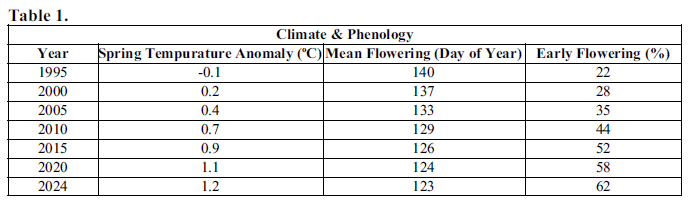
Graph of Information - Figure 1.
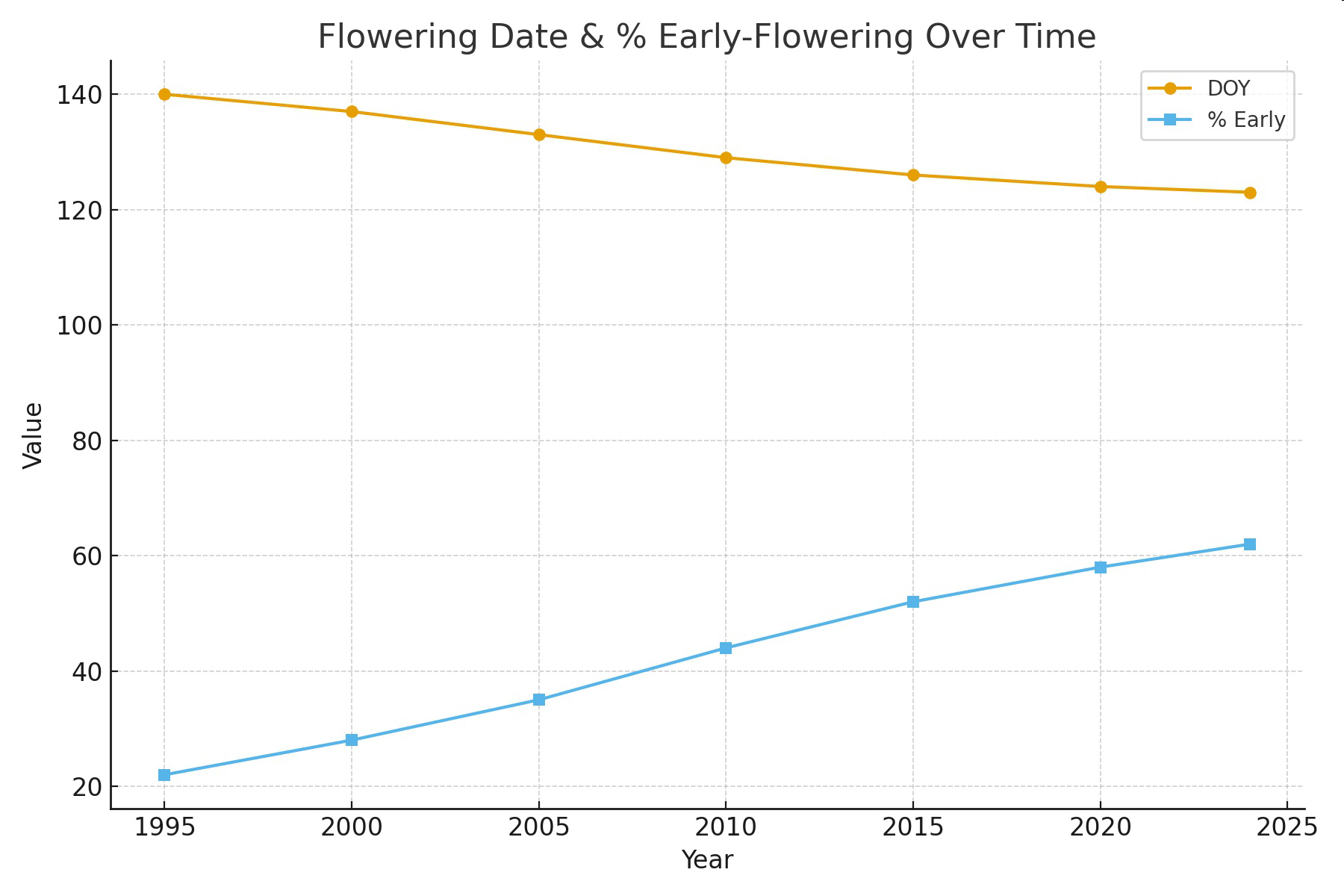
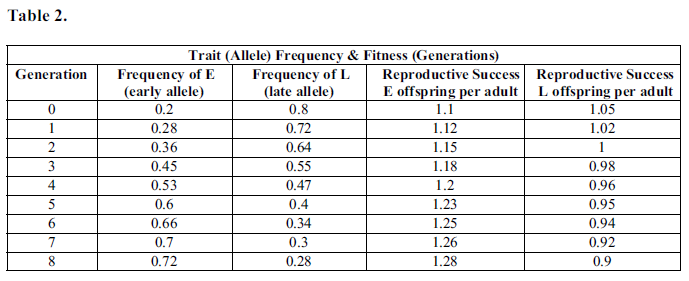
Graph of Information - Figure 2.
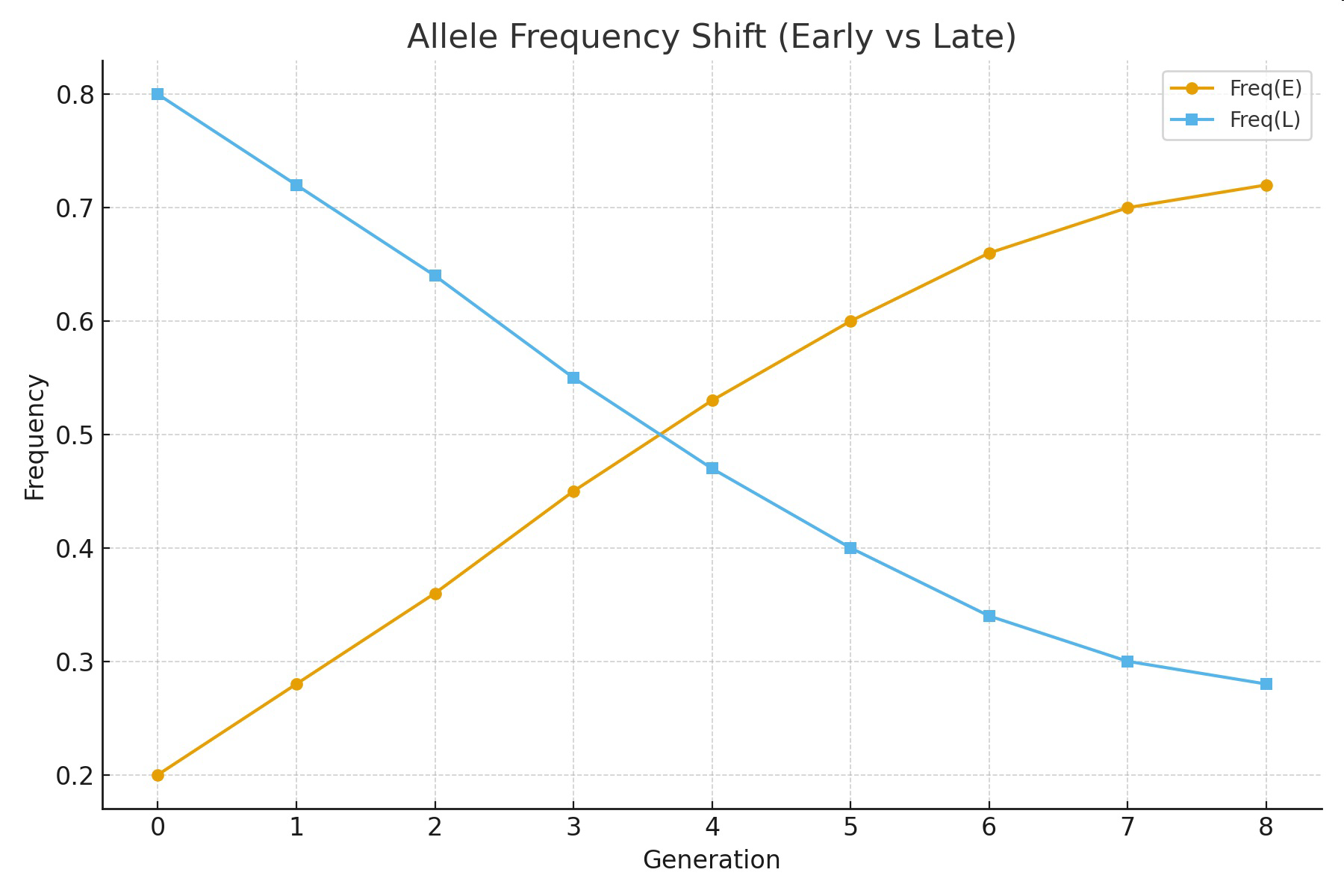
Figure 3.
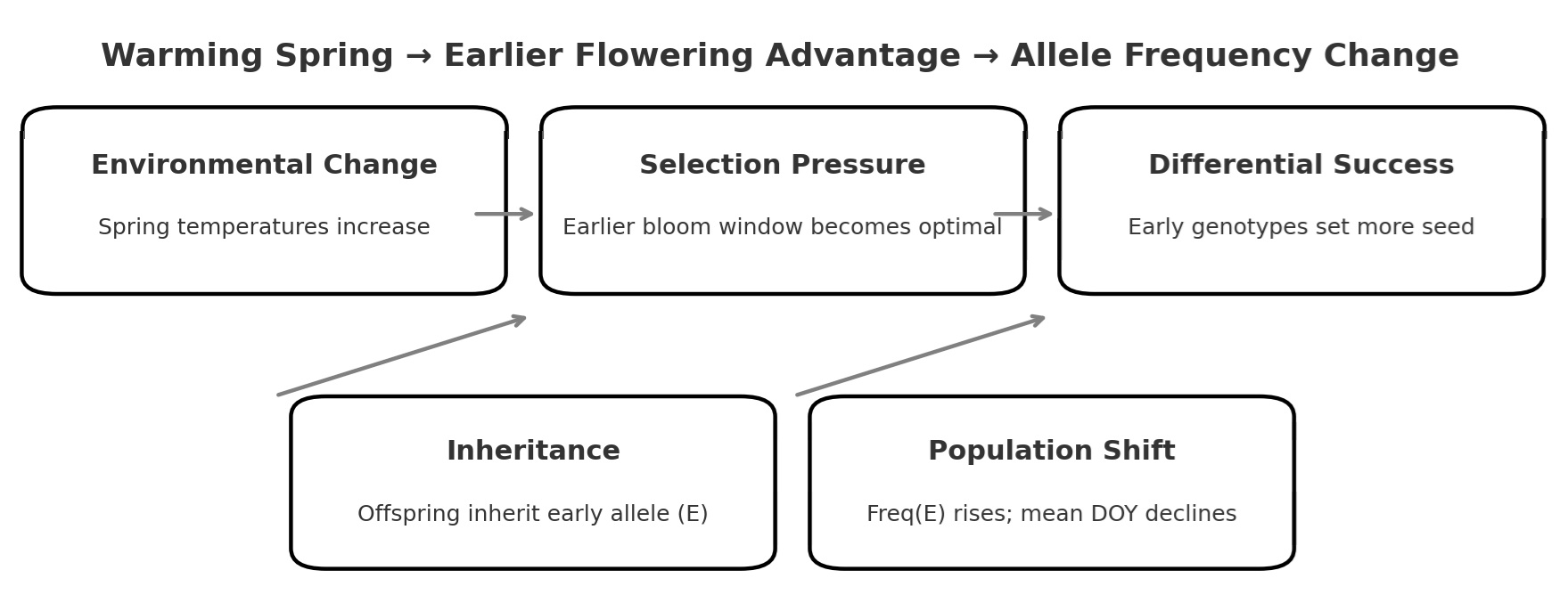
Figure 4.