Fossil Record of Marine Life
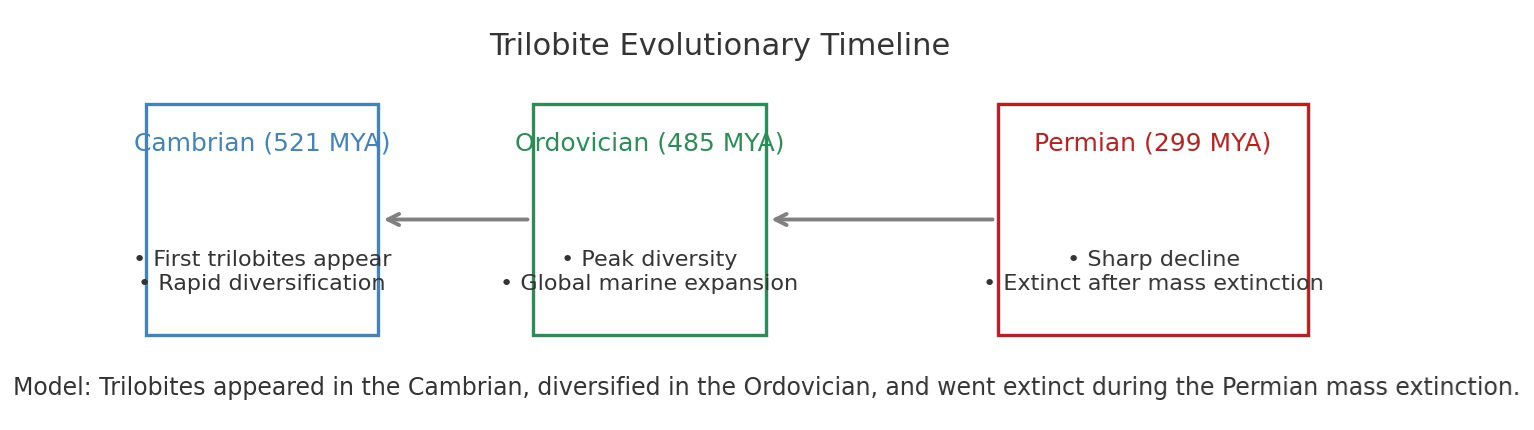
Trilobites are among the earliest complex animals to appear in the fossil record. They first emerged about 521 million years ago, during the Cambrian Explosion, when many new types of life suddenly appeared in Earth’s oceans. Over time, trilobites evolved into hundreds of families with different shapes, sizes, and lifestyles - some crawling on sea floors, others swimming or burrowing.
Their abundance in the fossil record allows scientists to see patterns of evolution, diversification, and extinction. Early trilobite fossils are found mostly in shallow marine rocks, showing that Earth’s first complex ecosystems developed in oceans. During the Ordovician Period, trilobite species diversity peaked as they adapted to new ecological roles.
However, environmental changes repeatedly reduced their populations. Mass extinctions at the end of the Ordovician, Devonian, and finally the Permian Period drastically decreased their diversity. The Permian Extinction, the largest in Earth’s history, eliminated 90% of marine species - including trilobites.
The trilobite record is key evidence that life changes over time, and that natural processes like climate shifts, sea-level changes, and continental movement have long shaped biodiversity. Fossil patterns - from their rise to their disappearance - demonstrate that the same natural laws operating today (e.g., sedimentation, adaptation, extinction) also governed the distant past.
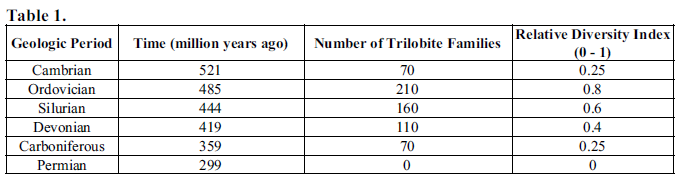
Graph of Information - Figure 1.
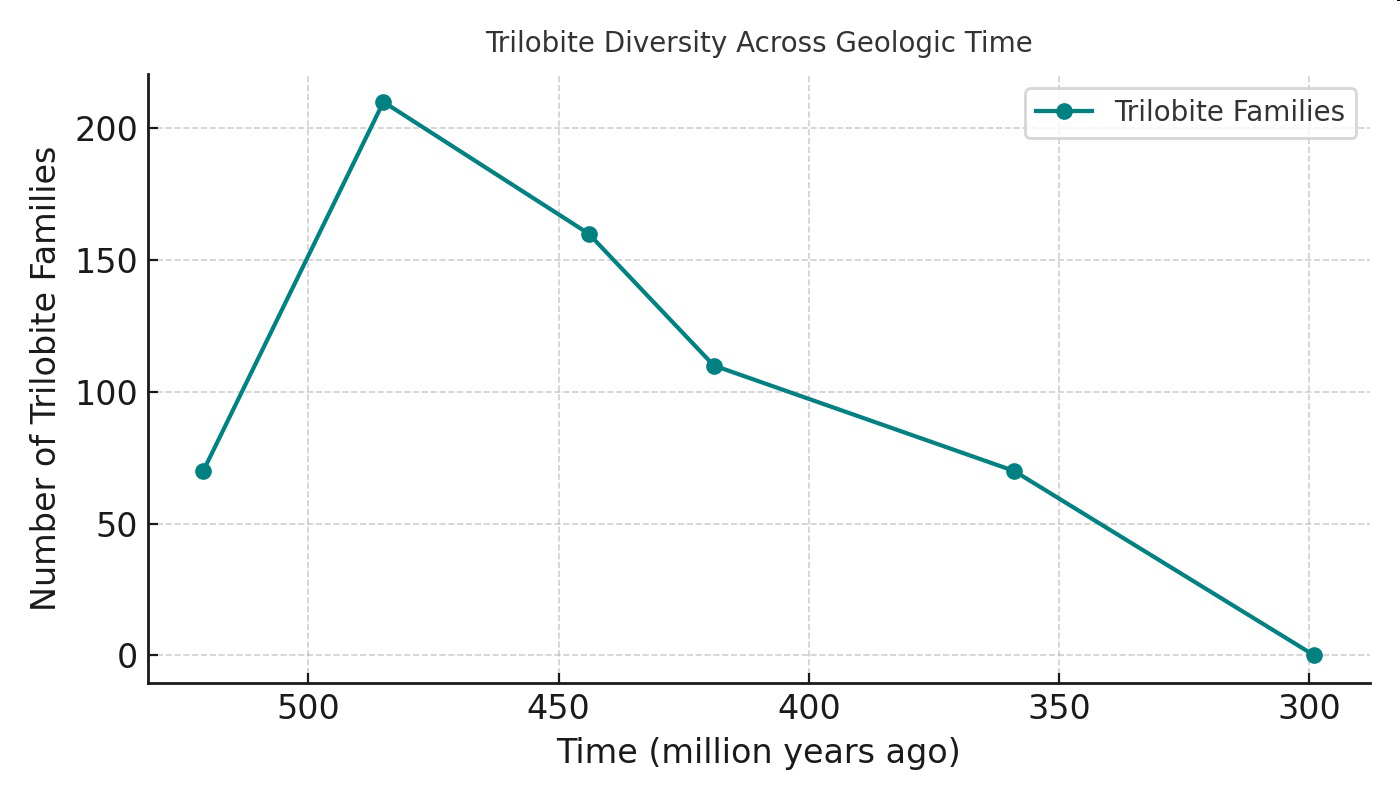
Figure 2.