Mosquitoes and Insecticide Resistance
For decades, humans have used insecticides like DDT, pyrethroids, and organophosphates to control mosquito populations. These chemicals kill mosquitoes by damaging their nervous systems or interfering with reproduction. However, when the same chemical is used year after year, a few mosquitoes survive because of genetic mutations that make them less sensitive to the toxin.
Those survivors reproduce, passing on their resistance genes to the next generation. Over time, the proportion of resistant mosquitoes increases. This is a clear, measurable case of natural selection - the environment (in this case, repeated insecticide exposure) favors individuals with traits that improve survival.
One well-studied mutation, known as the kdr (knockdown resistance) gene, alters a sodium channel in mosquito nerve cells, preventing insecticides from binding effectively. Mosquitoes with one or two copies of this mutation can survive doses that would kill nonresistant mosquitoes.
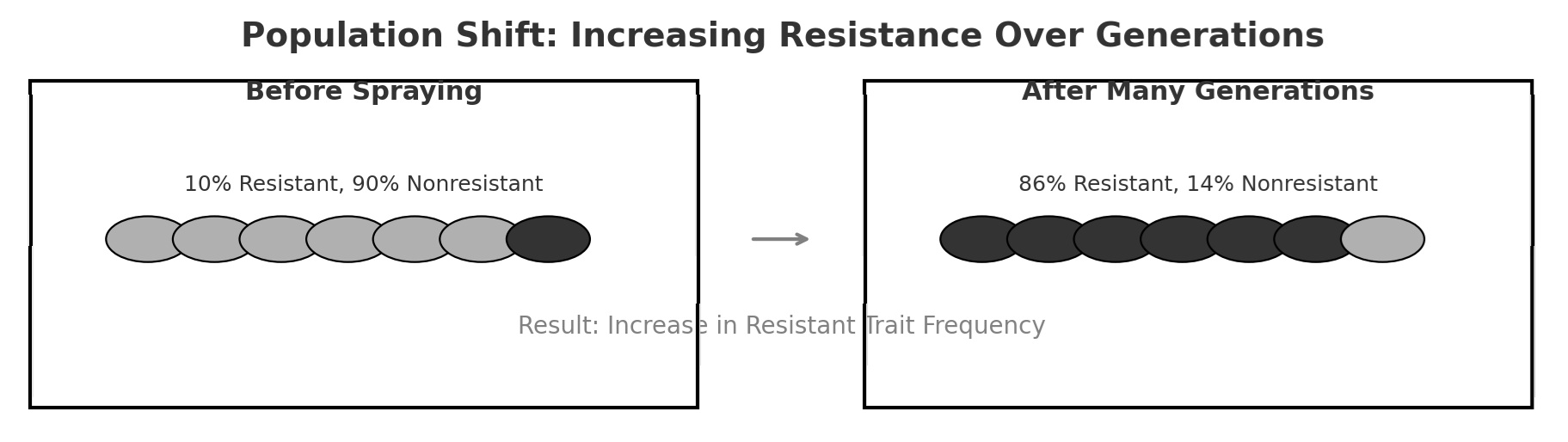
Scientists use mathematical models to represent how quickly resistance spreads. They track allele frequencies - the percentage of resistant (R) versus nonresistant (r) genes - and survival rates before and after insecticide application. For example, when spraying begins, perhaps 10% of mosquitoes carry the R allele. After ten years of repeated insecticide exposure, that number might climb to 80% or higher.
These data help public health programs adjust strategies. Some rotate insecticides to slow resistance or use biological control methods like releasing sterile males. The evolution of insecticide resistance shows how natural selection can cause a quantitative shift in population genetics within just a few generations.
Natural selection is not always slow - when selective pressure is strong and variation exists in a population, measurable genetic change can occur in years, not millennia. Mosquitoes offer a powerful reminder of how quickly evolution can shape the world around us.
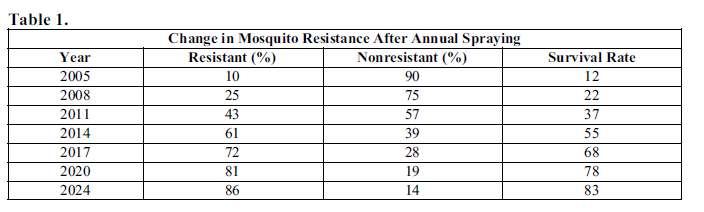
Graph of Information - Figure 1.
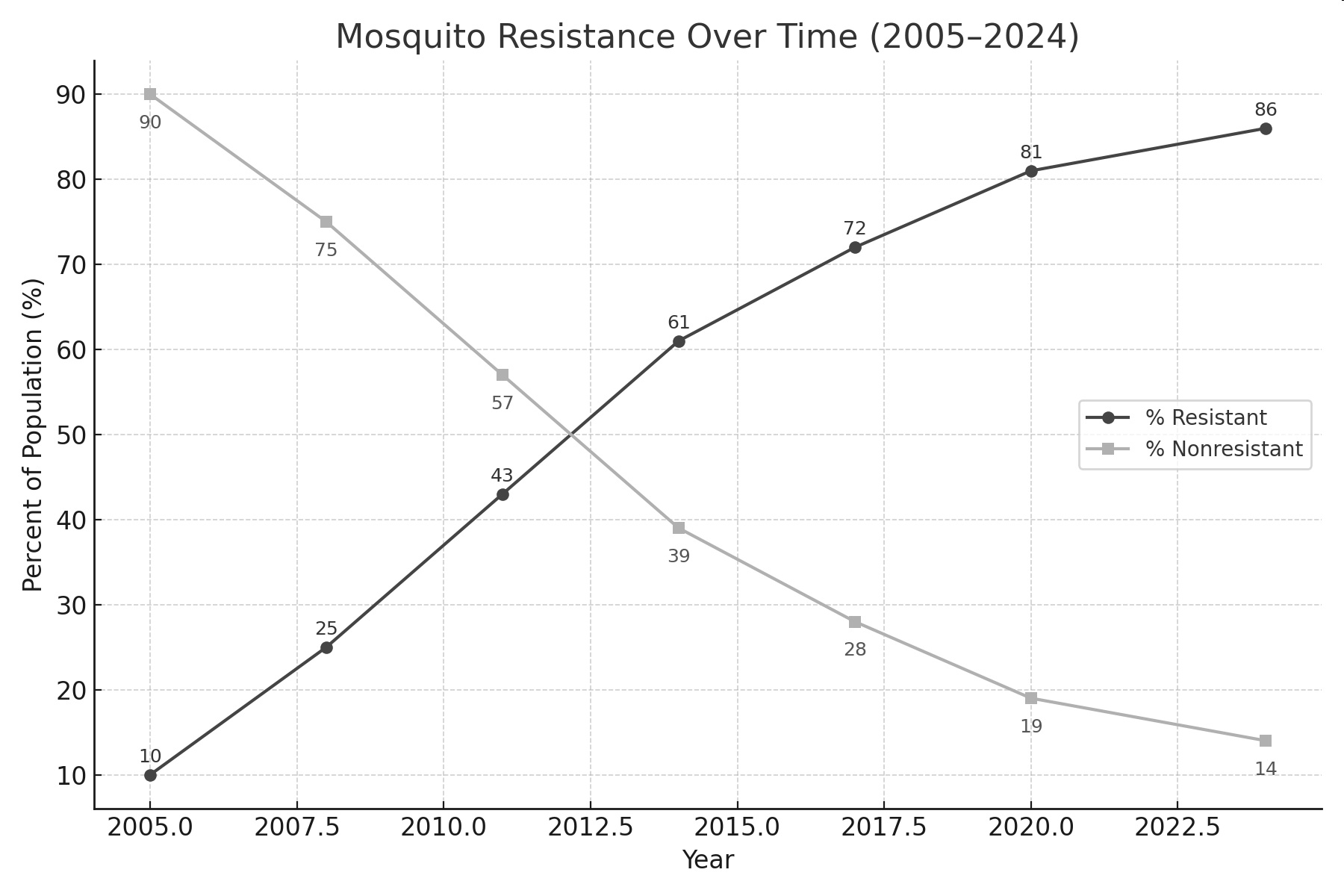
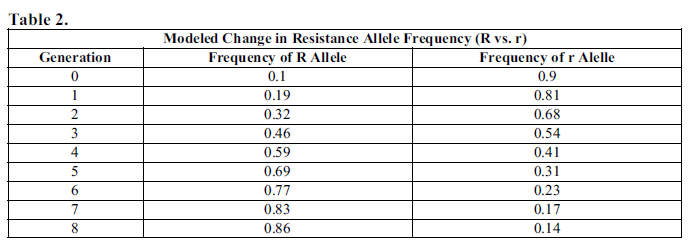
Graph of Information - Figure 2.
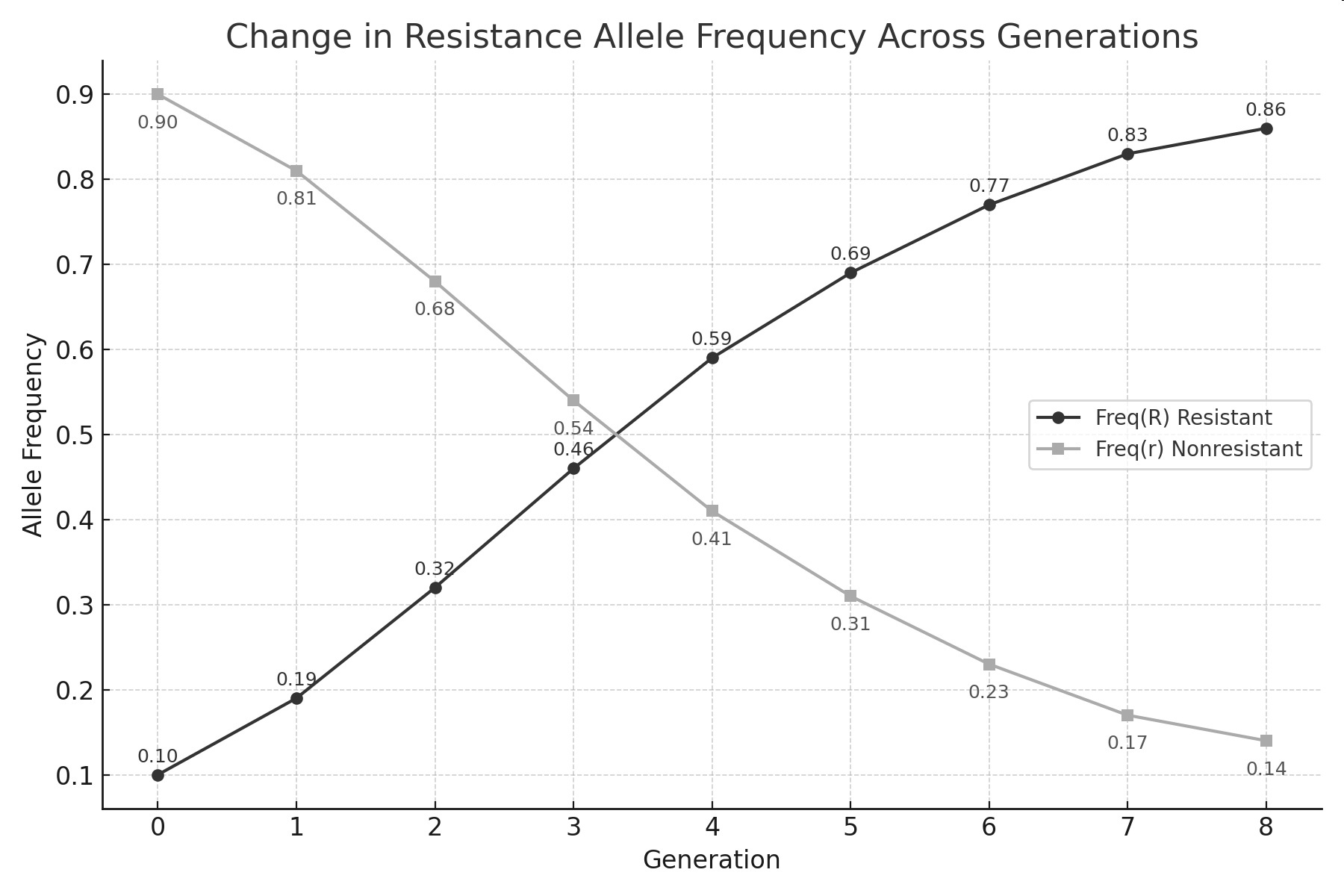
Figure 3.
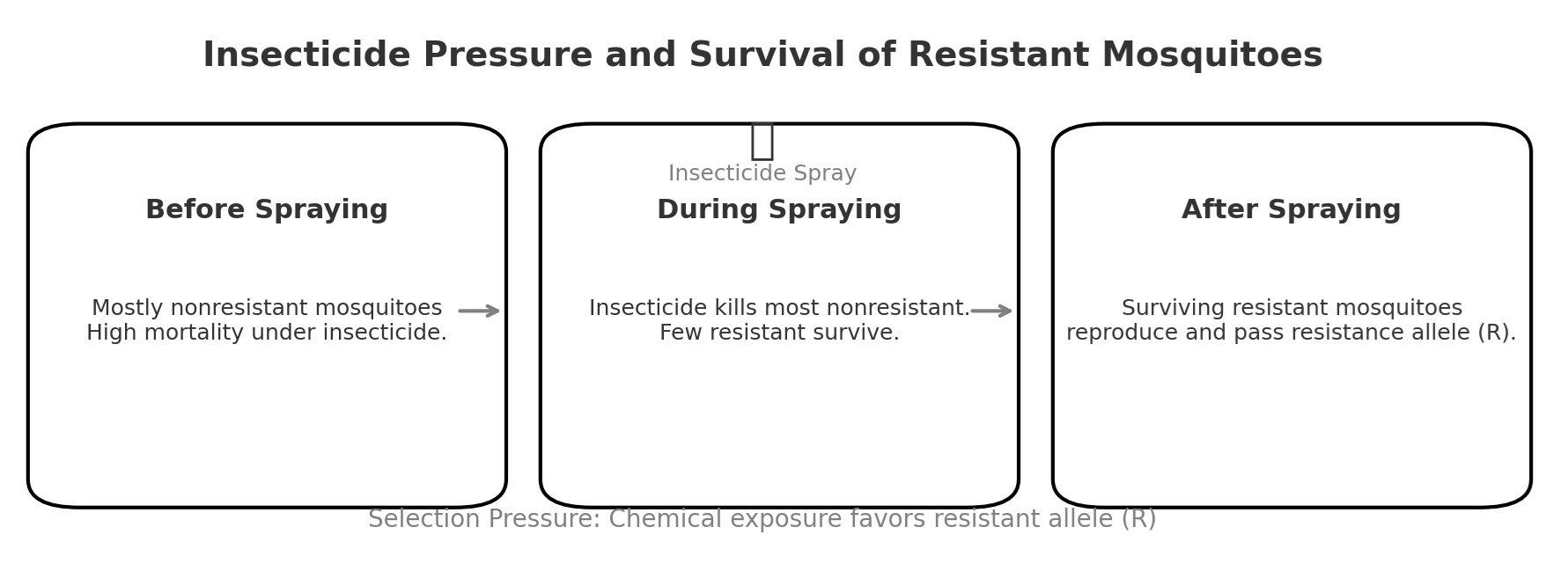
Figure 4.